

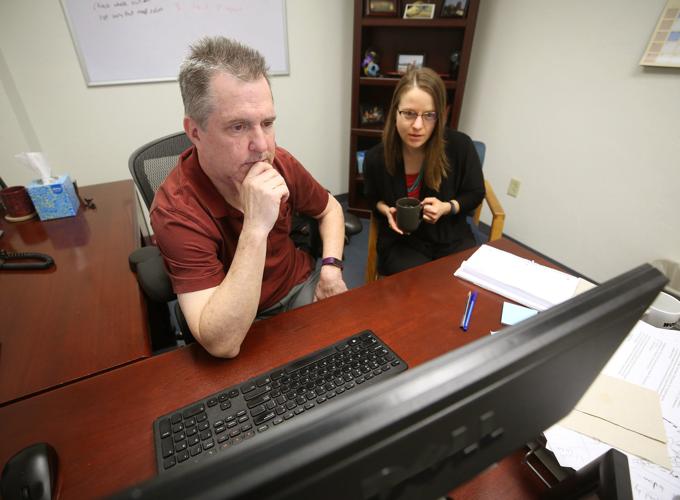

The Tucson-based Critical Path Institute has no laboratories, no drug chemists, no patent lawyers.
Yet the nonprofit is arguably one of the most important emerging drug-research organizations in the nation, if not the world.
The organization known as C-Path was founded in 2005 with a goal of bringing pharmaceutical companies, academic researchers and regulators together on neutral ground to develop tools to study drug candidates.
Thirteen years later, C-Path oversees 16 consortia that use mountains of patient data to develop new drug-development tools that can be used for clinical trials of drugs to treat diseases such as Alzheimer鈥檚, muscular dystrophy and Parkinson鈥檚 disease.
More than 60 drug and diagnostics companies 鈥� including major players like Abbott, AstraZeneca, Bayer, Eli Lilly, Pfizer and Novartis 鈥� participate in C-Path鈥檚 consortia, along with nonprofit research organizations and universities including the University of Arizona and the Mayo Clinic.
People are also reading…
C-Path also partners with nonprofit research groups such as the Alzheimer鈥檚 Association, the National MS Society, the March of Dimes and the Bill and Melinda Gates Foundation.
In just the last five years, C-Path has seen its annual budget double to more than $16 million and expanded its offices to accommodate a staff that has swelled to 68.
About three-quarters of C-Path鈥檚 budget comes from government grants, such including a five-year $2 million grant from the FDA, while consortia members contribute the rest.
鈥淲e鈥檝e doubled the number of projects we鈥檙e doing, doubled our operating budget, and doubled our staff in five years, and I believe that pattern of growth will continue, though it might not be that fast,鈥� said Martha Brumfield, who was named CEO of C-Path in 2013.
To fulfill its mission of speeding up development of safe drugs, C-Path staff work with consortia members to develop a variety of tools to help guide research and shape clinical trials.
Those include 鈥渂iomarkers鈥� 鈥� essentially bodily indicators of disease or susceptibility 鈥� as well as data methods to measure patient outcomes, disease progression models and clinical trial simulations, laboratory tools, data standards and databases.
Brumfield says she has some trouble explaining to strangers exactly what C-Path does.
鈥淚 generally say something like, we don鈥檛 test medicines, but we develop the test for others to use to test medicines 鈥� it reminds me a lot of the BASF slogan a few years ago that said something like 鈥榳e don鈥檛 make the products, we make them better.鈥欌��
C-Path has received regulatory endorsement for biomarkers or drug development tools in Parkinson鈥檚 disease, Alzheimer鈥檚 disease, tuberculosis, kidney disease and other areas.
Biomarkers can help show if potential new therapies are causing injury to a patient鈥檚 organs, and can play a part in selecting the appropriate patients to enroll in clinical trials.
C-Path also has received FDA and European endorsement of a disease model for Alzheimer鈥檚 disease and European endorsement for a lab model for tuberculosis.
Other C-Path consortia focus on therapies and in some cases diagnostics, for diseases including multiple sclerosis and Duchenne muscular dystrophy, and neonatal and pediatric drugs.
C-Path consortia members contribute data to each project and then can use the tools to develop new drugs. They also make some data available at no charge to the research community.
鈥淲e know our tools are being used inside companies either to make a go or no-go decision or to make clinical trials design decisions, but those discussions remain proprietary,鈥� Brumfield said.
C-Path consortia also use data to create simulations of clinical trials, which can help in the design of actual trials.
Another broader area of study is in 鈥減atient reported outcomes,鈥� an effort led by retired UA professor Stephen Coons, director of C-Path鈥檚 clinical outcome assessment program.
Working on 11 different disease areas, the consortium has developed rating scales that can be used as endpoints in clinical trials, based on interviews with patients about what symptoms most matter to their quality of life.
That鈥檚 important, groundbreaking work for patients with diseases with no full cure.
鈥淔or a patient with multiple sclerosis, if they have three days a week they can walk through the grocery store, they鈥檙e moving in the right direction,鈥� Brumfield said.
One area that C-Path is not involved in is cancer therapies, since there are a number of existing research collaborations that encompass development tools, Brumfield said.
THE PATH FORWARD
Drug companies see a lot of value in the collaboration fostered by C-Path鈥檚 consortia.
鈥淚 think C-Path is addressing an important unmet need, and it鈥檚 all about public health, in my mind,鈥� said Jiri Aubrecht, senior director and safety biomarker lead for drug giant Pfizer and co-director of C-Path鈥檚 Predictive Safety Testing Consortium.
Aubrecht, whose lab discovered an enzyme biomarker for liver damage that is being studied by the consortium, said the consortia can also 鈥渃ross-pollinate鈥� to study the use of biomarkers created to develop new drugs as diagnostic tools, for example.
鈥淭he patients get the drugs faster, and they get better tools for diagnosing their disease,鈥� said Aubrecht, who is based in Groton, Connecticut. 鈥淭his is a phenomonal thing, and I don鈥檛 know of any other organization that has that bandwidth.鈥�
Dr. Jonathan Davis, chief of newborn medicine at the Floating Hospital for Children at Tufts Medical Center in Boston, said C-Path鈥檚 International Neonatal Consortium could pave the way for major breakthroughs in drugs for premature babies.
Davis, who helped invent a drug to protect preemies鈥� immature lungs, said federal laws require drug companies to assess new drug candidates for their potential use in children and offer incentives to drugmakers who voluntarily conduct pediatric trials.
Though the U.S. spends some $29 billion to treat premature babies annually, the last time the FDA approved a neonatal drug was 1991, he noted.
鈥淚t鈥檚 a relatively young field, it鈥檚 a small market, it鈥檚 very high risk, and people are afraid so they tend to ignore them,鈥� Davis said.
In a little over three years, C-Path鈥檚 neonatal consortium has grown to more than 250 members in more than 40 countries and published more than 15 scientific papers.
Consortium members have been broken up into work groups to study specific neonatal areas, such as prevention of lung and intestinal damage and the group is working to establish benchmark lab standards for neonatal patients.
鈥淲e鈥檝e made enormous progress in a short time,鈥� Davis said. 鈥淭hey get everyone together and it鈥檚 amazing when you get people in the room from a variety of different disciplines and walks of life, how things can actually get accomplished 鈥� our own Congress could take a real lesson in watching us go.鈥�
Moving forward, C-Path is working on several new research initiatives and new consortia, Brumfield said.
C-Path is developing seven different disease models for tuberculosis including a clinical trials simulation, Brumfield said.
After adding four consortia last year, C-Path is preparing to launch a new consortium on Huntington鈥檚 disease, a fatal genetic disorder that causes the progressive breakdown of nerve cells in the brain, she said.
And while the institute has attracted international participation, it will soon have a presence in Europe with planning underway for a small office in Ireland, which should make C-Path eligible for European grant funding, Brumfield said.
鈥淚 don鈥檛 have any concerns about our viability and our model, even though we are not selling anything and we鈥檙e not revenue generating, our model is turning out to be sustainable,鈥� she said.
鈥淢y personal dream is that we have more of an impact in global health.鈥�
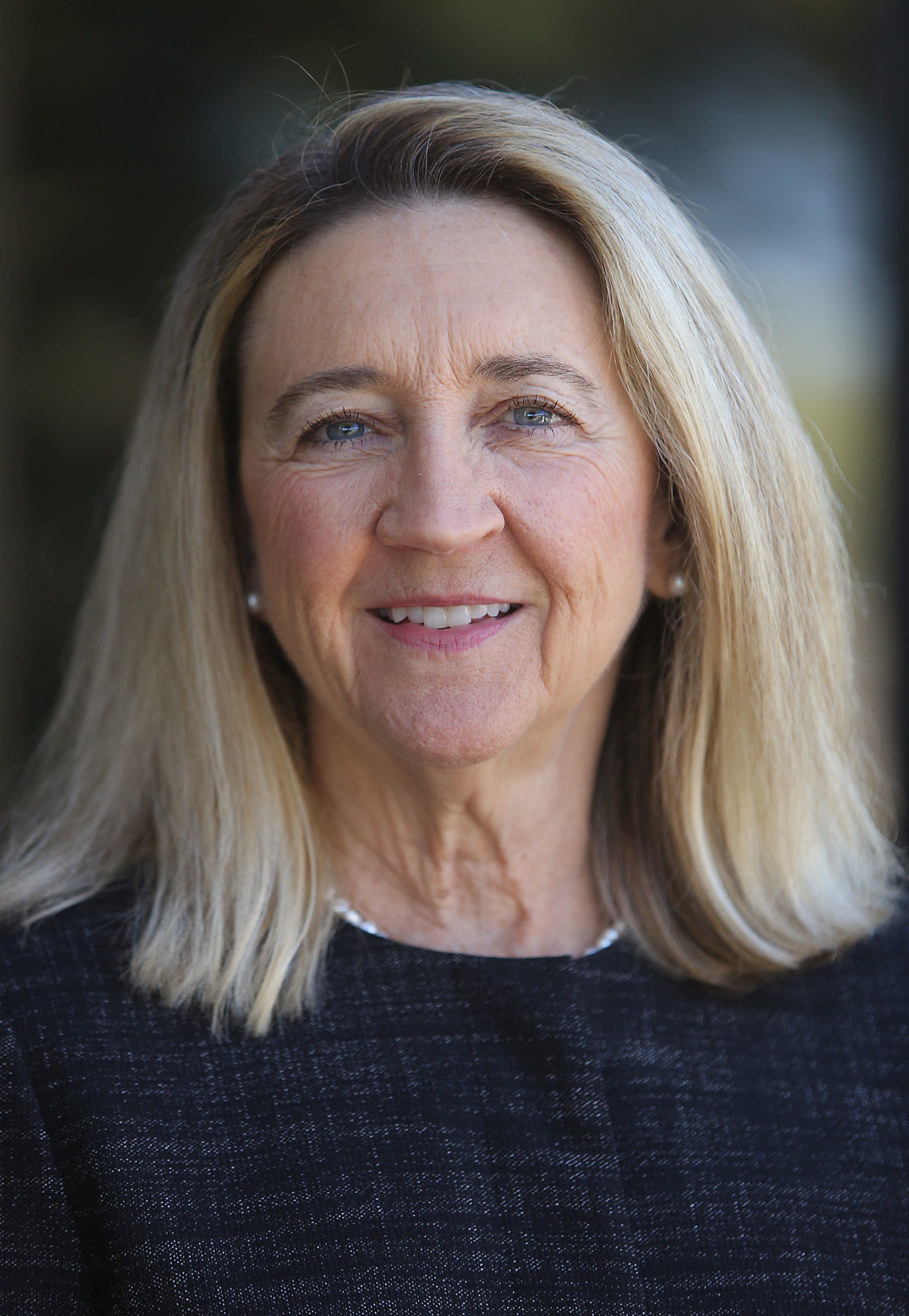
President and chief executive officer of Critical Path Institute
Contact senior reporter David Wichner at dwichner@tucson.com or 573-4181. On Twitter: @dwichner. On Facebook:

David Wichner
Reporter


