

SCOTTSDALE 鈥� Philip Smith remembers the sights, sounds and smells of the last time he went gambling.
鈥淚 was with my brother, and we were having a great time playing roulette and blackjack with all these different kinds of people,鈥� the 33-year-old Phoenix resident said. 鈥淚t鈥檚 actually really funny seeing the different types of personalities that come out when others play, especially when they are losing.鈥�
He said he remembers the thick fog of smoke and the dings of the machines surrounding him in the Las Vegas casino.
As much as he enjoyed the experience, there鈥檚 one part of the casino he avoided.
鈥淚 hate slots,鈥� said Smith, who attends Arizona State University. 鈥淚t鈥檚 all up to luck. It鈥檚 boring, and I can鈥檛 control what happens. The only time I would ever even consider playing is to pretend I am so I could score free drinks.鈥�
People are also reading…
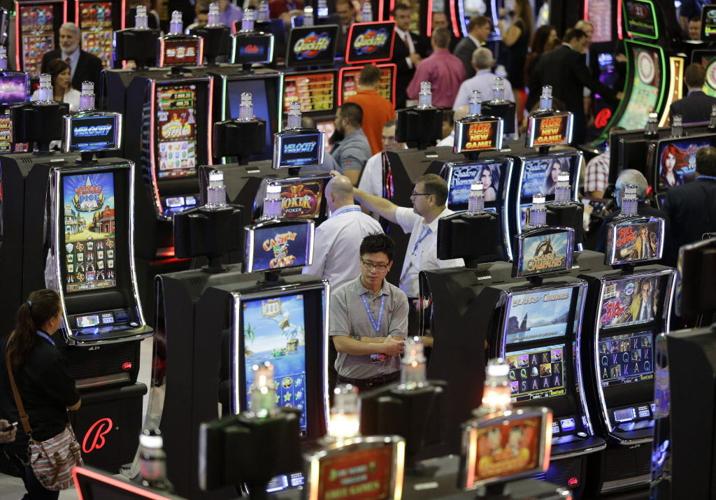
Smith鈥檚 opinions are indicative of a trend gaming experts and casino owners alike have noticed: The same attractions that once lured generations into gaming no longer work for this younger crowd. Slot machines 鈥� even casinos as a whole 鈥� aren鈥檛 enticing enough for the 18- to 34-year-old age group known as millennials.
It鈥檚 a subject so pressing to tribal casinos, organizers devoted a panel to discuss how to attract (and keep) millennials at a 2015 Arizona Indian Gaming Association Expo at the Talking Stick Resort in Scottsdale.
Tribal governments nationwide are revamping their casino floors and expanding visitors鈥� entertainment options beyond gambling. And they鈥檙e keeping millennials in mind.
Although gaming revenue has grown over the years, experts recognize the power of millennials, which are larger as a group than baby boomers, according to the Marketing Research Association. The association estimated that millennials will account for one-third of all retail spending within the next five years.
The current hand
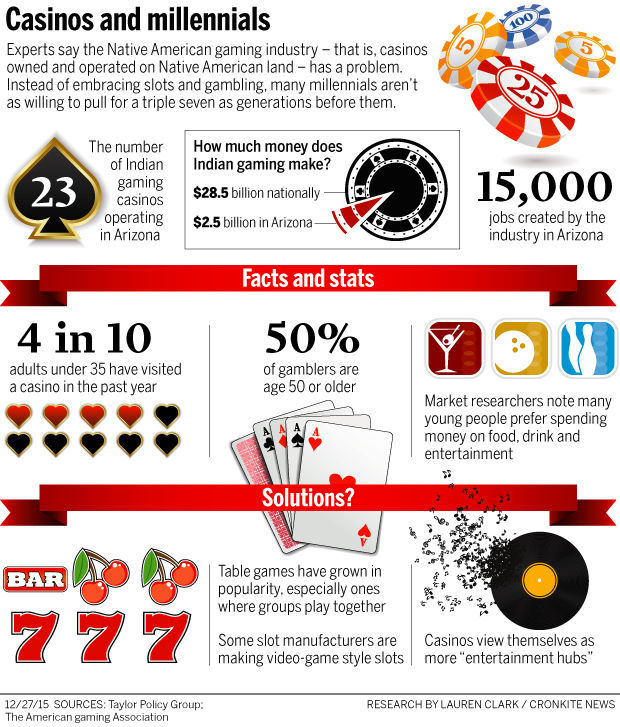
The tribal gaming industry generated $28.5 billion nationally in 2014. And in Arizona, the state鈥檚 23 casino operations brought in about $2.5 billion, according to the Arizona Indian Gaming Association.
Gaming provided 15,000 people with jobs in Arizona as well, according to the association.
The state only allows casinos on Native American reservations. In 1988, the United States passed the Indian Gaming Regulatory Act, which made casinos legal on tribal land.
A lot of good has come since, said Valerie Spicer, executive director of the Arizona Indian Gaming Association.
鈥淚t鈥檚 probably the single most economic phenomena happening to tribes. It鈥檚 unparalleled in socio-economic impact,鈥� Spicer said, adding that a portion of the revenue goes toward funding roads, schools and programs on reservations.
鈥淲e are also seeing a higher number of kids on the reservation seeking higher education,鈥� Spicer said. 鈥淭he impact has been immeasurable.鈥�
The bet on the future
Experts worry that the preferences of millennials could disrupt the industry.
Millennials have spent their lives attached to social media and have access to instant information on the Internet, said Robert Coppola, director of global research and consumer insights at YWS Design & Architecture. They want constant interaction and transparency, which puts slot machines in jeopardy.
That鈥檚 a problem, experts said. Slot machines make up about 65 percent of an average casino鈥檚 revenue, according to John Grochowski, an author and the gambling columnist at the Chicago Sun-Times.
During the expo panel, Coppola said slot machines don鈥檛 provide 鈥渟ocial experience,鈥� lack transparency and have a low skill level.
鈥淪lots will have to change, and I personally do not think that they will exist in this form for the future,鈥� he said.
Jason 鈥淲olf鈥� Rosenberg, vice president of marketing at online gaming at WhiteSand, an online gaming company and adviser to many casinos, said during the panel that casinos must change course.
鈥淵oung people are looking for 鈥業nstagrammable鈥� moments,鈥� he said. 鈥淪itting at a slot machine is not one of them.鈥�
One idea for slots is to change their appearance completely to something that resembles more of a video game.
鈥淜eep in mind, these people have had 100 percent of their life exposed to a digital platform,鈥� said David Hielscher, assistant director of marketing at Casino Arizona and Talking Stick Resort. 鈥淭hat means we have to completely reinvent a slot machine鈥檚 operations to look more like video games these young adults are used to playing.鈥�
Some machine manufactures have responded to this challenge, revamping arcade characters such as Pac-Man for an interactive betting experience and even designing a beer pong game where users can double up in teams to win money. Machines also mimic video games鈥� tendency to award players 鈥� with things like free spins and small cash prizes 鈥� to get them hooked for a longer time.
But many millennials like Smith said they are more attracted to table games, such as roulette, blackjack, craps and more because of their interactive nature.
Bobby Jones, vice president of sales and marketing at California-based Score Gaming, said his company has found a way to engage the younger audience in gambling.
鈥淲e realized we needed to make a more social, creative table game,鈥� he said. 鈥淲e wanted a unique interaction, where (young people) would encourage each other to make a particular move or bet. And we have seen a turn of the tide, and a tremendous comeback.鈥�
Two of their most popular games with the younger audience include group table games that allow friends to team up against the dealer: Throw One Back and Three Card 21 鈥淣鈥� Done.
Score Gaming is creating new games each year to see what will resonate with the millennial audience. But in the end, Jones said gambling may not attract as many millennials as the industry hopes.
鈥淗onestly, I don鈥檛 think we will get the lion鈥檚 share of millennials. But we will get a reasonable dent in gaming and attract some,鈥� Jones said. 鈥淭he industry has changed dramatically, and the glory days are gone. 鈥� Gaming is becoming a smaller portion of that piece of the pie. Younger folks would rather spend money having a good time with a group of friends with the flashing lights and music.鈥�
Additionally, moving to a millennial-based casino too quickly could pose a risk.
As many baby boomers 鈥� those between ages 69 and 51 鈥� retire, some may turn to gambling as a means of entertainment. According to the National Council of Problem Gambling, half of all gamblers are over age 50. And many in this demographic love the traditional layout of the casino with the slots, Spicer said.
鈥淵ou have people who are very loyal customers,鈥� she said. 鈥淎nd casinos have to balance between keeping that retention and incremental growth. You have to serve both populations, and you don鈥檛 want to upset that balance.鈥�
Shuffling the deck
Some casinos have changed their game plan: They treat their businesses as entertainment hubs instead of gaming centers.
In Tucson, the Casino del Sol Resort uses a wide variety of entertainment options to wrangle up a younger crowd. The casino has hosted concerts such as Christina Perri or Fall Out Boy and offers Cosmic Bingo 鈥� described as cosmic bowling with an 鈥渆xuberant鈥� host and plenty of alcohol.
鈥淚f a millennial wants to try some social gaming, play poker, grab a gourmet meal, maybe visit the spa and head out to a show or drinks and dancing, they can do that,鈥� Steven Neely, chief marketing officer of Casino del Sol, said via email. 鈥淎nd, of course, while they are here, they can tell all of their friends about it through the many 鈥榮elfie spots鈥� we have identified for them around the property.鈥�
Talking Stick Resort and Casino in Scottsdale heavily markets its summer pool parties offering bottle service, DJs and cabanas. The casino has pulled thousands of young people into its establishment during the summer.
鈥淲e see around 2,500 people on Saturday and Sunday for our pool parties. These kids have money to spend, and they will spend it,鈥� Hielscher said. 鈥淭hey need to be socially integrated 鈥� these are social animals we are talking about.鈥�
Talking Stick Resort also has Degree 270, a dance club on the resort鈥檚 14th floor that is the tallest out of all the clubs in Scottsdale, Hielscher said. It also hosts a weekly trivia night for young people to compete in teams.
Rosenberg agreed that millennials seem to like the other options.
鈥淲e are seeing a vast amount of disposable income being used at pools, clubs and high-price entry into a club,鈥� Rosenberg said. 鈥淭he formula of trapping them in a casino is being abandoned.鈥�
As some experts say a dollar is a dollar in any gambling establishment 鈥攚hether millennials spend it on food, drinks, gambling or entertainment.
But regardless of the casinos鈥� future direction, Smith, the ASU student, said having a good and an entertaining experience is all that matters.
鈥淚f I鈥檓 having fun anywhere, I would go back,鈥� he said.