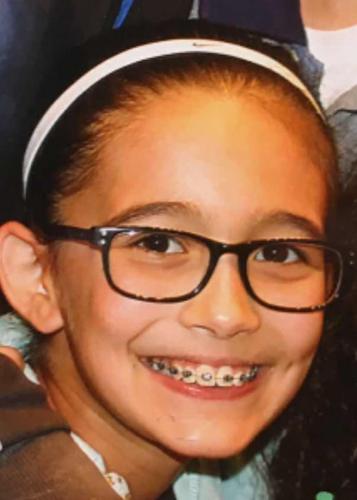

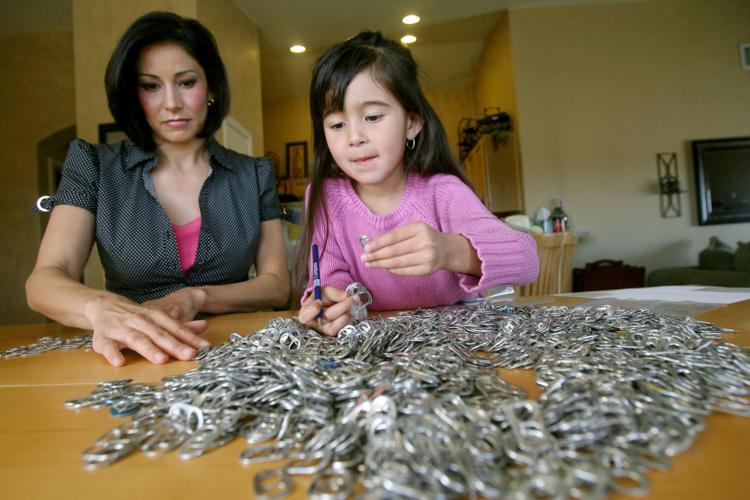
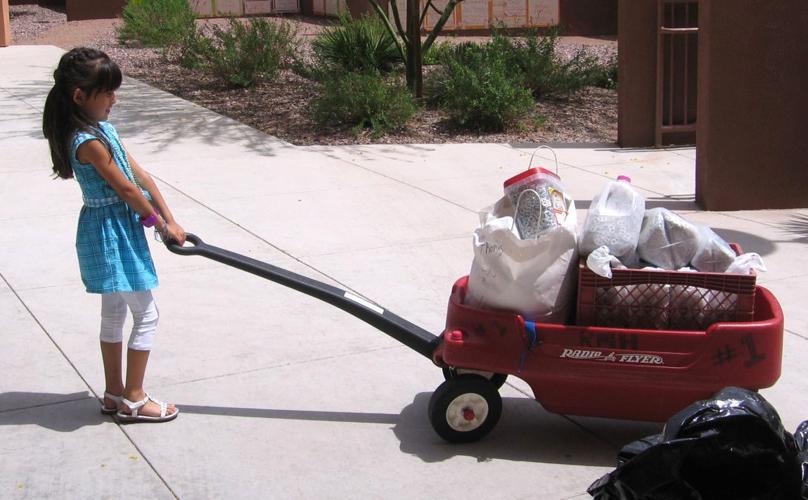
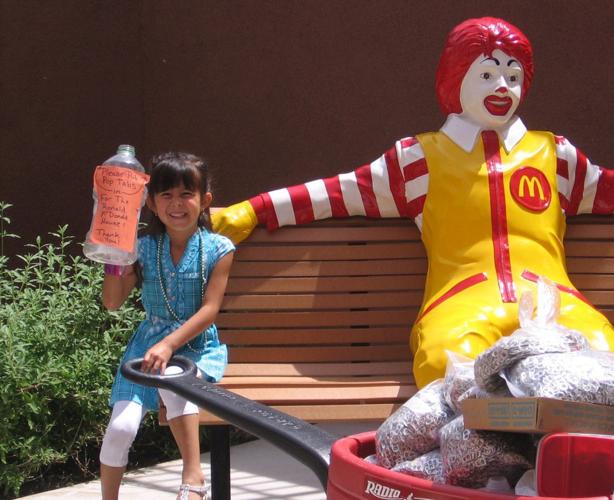
Annalise Lujan started collecting pop-tabs for the Ronald McDonald House at the age of 4.
She wanted to be a doctor someday, or maybe a gymnast. She definitely wanted to help people.
鈥淪he is just a giving soul and loves to help others,鈥� says Maryann Estrada-Lujan, Annalise鈥檚 mother. 鈥淪he wanted to be a doctor for the Ronald McDonald House and work for free. She has just always been a giving person.鈥�
On April 2, Annalise, now 12, vomited before a competition with her Tumbleweeds Gymnastics team. She insisted on competing, but threw up again during the third event, her mother says. She said she felt better after that, but during the fourth and final event, she couldn鈥檛 walk. Her parents took her to the hospital.
On April 3, she had her first seizure.
Annalise was hospitalized at Banner-University Medical Center Tucson on April 4 and soon put into a medically-induced coma to prevent further brain damage, Estrada-Lujan says.
People are also reading…
She turned 12 on April 18, and on April 21 was taken by a medical helicopter to Phoenix Children鈥檚 Hospital.
There, the Robins Elementary School student was diagnosed with febrile infection-related epilepsy syndrome, or FIRES, a rare brain disorder that causes continuous seizures and eventually death or some level of brain injury in previously healthy school-aged kids. Anti-epileptic drugs typically don鈥檛 help.
The cause of the syndrome is a mystery. Some believe it is initiated by an infection affecting the immune system or a fever triggering a genetic response in the body. But those are just two prevailing opinions, says Dr. Eric Marsh, assistant professor of neurology and pediatrics at the University of Pennsylvania鈥檚 Perelman School of Medicine and the Children鈥檚 Hospital of Philadelphia. Marsh has been treating the few patients who have come down with the rare form of epilepsy since 2000.
But there is hope for Annalise, because on May 8, she woke up.
Pop tab premonitions
The 51黑料网 first wrote about Annalise in 2010 when her uncle鈥檚 pop-tab collection inspired the 4-year-old to start her own. About a year later, Annalise appeared in the paper again after deciding to grow out her hair for Locks of Love.
鈥淚 want them to feel better,鈥� she told the Star in 2010 when asked about her pop-tab collection.
That first year, she donated about 70,000 pop-tabs to the Ronald McDonald House in Tucson. She has continued to collect the tabs and donate them each year on her birthday, averaging about 60 pounds of pop-tabs each year, Estrada-Lujan estimates.
鈥淪he got a ribbon and put a pop-tab on it and wore it as a bracelet, and people would ask, 鈥榃hy are you wearing that?鈥� and she would say, 鈥業鈥檓 collecting it for sick kids at the Ronald McDonald House,鈥欌�� Estrada-Lujan says. 鈥淓very year for her birthday, she donates her tabs.鈥�
The nonprofit鈥檚 website says that 鈥�1,267 pop-tabs make one pound,鈥� and 鈥�150 pounds helps one family stay the night at the house.鈥�
Last year, the Ronald McDonald House in Tucson made about $4,000 from recycling pop-tabs, says Kate Maguire Jensen, the president and CEO of Ronald McDonald House Charities of Southern Arizona.
And even in Phoenix, Annalise鈥檚 collection continued.
鈥淚n ICU they heard her story so the nurses started a little jar and are collecting,鈥� Estrada-Lujan says. 鈥淪he is still collecting for the Ronald McDonald House and she has been asleep.鈥�
That is bittersweet for the family, which hasn鈥檛 been able to make use of the house in Phoenix.
Annalise tested positive for MRSA, an infection that is caused by staph bacteria and is resistant to most antibiotics, according to the Mayo Clinic.
Because many of the kids who do stay at the Ronald McDonald Houses have vulnerable immune systems, the nonprofit 鈥渉as a very strict policy relating to infectious diseases to ensure, as best we can, the health, welfare, safety and comfort of the families staying at the Ronald McDonald House,鈥� writes Nancy Roach, the executive director of Ronald McDonald Charities of Phoenix in a prepared statement.
鈥淲hile we never want to turn anyone away, there are, unfortunately, times when we have to make very difficult decisions like this one.鈥�
Estrada-Lujan has been sleeping on the couch in her daughter鈥檚 room, and her husband has been commuting every few days while their 13-year-old son finishes school.
鈥淲ho knew she would be advocating for them, and now we鈥檙e going to need to use those services?鈥� Estrada-Lujan says.
Intractable epilepsy
Annalise went to the hospital the first time after that gymnastics competition in early April.
鈥淪he competed with us all season and when she got to state this year is when she got sick,鈥� says Courtney Jolly, Annalise鈥檚 coach and owner of Tumbleweeds Gymnastics. 鈥淲e all thought she had a stomach bug because she threw up, and that鈥檚 when she went to the hospital.鈥�
Banner confirmed the stomach virus theory and sent Annalise home with some medication. After the first seizure, the hospital attributed it to dehydration, hooked Annalise up to an IV and sent her home with additional medication, Estrada-Lujan says.
When Annalise returned to the hospital after the second seizure, the doctors kept her.
鈥淪he had continuous seizures, and they weren鈥檛 able to break status even after several attempts with medications,鈥� Estrada-Lujan says. 鈥淭hey put her into a medically-induced coma to save her brain from further permanent damage.鈥�
At Phoenix Children鈥檚, the family met Dr. Angus Wilfong, the division chief of pediatric neurology at Barrow Neurological Institute at Phoenix Children鈥檚, and learned about FIRES.
Estrada-Lujan spent the night learning everything she could about the syndrome.
That鈥檚 where she first discovered the drug cannabidiol, or CBD, a component of marijuana that has been increasingly studied as a treatment for FIRES and other intractable, or hard-to-treat, forms of epilepsy.
Medicinal marijuana
Last year, Wilfong (who was working at Texas Children鈥檚 Hospital until late last year) and seven other doctors published a study on the use of cannabidiol in treating FIRES. In the study, they found that the Schedule 1 drug reduced the frequency and duration of seizures and allowed the patients to be weaned from other medications.
鈥淭his stems from the whole medicinal marijuana craze that is out there,鈥� says Dr. Eric Marsh, one of the doctors who authored the study. 鈥淭here are lots of anecdotes that were on social media that suggested that marijuana high in cannabidiol and very low in THC could be anti-epileptic.鈥�
The liquid CBD oil has low or no THC, the compound in the cannabis plant that produces the high.
When Estrada-Lujan learned about it, she began advocating for its use in Annalise鈥檚 treatment. Nothing else seemed to be working.
鈥淚 wanted to know if my daughter was eligible,鈥� she says. 鈥淒r. Wilfong was new to Arizona and didn鈥檛 have his license to use it here, so he got with his partner, Dr. John Kerrigan, who had his license for this Schedule 1 drug.鈥�
Estrada-Lujan hopes that successful treatment of the syndrome with CBD oil will help other families like theirs who didn鈥檛 know about the option Annalise is trailblazing.
The process to use the drug requires approval from federal agencies such as Drug Enforcement Administration, Marsh says.
During that process, Annalise remained in a coma.
There are still a lot of questions surrounding the use of cannabidiol as a treatment for FIRES.
Because there isn鈥檛 really an option to give an ill child a placebo, it鈥檚 hard to know whether the success of patients was a result of cannabidiol, timing or some other combination of factors, Marsh says.
Questions remain about dosage, when to use it and defining the ideal patient.
Also unknown are the effects cannabidiol use might have on the developing brains of these young patients. Using medicinal marijuana with THC over time probably would lower the IQ of a young patient, Marsh says, but not enough data exist on the impact of cannabidiol.
鈥淪ome parents are desperate, and they are willing to try anything, but it is not a miracle, and you have to be careful,鈥� Marsh says.
On Saturday, May 6, Annalise was given a dose of Epidiolex, the same liquid CBD extract used in the study.
After three treatments of CBD oil, Annalise stopped seizing continuously, Estrada-Lujan says.
鈥淚 was there when she woke up,鈥� she says. 鈥淚t was amazing. It was truly amazing to see eyes again.鈥�
Rehab road
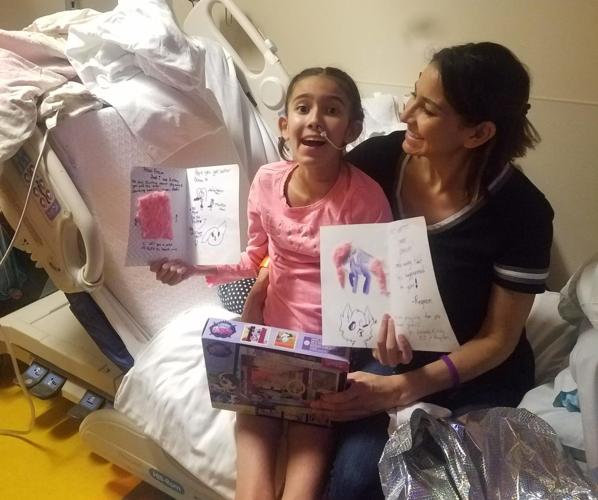
Annalise is now awake and breathing on her own. She can follow basic commands.
鈥淥pen your mouth. Squeeze my finger. Stick out your tongue,鈥� Estrada-Lujan says.
To get off the ventilator, Annalise had to prove she could breathe independently by successfully 鈥渟printing,鈥� or breathing without a ventilator for designated amounts of time.
At every stage, her community has rallied around her.
鈥淚 told her coach that she would be sprinting to prove she had strong enough lungs to get off the ventilator, so her teammates were all sprinting at Tumbleweeds,鈥� Estrada-Lujan says. 鈥淭hey were sprinting while she was sprinting.鈥�
The Tumbleweeds team has made cards for Annalise and sent a leotard to hang in her room, Tumbleweeds coach Jolly says.
鈥淪he鈥檚 very energetic and always has a smile on her face,鈥� Jolly adds.鈥� She鈥檚 caring for the other girls and constantly supportive of them. She鈥檚 just an all-around great kid.鈥�
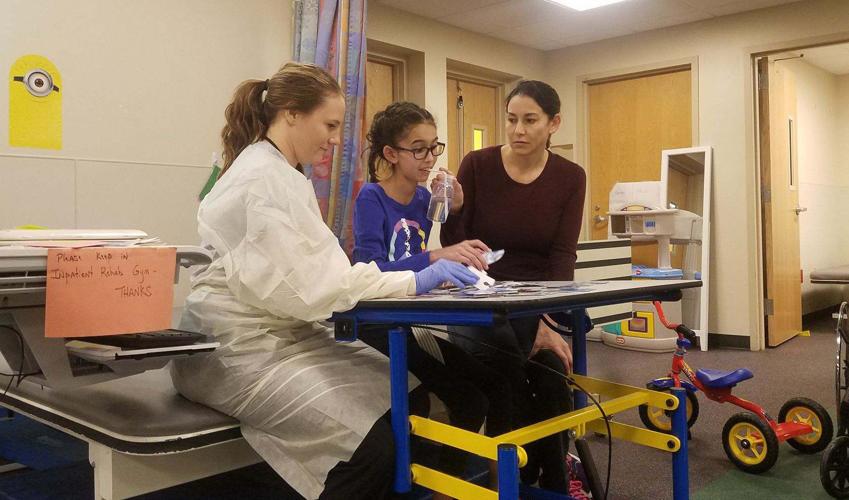
As Annalise begins therapy, the process will uncover the extent of the syndrome鈥檚 effect on her brain. She鈥檚 still having a few seizures for 8 to 10 seconds, but only one or two in the last week. They鈥檙e not continuous like before, her mom says.
鈥淲e don鈥檛 know how much brain damage has been done,鈥� Estrada-Lujan says. 鈥淪he needs speech therapy. She has tried to speak, and you can make out a few things. We don鈥檛 know what her motor skills are and the memory loss she has had.鈥�
Her ability to speak is limited, comparable to that of a 3- or 4-year-old, her mom says. It takes her time to process information.
Two GoFundMe pages currently tell Annalise鈥檚 story. One, set up by Estrada-Lujan鈥檚 aunt, Margaret Geittmann, has a goal of $100,000 to help with medical expenses. had raised more than $15,000 as of Friday. The second campaign seeks to cover the cost of Annalise鈥檚 therapy, with a goal of $5,000. had raised almost $4,000 by Friday.
Estrada-Lujan hopes that Annalise can complete some of her therapy at Tumbleweeds.
鈥淎ll of our physicians and staff are happy to see she is doing well and are encouraged by the progress she has made thus far,鈥� writes Kerrigan, the director of the pediatric epilepsy program and clinical neurophysiology laboratory at the Barrow Neurological Institute at Phoenix Children鈥檚, in a prepared statement.
鈥淲hile cannabidiol (CBD) is potentially one of the treatment avenues that has played a role in her progression, we can鈥檛 say for certain it鈥檚 what led us to this point, as we have been actively caring for and providing various treatments throughout her stay at Phoenix Children鈥檚. Controlled scientific trials of CBD are currently underway, which will hopefully clarify its role as a possible treatment for children with severe forms of epilepsy.鈥�
Annalise is making progress and working hard, but the road ahead will be a long one. Estrada-Lujan hopes they will be discharged in the next few weeks. Then they can come home to Tucson.
鈥淭o me it was so devastating because she is such a beautiful talented and kind little girl,鈥� says Geittmann, a registered nurse who lives in Illinois. 鈥淪he has done so much for others, and so it鈥檚 time that we come together and do this for her.鈥�

Annalise Lujan
Contact reporter Johanna Willett at jwillett@tucson.com or 573-4357. On Twitter: @JohannaWillett

Johanna Willett | This Is Tucson
Reporter