
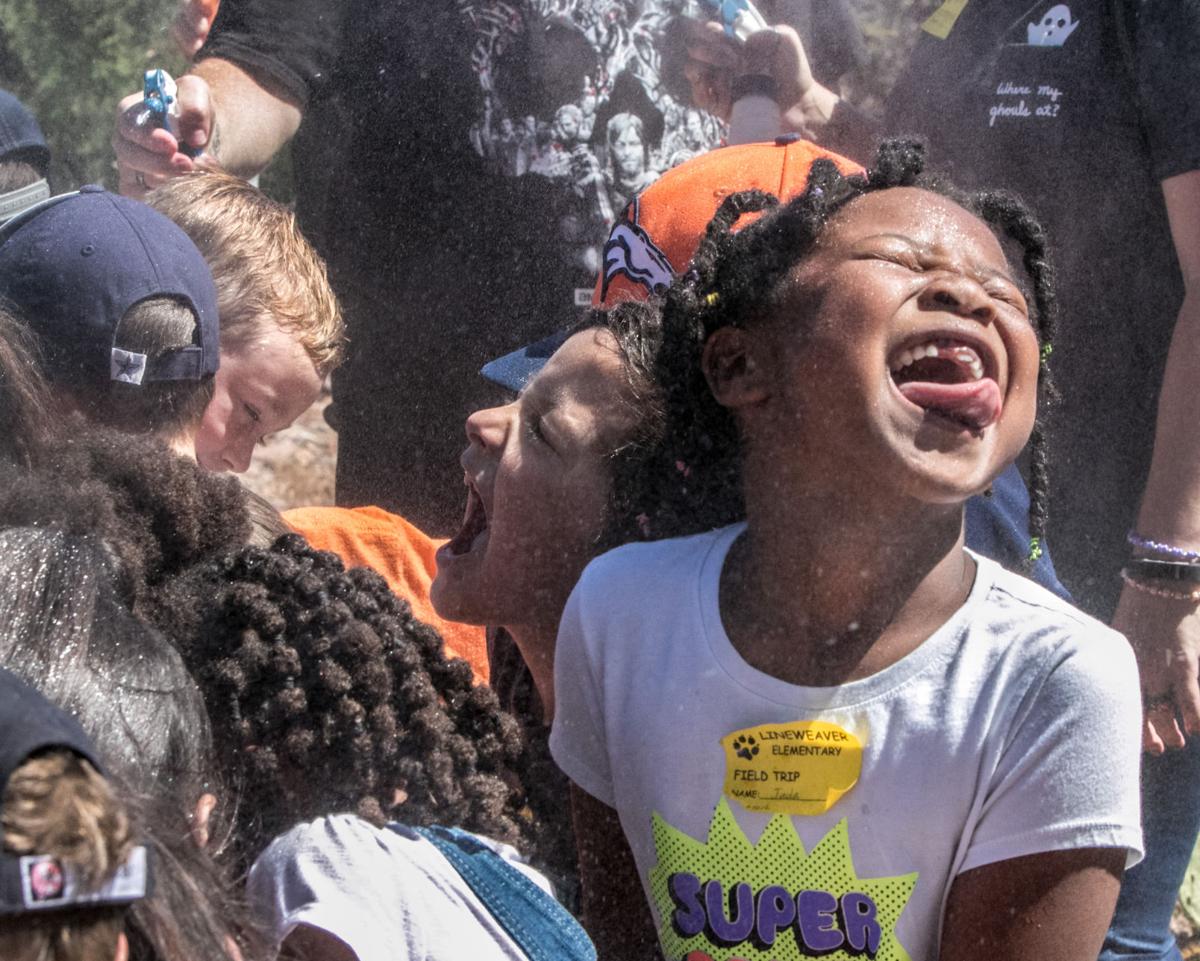
About 40 first-grade students sit in the shade of a ramada on a hot autumn day at the Cooper Center for Environmental Learning.
They were visiting Camp Cooper for a half-day field trip with TUSD鈥檚 Lineweaver Elementary School.
鈥淵ou know, this is also a classroom,鈥� says camp leader Kellie Sheehan. 鈥淭he floor is dirty. The ceiling is blue and the walls are different colors of green and brown. And, we have lots of neighbors.鈥�
After hearing from the camp leaders, the children split into two groups to go for a nature hike through the lush desert of the Tucson Mountains on the west side .
The group stops to look at a majestic saguaro with 13 arms.
The camp leader talks with the students about how long it takes for saguaros to grow .
People are also reading…
鈥淲hat would you do if you had 13 arms?鈥� asks group leader Gabe Gerson.
鈥淧lay more video games,鈥� a student yells out, earning a few giggles from the rest of the kids.
The children observe the differences between the landscape they were in when they were walking along the wash and when they were walking in the desert. Most notice there were more cacti and fewer mesquite trees outside the wash.
This goes on for the duration of the one-hour trek . Observations are made, questions asked and answered.
Budget cuts, however, and time constraints have made it harder for Tucson-area teachers to give their students out-of-classroom learning opportunities like these.
PLANNING, BUDGETING
For the Tucson Unified School District, field trips are planned at the teacher and school level.
Teachers have to fill out paperwork and explain how the trip supports what is being taught in the classroom, find funding and secure transportation.
鈥淲e have to be very specific and list standards and objectives to justify any field trip,鈥� said Cindy Smith a fifth-grade teacher at Kellond Elementary. 鈥淔or example, our Pima Air and Space trip supports our models and design unit we started off the year with and our solar-system learning we are doing now.鈥�
One set of forms teachers have to fill out is six pages long, said Elizabeth Bouwens, a second-grade teacher at Hollinger K-8. And those forms have to be turned in at least six weeks in advance if they plan on using a school bus.
Since there are costs involved 鈥� a TUSD bus is $150 and local-attraction entry fees run between $2 and $8 per student 鈥� teachers have to find ways to fund their trips.
As an example , it would cost $275 for a class of 25 students to take a bus on a field trip that has an entry fee of $5 each.
Bouwens, who鈥檚 been teaching for 24 years, said she takes her class on four to six field trips per year.
鈥淚t used to be more 鈥� six and sometimes eight 鈥� but we cannot afford them anymore,鈥� Bouwens said. 鈥淲e are lucky at my school to have an active parent association. They do fundraisers and use the money to help us with our trips. ... For other trips, sometimes we don鈥檛 get enough, so I pay the difference. 鈥�
To help ease costs, Bouwens tries to find trips that don鈥檛 cost anything. For example, Sabino Canyon is not charging for field trips this year, and the DeGrazia Gallery in the Sun has not charged in the past.
Parent-teacher organizations are a key element in funding trips, usually covering the costs of transportation. If not, teachers have to rely on parent volunteers to drive.
Families are often asked to pay entry fees, but if they can鈥檛, teachers sometimes pay for it themselves, use tax-credit money or donations.
Costs for a Camp
Cooper field trip are $5 per student for a half-day; $8 per student for a full day and $10 per student for overnight experiences. But Colin Waite, director of the Cooper Center for Environmental Learning, said the trips are so important and valuable to a child鈥檚 education that he would never turn a group away because it couldn鈥檛 afford it.
鈥淣inety percent of the audience at Cooper is TUSD schools and every TUSD school has Title 1 students, and those are the kids who need it the most,鈥� Waite said. 鈥淭heir families are not going to the Desert Museum or national parks.
鈥淭hey have parents working two jobs or don鈥檛 make enough to do those things, so when those kids arrive at the center it鈥檚 brand new. They may have never been outside of their neighborhood or city. ... If we charged at Cooper what it cost to run programs, we would eliminate our audience. I would never turn away a group because they couldn鈥檛 afford it. I would find the funding. We would find a way because it鈥檚 that important. It鈥檚 the kids who need it most.鈥�
REAL-LIFE CONTEXT
Supporters of field trips say getting students out of the classroom gives lessons real-life context, making learning more enjoyable and successful.
鈥淚f you鈥檙e learning reading, writing, math in a vacuum that has a curriculum that doesn鈥檛 relate to the world they live in, they鈥檙e less likely to enjoy and appreciate learning it,鈥� said Waite.
鈥淚f you teach a concept in the classroom and you come to Camp Cooper and see it in action 鈥� you鈥檙e using senses to explore and see wildlife and saguaros are towering over you 鈥� there鈥檚 this inspiration that happens that makes them more successful.鈥�
Amber Gurney, a parent chaperon on the Cooper trip, wants the real-world experience for her kids.
鈥淚 want them to learn real stuff and not just book stuff,鈥� Gurney said.
Because of the economic challenges its families face, the Sunnyside School District places a high value on field-trip opportunities, said Victor Mercado, a Sunnyside spokesman.
鈥淔ield trips 鈥� whether they are academic, athletic, social or related to the fine arts 鈥� offer our kids opportunities to travel to different cities, visit college campuses and interact with students from other districts who come from diverse backgrounds,鈥� Mercado said. 鈥淔ield trips enrich the student experience at all levels.鈥�
Contact Angela Pittenger at 573-4137 or apitteng@tucson.com. On Twitter: @CentsibleMama
Briana Apodaca, a University of Arizona journalism student who is an apprentice at #ThisIsTucson, contributed to this story.