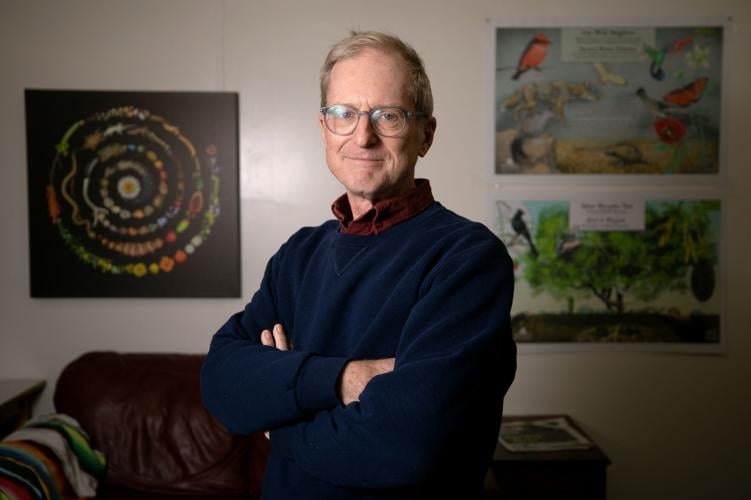
Artist Paul Mirocha rarely encounters coyotes in his downtown Tucson neighborhood, but he saw one the morning he went to meet author Barbara Kingsolver to talk about the children鈥檚 book they were making together.
鈥淚t felt like an omen,鈥� the accomplished illustrator said.
Mirocha has teamed with the award-winning author and her daughter, Lily, on a new educational picture book called 鈥淐oyote鈥檚 Wild Home.鈥�
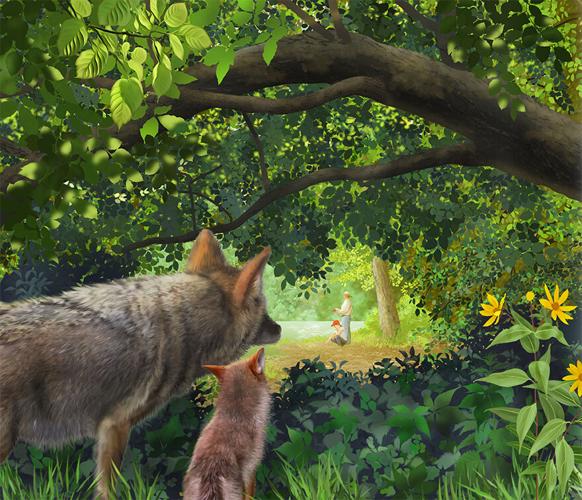
The book follows a coyote and a pup and a girl and her grandfather as they wander through the same Appalachian forest in search of adventure.
The coyotes hunt and frolic, the humans fish and camp, and the reader learns about the important role these adaptable predators play across their growing range.
Some people consider coyotes a pest or a danger, Mirocha said, but they are just doing what is necessary to survive, just like us. 鈥淭he story is to accept that and respect them,鈥� he said.
People are also reading…
鈥淐oyote鈥檚 Wild Home鈥� is set for release on Nov. 28 through The Gryphon Press.

Tucson-based illustrator Paul Mirocha collaborated with award-winning author Barbara Kingsolver and her daughter, Lily, on a children鈥檚 book which is set to release on November 28. The title of the book, 鈥淐oyote's Wild Home.鈥澛�
It is the first published book for Lily Kingsolver, an environmental educator in Florida, and the first children鈥檚 book for Barbara Kingsolver, the best-selling author who launched her career in Tucson and won the Pulitzer Prize for Fiction this year for her latest novel 鈥淒emon Copperhead.鈥�
Mirocha has , including several other picture books for children.
He said he is probably best known locally as a long-time on Tumamoc Hill and for the artwork he did for an acclaimed, genre-blending 2016 anthology by The University of Arizona Press.
His illustrations also have appeared in previous books by Kingsolver, including her 2002 essay collection 鈥淪mall Wonder鈥� and her 2000 novel 鈥淧rodigal Summer,鈥� in which coyotes play a central role.
He said he and Kingsolver are old friends who first met in the 1980s when they both worked at the U of A鈥檚 Office of Arid Land Studies.

The cover of the new educational picture book by award-winning author Barbara Kingsolver, her daughter, Lily Kingsolver, and Tucson illustrator Paul Mirocha.
Back then, Mirocha said, she was earning a paycheck as a science writer and working on a novel at night 鈥渨hile she figured out what she wanted to do next.鈥� That little side project turned out to be 鈥淭he Bean Trees,鈥� her first best-seller, set in Tucson.
Mirocha said Kingsolver tried her hand at children鈥檚 books in the past, but she scrapped them because she didn鈥檛 like how they turned out. It was Lily鈥檚 interest in the idea that convinced Kingsolver to sign on to the coyote book, he said.
鈥淪he called and asked me to illustrate it. Of course, I couldn鈥檛 say no,鈥� Mirocha said.
He said the deadlines for the picture book were intense. He had to produce 32 large spreads for the book in about 8 months, using a digital painting technique he has mastered. 鈥淎t some points I was doing a page or spread per week,鈥� he said.
Being an illustrator can be lonely, Mirocha said, but this project was just the opposite: It was a lively collaboration with a dear and loyal friend.
, Kingsolver said she and her daughter 鈥渄ecided that after centuries of bad wolves and bears, predators needed better representation in children鈥檚 books.鈥�
She said Mirocha 鈥渂rought our best dreams to life.鈥�
The work began in September of last year when Kingsolver invited the artist to her home in southwestern Virginia to discuss the book and learn about its setting.
He was leaving his house in Armory Park to catch his early morning flight to the East Coast when the aforementioned coyote trotted across the road in front of him in an industrial area about two blocks from home.

A coyote and pup watch a little girl and her grandfather in one of Tucson illustrator Paul Mirocha's paintings for the new children's book "Coyote's Wild Home."聽
鈥淚 slowed down, and it turned to look at me briefly, then was gone,鈥� he said. 鈥淲henever I see a coyote, I see it as a communication somehow. I think, 鈥楽omething unexpected is going to happen, and it鈥檚 best not to judge it as good or bad.鈥欌��
During the week-long book-planning visit, Kingsolver and her husband, Steve Hopp, put Mirocha up in a cabin about a quarter of a mile from their house and introduced him to their lush, private hollow in the Appalachians. The forest locations in the book are based on real spots the author and her family know well.
鈥淚 went to all these places and got really inspired. It was like going to scenes from a movie,鈥� Mirocha said. 鈥淚t was so different than the Sonoran Desert. It was just exploding with green. It was a totally new exploration.鈥�
The trip also served as a crash course in the botany of Appalachia. He made sketches and took 鈥渢ons of reference photos,鈥� as Kingsolver and Hopp acted as teachers and tour guides.
At one point, they picked native pawpaw fruit 鈥� sort of a cross between a banana and a mango that grows in eastern forests 鈥� and Kingsolver baked them into a pie.
鈥淭hey showed me all sorts of stuff,鈥� Mirocha said. 鈥淚n order to do the drawing, you need to learn the science behind it.鈥�
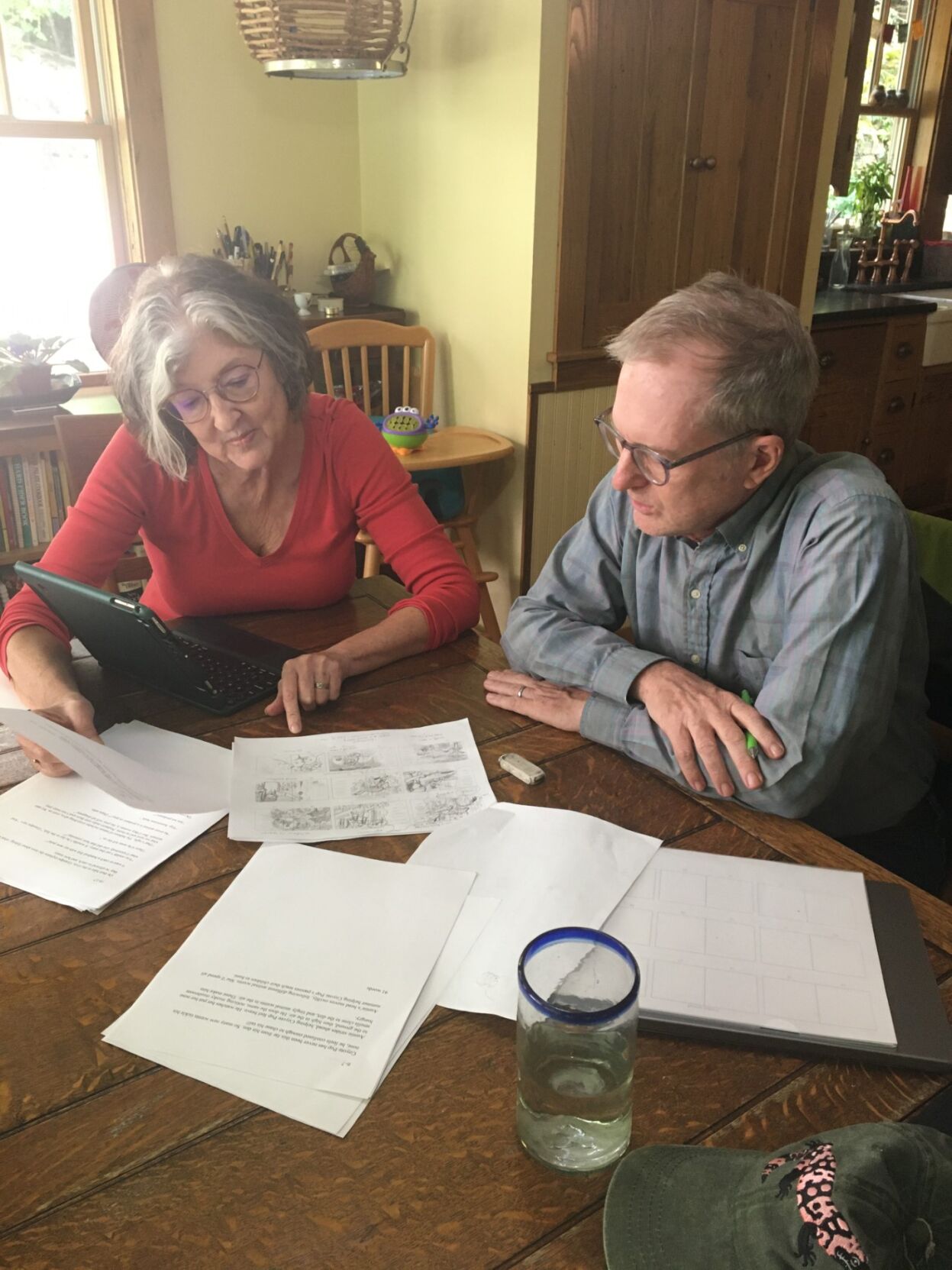
Early in the visit, he and Kingsolver sat together at her kitchen table 鈥� and Lily joined them over Zoom 鈥� so they could sketch out a storyboard for the entire book.
鈥淭hat was just indescribably fun,鈥� Mirocha said of the whole experience. 鈥淚t was really a treat to work with Barbara and Lily.鈥�
Reporter Henry Brean filmed this coyote chorus at Crooked Tree Golf Course on Dec. 27, 2022.