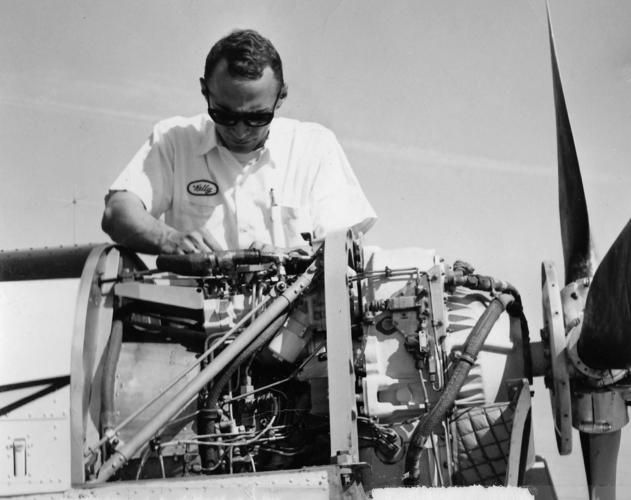
Jim Kelly spent almost three years as an aircraft mechanic at Marana airfield before he found out who he was really working for.
One day in 1966, Kelly鈥檚 boss at Intermountain Aviation pulled him off the flight line and sent him to see a man he had never met in an office he had never been to in downtown Tucson.
鈥淚 didn鈥檛 know who this guy was, but he said, 鈥榃e want you to take a polygraph test,鈥欌�� the 77-year-old recalled. 鈥淚 said, 鈥榃ell, what for?鈥� and he said, 鈥業 can鈥檛 tell you.鈥欌��
The next day, he was called into a meeting with the airfield鈥檚 personnel manager, who handed him an unexpected paper to sign.
鈥淚t was a standard government secrecy document: You can鈥檛 talk about what you鈥檙e about to read or whatever,鈥� Kelly said. 鈥淏asically, if you do, it鈥檚 10 years in Fort Leavenworth.鈥�
People are also reading…
Then the manager brought out a folder that said 鈥淭op Secret鈥� on it. That鈥檚 when Kelly learned that the airplanes he was working on were being used to fly covert missions all over the world.
Intermountain Aviation was a front for the CIA.
鈥淏asically they needed their own airline,鈥� said historian Jason Gart, who wrote about the agency鈥檚 clandestine air service as part of his doctoral thesis at Arizona State University. 鈥淭his is Arizona at the heart of the Cold War.鈥�
Vanishing tail numbers, boxes bound for Nepal
According to Gart鈥檚 research, Intermountain Aviation opened in Phoenix in 1961 as a self-described 鈥渁ircraft charter and rental service.鈥�
The following year, the company moved to the decommissioned World War II-era military airfield in Marana, where it operated, largely in plain sight, as a staging ground for CIA missions in Southeast Asia, Tibet, Africa and South America.
To maintain its cover, Intermountain also took on legitimate jobs, from repairing firefighting aircraft in Idaho to airdropping stock trout into lakes around the state for the Arizona Game and Fish Department.
鈥淭hink about it: Probably the best way to keep a secret is to keep it out in the open,鈥� said Gart, now the vice president of History Associates Inc., a historical research firm in Rockville, Maryland.
Intermountain even managed to fool many of its own employees.
鈥淲e had maybe 60 to 80 people working there, and there were probably 10 people that knew what was going on. I mean officially,鈥� Kelly said.
The revelation came as a shock to him at first, but the more he thought about it, the more it helped explain some of the weird stuff he had seen at work.
For one thing, Intermountain operated a bizarre mix of aircraft for a commercial company, including Navy T-28 trainers, old C-46 cargo planes and a B-17 bomber.
鈥淎nd in the flight line office, we would have boxes that would say Kathmandu on them and funny names like that,鈥� Kelly said. 鈥淣obody knew why or who the customers were, you know. Nobody ever said anything.鈥�
Then there was the time he was spraying down an airplane after an oil leak and the tail number washed off.
When he asked his boss about it, he was told someone must have used water-based paint by mistake. Kelly was 22 years old at the time, so he never gave it another thought. At that age, he said, 鈥測ou鈥檒l believe anything.鈥�
pilots who disappear, cargo drops in the desert
Soon after Kelly was let in on the company鈥檚 true mission, Intermountain began sending him on monthly cargo flights to various military installations from San Francisco to Andrews Air Force Base in Maryland.
Three men 鈥� a pilot, a co-pilot and Kelly as flight engineer 鈥� would take off in a 鈥減rivate鈥� transport loaded with CIA deliveries, and they might not return to Marana for a week.
鈥淲e鈥檇 have total access to any Air Force base, and that鈥檚 not normal for civilian people to land at Air Force bases,鈥� Kelly said. 鈥淚 couldn鈥檛 tell you what was in the cargo, because we didn鈥檛 open the boxes. But they would have different countries鈥� names on there. Southeast Asian countries would be on the box.鈥�
It was around that same time that Kelly found out what Intermountain鈥檚 B-17 was for.
The World War II bomber was being outfitted for something called the Fulton Skyhook, an experimental system that allowed the aircraft to pick up downed pilots or equipment without landing.
You can see the skyhook in action, snatching James Bond and his female companion to safety, at the end of the 1965 movie 鈥淭hunderball.鈥�
鈥淭hat was our airplane. We did that,鈥� he said.
The CIA also used Marana airfield to develop new ways to accurately drop supplies and equipment at low altitudes, day or night.
鈥淲e would drop cement blocks or 55 gallon drums of water or whatever to simulate cargo drops,鈥� Kelly said. 鈥淪ometimes it was on Marana airfield. Other times we鈥檇 fly around Arizona, and they鈥檇 just pick a spot that they had predetermined. We鈥檇 dump the cargo out, and wherever it landed it landed. They鈥檇 have guys there to retrieve it.鈥�
Because of the secrecy of their work, Kelly said it wasn鈥檛 unusual for his Intermountain co-workers, especially the pilots, to disappear for weeks or months on end.
Some people went out on assignment and never came back.
Kelly recalled an ex-Navy pilot named John Merriman, whose T-28 was shot down in the Congo during ground attack training for the CIA鈥檚 campaign against the communist-backed Simba rebels. Merriman survived the crash, but he died from his injuries several weeks later during transport to a hospital.
Merriman鈥檚 wife was initially told her husband was killed in a car accident in Puerto Rico. According to Kelly, Merriman is one of the few civilian contractors to be honored with a star on the memorial wall at CIA headquarters.
Learning to lie on two continents
Kelly was born in Rochester, New York, and moved to Tucson as a child, when his dad took a job at Hughes Aircraft in 1955.
He said 鈥渉orrible鈥� eyesight kept him from his dream of becoming a fighter pilot, so he moved to California to train as an aircraft mechanic after he graduated from Salpointe Catholic High School in 1960.
He returned to Tucson a little over a year later, but he struggled to find work in the local aviation industry.
After a backbreaking summer as a landscaper, he managed to pester Intermountain into hiring him as a mechanic 鈥渨ay out in the boonies鈥� for $2 an hour.
Over the next three years, Kelly worked his way up from the hangar to the flight line and, finally, to that lie-detector test downtown.
After that, nobody in his life got a straight answer when they asked him about his job.
鈥淵ou just learn to lie to people. It鈥檚 what you do. Even the guys I grew up with, went to high school with and I鈥檓 still friends with 鈥� they never knew,鈥� Kelly said. 鈥淢y dad worked at Hughes, of course, and he said he had somebody tell him that the CIA was running Intermountain. I said, 鈥楧ad, you鈥檙e full of beans.鈥欌��
Kelly drew his first overseas assignment after about four years on the job.
Intermountain sent him to South America as part of its 鈥淓cuador contract,鈥� which mostly involved ferrying CIA informants around the country in a twin-engine Cessna 411 that, at least on paper, was assigned to the American embassy in the capital city of Quito.
鈥淲e were supposedly operating for the ambassador, but actually it was what they called the air attache office. And that was the CIA office,鈥� Kelly said. 鈥淭he ambassador we flew one time.鈥�
Jack Cole was the pilot; Kelly was his flight engineer and on-board mechanic. Roughly five days a week for eight months straight, the pair flew everywhere together.
鈥淥ur main job was just to transport people. You know, counterinsurgency guys. We鈥檇 pick them up and take them back to the embassy, they would debrief them, and (then) we would take them back to their home,鈥� Kelly said. 鈥淭hat鈥檚 what鈥檚 kind of funny. They say Russia is interfering with our elections. Well, we do it all the time. That鈥檚 what the CIA does, they interfere.鈥�
Through it all, Kelly鈥檚 airplane never came close to crashing. It was never shot at. The only time Kelly had a gun pointed at him was when he danced with the wrong girl in a bar, and a Marine guard from the embassy had to disarm her jealous boyfriend.
Out through the gate with eyes wide open
After his return from Ecuador, Kelly married a woman he met while working at Marana airfield. She was employed by Intermountain, too, but she didn鈥檛 find out about the CIA connection until the company briefed her about it a few months after the wedding.
鈥淭hey take the wives in, because it鈥檚 hard to explain to a wife why you鈥檙e going places and then you don鈥檛 come back when you say you鈥檙e coming back,鈥� Kelly explained. 鈥淗ad we not been married, she would have never known.鈥�
Kelly took his secrets with him when he left Intermountain for good in October 1969, just as the company was talking about sending him to maintain aircraft at a frozen, oil pipeline construction site on the North Slope of Alaska.
鈥淚t was a unique experience to say the least, but they didn鈥檛 pay a lot of money,鈥� he said of his time as a CIA contractor. 鈥淚 was married, and I wanted to get a better job, so I quit and went to work for the Air National Guard.鈥�
Kelly decided it was finally safe to tell his story a few years ago, after his long-defunct former employer had been thoroughly exposed, along with the rest of the CIA鈥檚 secret flight operation.
鈥淭he CIA Connection,鈥� Kelly鈥檚 self-published book on his time at Intermountain, came out in 2013. He has since started work on a sequel about his evolving view of the intelligence community and government as a whole.
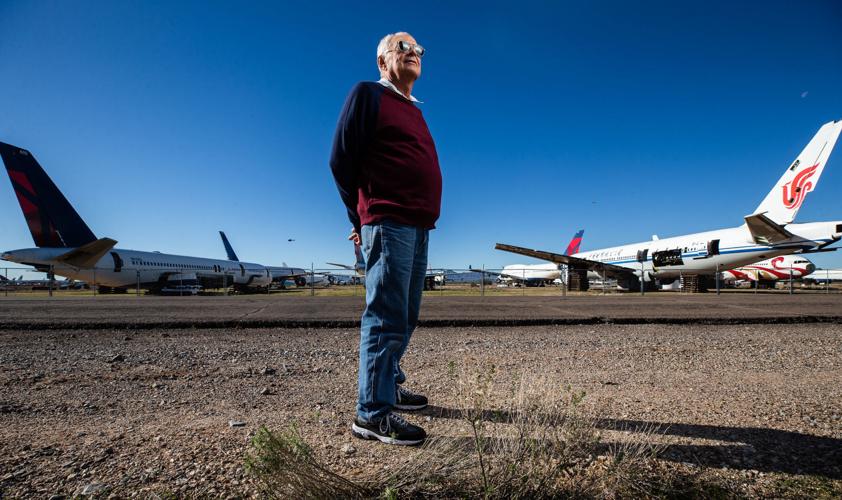
Earlier this month, Kelly made his first trip back to Marana airfield in 50 years, since the day he quit his job there and drove out through the main gate for the last time.
The place is called Pinal Airpark now, and much of it is being used to store old passenger jets, but there鈥檚 still a sizable military presence. As Kelly steered his red Corvette down the air park鈥檚 main road, soldiers with parachutes drifted down from transport planes that buzzed through the sky overhead.
The only thing Kelly saw that looked the same as it did in the 1960s was the old airfield tavern where he used to tend bar after work in exchange for free food and drinks.
He said he was just a naive kid when he went to work for Intermountain and the CIA. The experience really opened his eyes.
鈥淢y little stint with those guys changed my mind about the government. Because what I found is the CIA can do just about whatever it wants, and unless they get caught, nobody knows and nobody cares,鈥� he said.
And though Kelly still considers the CIA a 鈥渘ecessary evil,鈥� he thinks the agency and its leaders need to be questioned, scrutinized and kept in check.
鈥淭he government, you can鈥檛 believe them. They say one thing, and then they just go ahead and do something else. Or they give you a bogus reason why they鈥檙e doing it,鈥� he said. 鈥淪o I鈥檓 very skeptical now. I didn鈥檛 question anything before I went there. Now I question everything.鈥�
Contact reporter Henry Brean at hbrean@tucson.com
or 520-573 4283. On Twitter: @RefriedBrean

Henry Brean
Reporter