

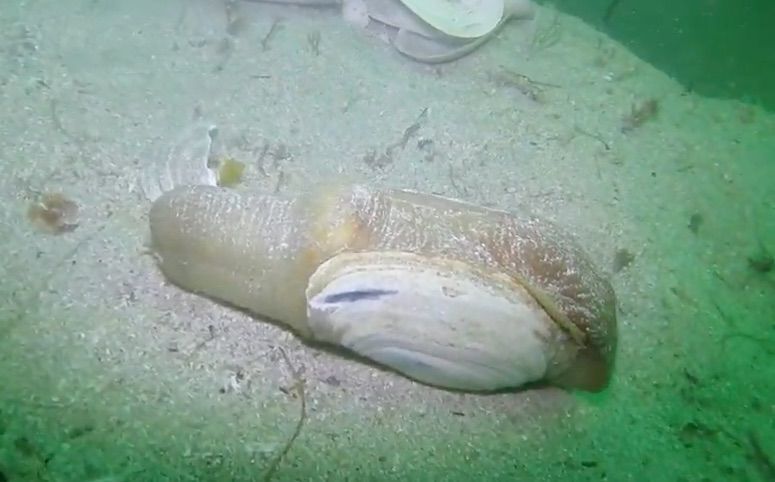
For years, scientists have studied trees to learn about yearly rainfall, temperature and climate over time. Now, a University of Arizona researcher is diving a little deeper to gather new climate data from an unexpected sea creature 鈥� a clam called a geoduck.
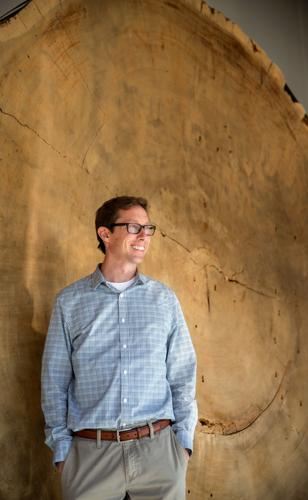
Funded by a three-year, $480,000 National Science Foundation grant, Bryan Black, an associate professor at the UA鈥檚 Laboratory of Tree-Ring Research, is using geoduck shells from the northeast Pacific Ocean to create a chronological history of climate in these waters. Geoduck, pronounced 鈥済ooey duck,鈥� are a species of large edible saltwater clam.
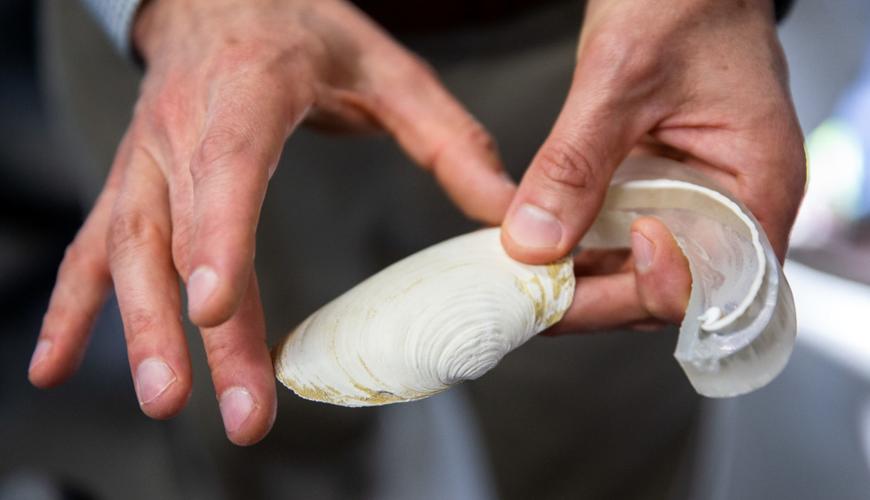
Just like the rings that trees develop every year, clams also have climate information embedded within their shells. Each striation, or ridge, on the shell of a geoduck represents the passing of a year, and it contains clues about oceanic climate.
鈥淚t turns out that clams form annual growth increments, or rings, just like trees do. And you can see these on the outside of many shells, including clams,鈥� Black said. 鈥淪o, what we can do is cut through the middle of the shell and very carefully polish and prepare that surface to clearly reveal those growth increments.鈥�
People are also reading…
Geoducks can live to be about 180 years old, but their shells can survive in the water for an additional 2,000 years, according to radiocarbon data.
鈥淲e can measure those growth increment widths to tell us something about the climate those clams experienced,鈥� Black said. 鈥淭he width of each increment, or ring, in these clams is very strongly related to the temperature of the water temperature that they experienced that year.鈥�
Climate Trends
For this project, Black hired a team of who commercially fish for geoduck, to collect hundreds of shells and deliver them to his lab.
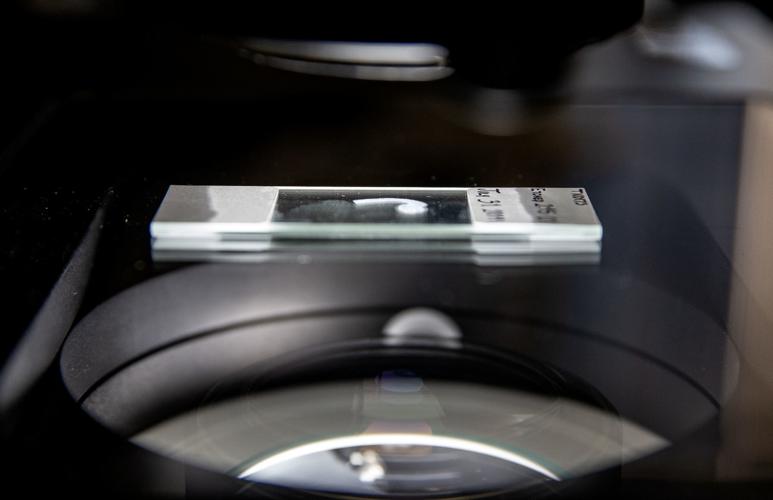
Once received, Black and his team slice the shells, cast them in epoxy, polish the surface of the epoxy, and measure the width of each striation. Then, through a process called crossdating, they establish the exact calendar year each striation was formed.
鈥淐rossdating is the foundation of dendrochronology,鈥� Black said. 鈥淎s climate varies from year to year, it induces a synchronous growth pattern or 鈥榖ar code鈥� among all individuals of a given species and site. By matching those 鈥榖ar codes鈥� among shells, we can determine exactly when each individual lived and extend our record back in time.鈥�
Using these techniques, Black and his team have successfully recorded a year-by-year history of the Pacific Ocean鈥檚 climate dating back to 1728.
In the Pacific North, there is a pattern of flipping between cool periods and warm periods every 20 to 30 years. According to Black, geoducks are very consistent in picking up these climate shifts, which is important because that flip-flopping between warm and cool periods is difficult to capture using trees alone.
鈥淲henever the North Pacific slips between one of these 20- or 30-year warm phases to a cool phase, it can profoundly rearrange the marine ecosystems and their functioning, with major impacts on fisheries, he said. 鈥淭his flip-flopping also strongly influences fire and drought, snowpack and river discharge in western North America, but we really don鈥檛 know how it鈥檚 behaved in the past, which is the goal of this research.鈥�
With the data they鈥檝e collected so far, Black said they鈥檝e noticed strong warming trends, especially since the 1920s. Black hopes that as they continue to collect data, they鈥檒l begin to understand this warming trend through a much longer-term context.
For postdoctoral researcher David Reynolds, this project is producing data that will have real world, global implications.
鈥淥ur understanding of how the oceans interact with the global climate is really not that great. Our modern observations really only go back about 50 years,鈥� Reynolds said. 鈥淭his type of project where we鈥檙e looking at shells from the North Pacific really allows us to tackle those really big-picture, important questions. When we can integrate these data with numeric climate models, we can then help policymakers really understand how the climate is going to change in the future and what the uncertainties are around that.鈥�
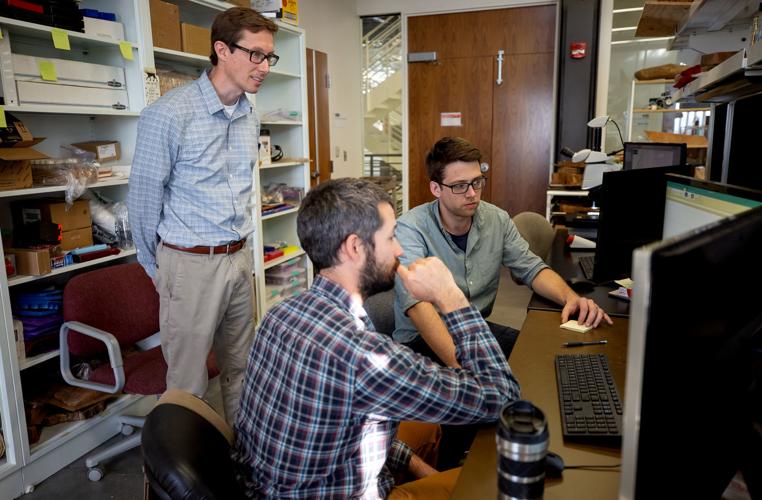
Inside Black鈥檚 lab, Reynolds works with Ph.D. student David Edge and undergraduate Christine Outridge to process the clams, take images and analyze the data using a computer program that they developed.
Next Steps
The team hopes to be able to develop a 1,000-year chronology using climate information from geoducks.
As a researcher in the UA鈥檚 Tree Ring Lab, Black also hopes to combine this data with the chronologies of trees, which date as far back as 10,000 years.
鈥淲e can relate this long geoduck chronology to trees to see if trees provide us some complimentary information about climate in the past and how the ocean and the atmosphere are linked,鈥� he said.
Black also has colleagues who are working to develop chronologies from clams in the North Atlantic and is hoping to be able to compare data between two oceans to understand how climate has affected them differently over long periods of time.
鈥淲e can get histories that span most of the past century, and that tells us a lot,鈥� Black said. 鈥淲ith these long chronologies, we can establish robust relationships between the biology and the climate.鈥�
Contact reporter Jasmine Demers at jdemers@tucson.com
On Twitter: @JasmineADemers

Jasmine Demers
Reporter


