
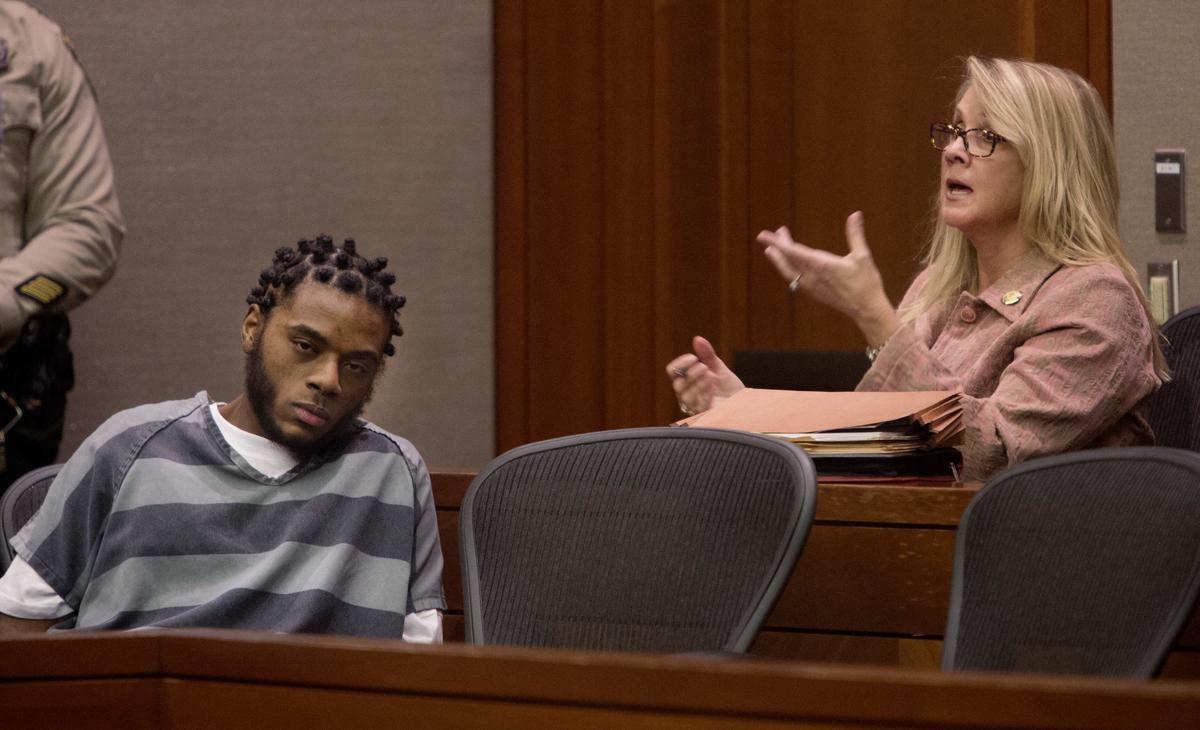
A judge has ordered that a Tucson man accused in two killings be involuntarily medicated in an effort to restore him to competency.
King Yates is facing first-degree murder charges in connection with the 2016 shooting death of his wife Cassandra and the 2017 asphyxiation death of Branden Roth, Yates鈥� cellmate in the Pima County jail.
Yates initially passed a competency exam, but after several months of erratic courtroom behavior 鈥� including firing of two attorneys 鈥� Pima County Judge Howard Fell ordered a repeated competency exam.
Yates had been seeking to represent himself, but the competency exam found that he was not only incompetent to defend himself, but also incompetent to stand trial. Fell has appointed Tucson attorney Bobbi Berry to serve as Yates鈥� advisory counsel.
In November, Fell ordered Yates to participate in the Pima County jail鈥檚 Restoration to Competency program, which Yates had successfully completed in a past case.
People are also reading…
During a hearing last month, it was revealed that Yates agreed to take medication recommended by the doctor that oversees the program, but after taking one dose refused all subsequent administrations.
Dr. David Jendusa testified that he previously worked with Yates in 2015 and saw him successfully restored to competency after taking an oral antipsychotic medication called Seroquel. Jendusa said that at the time, Yates agreed to take the oral medication under the threat of forced injections, but such an option is not available under the current law unless a judge issues an order.
During the January hearing, Berry objected to the involuntary medication of Yates, saying she believed the trauma could be detrimental to his mental health. Jendusa said that if Yates was traumatized as a result of being restrained, it would not be significant and would be short-lived.
Berry renewed her objections in court Monday, saying she didn鈥檛 believe it was in Yates鈥� medical best interest or medically appropriate to administer injections against his will.
鈥淲e鈥檙e at a different state in Mr. Yates鈥� life now,鈥� Berry said, adding that his psychotic features are more apparent now than they previously were.
Berry went on to say that the court can鈥檛 expect the jail staff to be gentle or empathetic and that the situation would likely turn into a 鈥渨restling match鈥� between Yates and corrections officers.
Fell said that the only way Yates can avoid being prosecuted in connection with the two murders is if he鈥檚 found not competent and unable to be restored to competency.
鈥淭hat鈥檚 never going to happen,鈥� Fell said.
Deputy Pima County Attorney Jonathan Mosher said that for years, he鈥檚 had to repeatedly tell the victims鈥� families that the case is delayed and there鈥檚 nothing he can do about it.
Mosher renewed his request for another doctor to examine Yates for symptoms of malingering, a condition in which one exaggerates or fakes symptoms for their own benefit, such as escaping prosecution. Mosher said that while the previous competency exam had addressed some of Yates鈥� mental health issues, he hadn鈥檛 seen any structured, validated measures of malingering being implemented.
鈥淚鈥檝e got a really cloudy picture of this man鈥檚 competency or not,鈥� Mosher said. 鈥淚鈥檓 begging to get someone in to evaluate Mr. Yates who is willing to do the heavy lifting.鈥�
Fell said he鈥檇 take both issues into consideration, expressing concern that if he ordered forcible medication, it could trigger an appeal, which would further delay the case. He also said that the Restoration to Competency staff had said they can鈥檛 proceed unless or until Yates is medicated.
鈥淭here are constraints the law puts on all of us, and I鈥檓 obligated to follow the law,鈥� Fell said.
On Wednesday, Fell denied the state鈥檚 request for another psychological exam but ordered Yates be subject to involuntary medication.
Fell said in his written ruling that Yates has been diagnosed with schizoaffective, bipolar and anti-personality disorders by two doctors and diagnosed with 鈥渟ignificant mental illness鈥� by four additional doctors. To meet the criteria for forcible medication, the state had to satisfy each of the following factors: Important governmental interests are at stake, involuntary medication will significantly further those interests, involuntary medication is necessary to further those interests and administration of the drugs is medically appropriate.
Fell said that based on Jendusa鈥檚 testimony, the state has made its case through 鈥渃lear and convincing evidence鈥� and not only is Yates incompetent to stand trial, but he鈥檚 also incompetent to refuse medication and is subject to involuntary treatment.
Yates鈥� next court appearance is scheduled for March 25.