A Tucson man who was paralyzed after Pima County Sheriff鈥檚 Department deputies entered his house and shot him has filed notice that he intends to sue the county and the department for $176 million, alleging they raided his house despite being made aware he was facing swatting threats from hackers.
In a notice of claim filed by Axeel Melendez鈥檚 lawyer July 24, Melendez and his mother allege the deputies鈥� actions show 鈥渞ash decision-making and recklessly dangerous shoot-from-the-hip mentality鈥� at the department.
Melendez鈥檚 case, previously reported by the Star, is drawing new attention to swatting, an extortion tactic hackers use that involves making fake calls to law enforcement with the intention of causing officers to raid a home.
People are also reading…
What is included in the $176 million?
The claim names Pima County Sheriff Chris Nanos and his legal advisor, 13 deputies, 911 operators, Pima County Attorney Laura Conover, Pima County Risk Management, and the Board of Supervisors.
Injury lawyer Dev Sethi argues Melendez deserves compensation for past and future medical expenses as he will likely face the rest of his life as a paraplegic, totaling $25 million. The claim says at least two of the deputies' eight bullets hit him, causing a complete spinal cord injury and breaking his right leg.

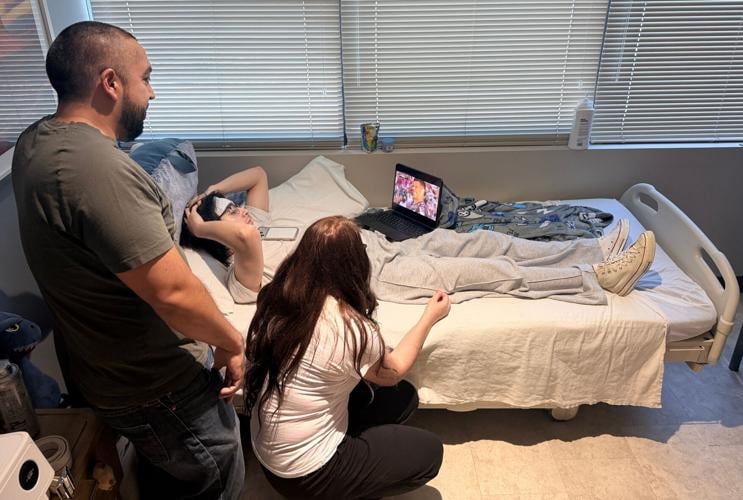
Family members join Axeel Melendez in watching a soccer match from his hospital bed.
Besides medical expenses, Melendez鈥檚 lawyer also claims his injuries will not allow him to pursue the career he planned for and that he deserves up to $7 million in wage losses. Melendez, now 24, attended an auto trade school and wanted to work on a Formula 1 engineering team, the claim reads.
Melendez is demanding $80 million each from both the county and the sheriff鈥檚 department.
Including an additional $16 million for emotional damages to his mother, Carmen Melendez, the total claim reaches $176 million.
Prior fake threat ignored
Melendez was hacked after playing an online video game earlier this year. After hackers had his personal information, they began threatening to call the police to his house or report his family to Immigration and Customs Enforcement if he didn鈥檛 send them money. In response, Melendez called the sheriff鈥檚 department and asked for help.
The deputy who followed up on Melendez鈥檚 initial call said the threat information would be relayed to the proper channels.
鈥淪ince he called law enforcement to get ahead of the false reporting, he should be alright, and that, if any reports come in afterward, we will contact him regarding those reports, and he would just need to let deputies know that he had been a victim of fraud and hacking,鈥� an incident report reads.
Sethi highlights that one call for Melendez鈥檚 address was determined to be fake by a PCSD deputy just two days before, on April 8.
The next day, a call to the city鈥檚 non-emergency 311 number claimed to be Melendez, saying his father had just shot his sister. Sethi alleges officers missed that Melendez had already been a victim of a fake threat.
鈥淧CSD had already received, recognized, and cleared false reports for Axeel at the same residence that also came in through 311,鈥� the claim reads.
Transcripts show officers also ignored multiple signs the call was likely fake, Sethi alleges, including that it came from an out-of-state Wisconsin phone number, the caller gave inconsistent details, and there were no background sounds expected in a shooting situation.
鈥淣o communications professional or law enforcement officer appropriately recognized or properly responded to any one of the call鈥檚 many red flags,鈥� he wrote.
After deputies were on their way to his house, Sethi writes a deputy radioed a warning about the swatting situation and mentioned the first fake call. Sethi alleges the three responding deputies proceeded with entering the home without trying to contact Melendez with phone numbers on file.
鈥淭he available transcript and CAD, computer-aided dispatch, does not indicate that PCSD dispatch called Axeel鈥檚 known phone number or anyone else鈥檚 phone number in the home, meaningfully cross-checked the call against the April 8 swatting report before escalating the response, or slowed the response to account for the obvious risk that this was the exact false report Axeel had warned PCSD about,鈥� the claim reads.
Deputies smashed Melendez鈥檚 bedroom window, causing him to wake up his mom and find her registered handgun.
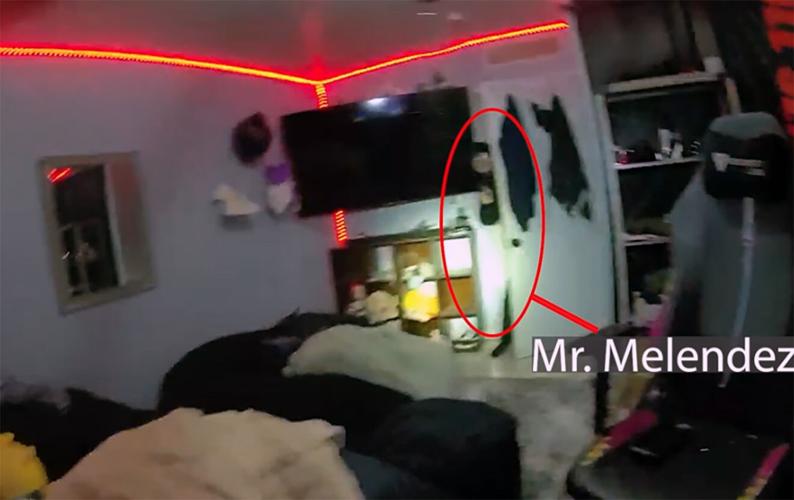
Body camera footage from the April 10 shooting, released as part of the Pima Regional Critical Incident Team investigation, shows Melendez opening the door to his bedroom holding the gun.

Video released last month showed the moments before the shooting of Axeel Melendez, 23, when Pima County Sheriff's deputies forced their way into his house while answering a fake emergency call about a shooting. Melendez, who was holding his mother's handgun, was shot and left paralyzed.
PCRIT is a multi-agency law enforcement task force that investigates shootings involving police.
The claim cites Melendez鈥檚 interview with PRCIT, where he said he believed an intruder had smashed the window.
Sethi said Melendez did everything right in trying to get ahead of a swatting threat.
鈥淗e immediately reported the swatting threats against him, he asked the sheriff鈥檚 department for help, and he believed PCSD personnel when they promised to keep him safe. The county鈥檚 actions left Axeel no choice but to move forward with a Notice of Claim.鈥�
A notice of claim is the first step in a lawsuit against the government. Pima County and PCSD have 60 days to respond before the claim is automatically treated as denied under Arizona state law.
The Sheriff鈥檚 Department declined to comment, citing ongoing legal proceedings. The Pima County Attorney鈥檚 Office said it is aware of the lawsuit but could not comment further.