
Even with all that has happened, it didn鈥檛 become clear that Arizona residents are subjects of a new-technology experiment until March 18.
That was the night when an Uber self-driving vehicle struck and killed Elaine Herzberg as she pushed her bike across a Tempe street.
It鈥檚 no coincidence that Uber and other companies have been testing autonomous vehicles in Arizona. It鈥檚 Gov. Doug Ducey鈥檚 economic policy to remove regulatory barriers and invite cutting-edge technology companies of all sorts to settle in Arizona.
The hoped-for effect is that Arizona will boom as a hub for a variety of technologies. Vector Space Systems, the Tucson-based rocket and satellite company, is one example the administration cites. It is a satellite-based crypytocurrency. Another is , a Chinese company developing self-driving commercial trucks in Tucson.
People are also reading…
The problem: Ducey鈥檚 broad deregulation is turning Arizona residents into unwitting subjects of technological experiments.
Soon, that experiment will open us up as a test market for new financial technologies. A new state law has turned Arizona into a 鈥渇intech sandbox鈥� 鈥� a place where companies can apply to experiment with their new currencies, lending and payment technologies. Think Bitcoin or Venmo.
Arizonans will be the subjects of the experiment, and, hopefully, the beneficiaries.
In an email, Susan Marie, the spokeswoman for the Arizona Commerce Authority, explained the state鈥檚 approach this way :
鈥淲hile we鈥檙e not trying to 鈥榖e the next Silicon Valley,鈥� the history of that place and also of places like Cambridge, for example, has a lot to teach us why creating an environment that encourages innovation is good for the economy and also good for solving challenges a growing population will face in areas like connectivity, health care, water resource management, agriculture, transportation, etc. The history of those places also tells us that this is a long-game strategy 鈥� in those places it took 20 to 30 years to see meaningful success.鈥�
So that鈥檚 the idea 鈥� attract new companies to Arizona, give them a place to grow, and enjoy prosperity as the benefits gradually spread. The trick, though, is to ensure Arizonans, as residents and consumers, aren鈥檛 victimized in the process. And I鈥檓 not sure this state, with the wide-open influence of special interests, is up to striking the right balance.
The most stunning example, until Herzberg鈥檚 death, was the Theranos experiment.
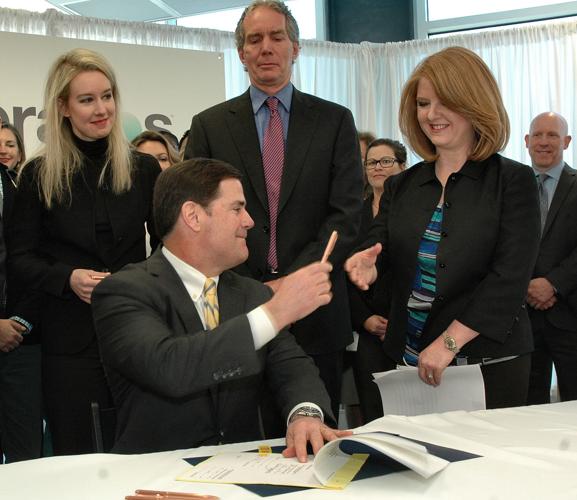
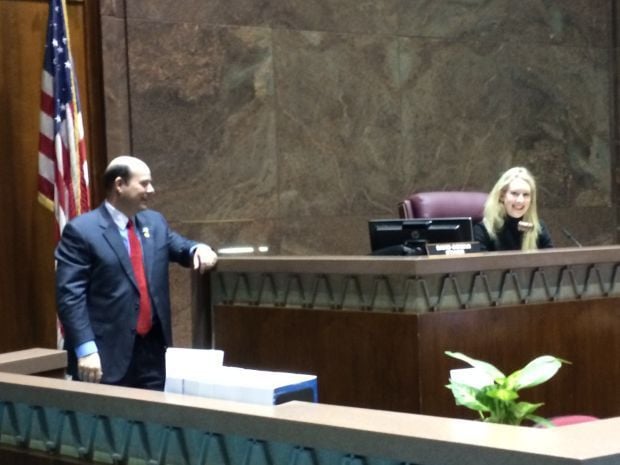
As I鈥檝e , I happened to be in the room in March 2015 when the founder of the blood-testing company Theranos swept into Arizona鈥檚 capitol and dazzled then-House Speaker David Gowan and other legislative leaders. It turned out to be an excellent lesson in how not to welcome new technologies into Arizona.
The Legislature easily passed a bill allowing Theranos to begin offering its allegedly revolutionary blood-testing to consumers without a doctor鈥檚 order. The technology was supposed to be able to test you for a host of conditions using just a drop of blood, rather than vials. The problem was, it didn鈥檛 work.
But we didn鈥檛 find that out until after Theranos had set up blood-testing operations in Walgreens stores, especially in the Phoenix area. In December, as a result of a consumer fraud lawsuit by the Arizona Attorney General鈥檚 Office, the company sent out 76,000 refunds to customers totaling $4.6 million. The SEC settled a fraud case against the company last month, and a federal criminal investigation is ongoing.
Our elected officials really blew that one. And it appears that, with Uber, we did not keep adequate track of the experiments that Uber and other companies have been running on our roads. When the governor announced the regulatory permission for Uber and others to test these vehicles on our roads, he set up a 鈥淪elf-Driving Vehicle Oversight Committee.鈥� It met only once, online records say, in August 2016.
So why should we trust the next big experiment being run on Arizona鈥檚 residents, the financial technology sandbox? We shouldn鈥檛, of course, even though there are safeguards in place that distinguish the sandbox from the open roads and pharmacy labs that Uber and Theranos exploited.
鈥淭here鈥檚 a lot of talk about what happened with Uber,鈥� Marie of the Arizona Commerce Authority told me in an interview. 鈥淲e all need to be careful not to overlearn the lessons of previous failures and impose them on new technologies. The idea of the sandbox is that it鈥檚 in a box, it can be tested.鈥�
The establishes the Attorney General鈥檚 Office as the gatekeeper that will receive applications, approve them, and keep track of the experimental technologies, which may include cryptocurrencies, new ways to transmit money and new ways to lend.
It also limits the number of people who may become customers to 10,000 per product or service and caps individual consumer loans at $15,000 per loan, $50,000 per person in aggregate loans. Customers must also be told of the experimental nature of the product or service, and each project is limited to two years, unless the company applies for and receives a one-year extension.
鈥淭his is not Theranos or Uber,鈥濃�� Attorney General鈥檚 Office spokesman Ryan Anderson said. 鈥淭hose were examples where you had government coming in and picking winners and losers in the marketplace with respect to lowering regulations and allowing them in.鈥�
鈥淲e鈥檙e setting up a regulatory structure that is open to all,鈥� he added. 鈥淚t鈥檚 not laissez faire anarchy.鈥�
And yet there are worrying signs about the sorts of companies that may try to exploit the sandbox, said Kelly Griffith of the Tucson-based Center for Economic Integrity. She worked on the bill and was able, with an alliance of consumer groups, to win some changes. And yet, she pointed out, title loan companies are still specifically included in the law.
These are corner-store lenders you see especially in poor neighborhoods, the successors to payday loans, who lend small sums of money at relatively high interest rates using the customer鈥檚 vehicle as collateral.
鈥淭itle loans are not an innovative financial product,鈥� Griffith said. 鈥淚t defies my understanding why they would feel compelled to put title lenders in the bill.鈥�
It鈥檚 especially curious because the bill specifies that they must follow existing state law. And yet, these are exactly some of the sketchy actors that are likely to try to take advantage of any financial deregulation we offer. Payday lenders and their usurious ilk have to win favorable laws and regulations, even after payday loans were in 2010.
Separately, last week a Mesa man was convicted of money laundering for doing $164,700 in bitcoin transactions for undercover agents posing as drug traffickers. No doubt he won鈥檛 be the last person to try to use innovative technology for criminal purposes.
鈥淚 don鈥檛 particularly think the AG has any nefarious intentions, but I think there will be unintended consequences,鈥� Griffith said. 鈥淲e鈥檙e going to end up with people getting run over.鈥�
Financially this time, not literally.