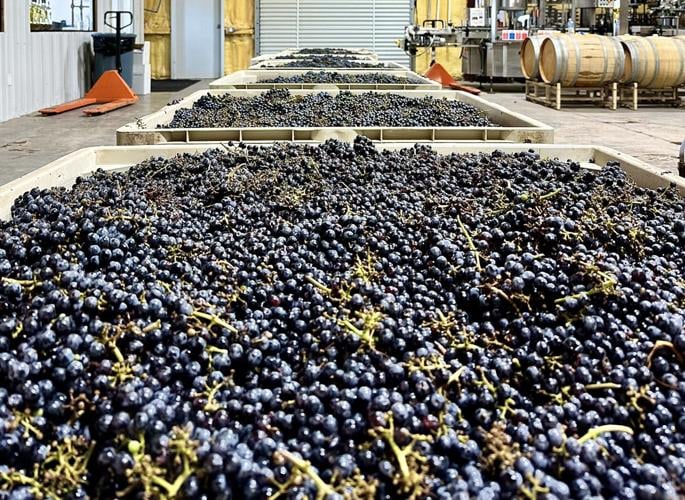
This year鈥檚 Southern Arizona wine grape harvest has been pretty exceptional, but Mark Beres and his Flying Leap Vineyards partners plan to leave as much as 30% of the fruit to die on the vine.
Stephen Basila sold the nearly 16 tons of fruit he expected to get from the 8 acres he has under vine at Autumn Sage Vineyards on Elgin Road, but he had to take a $500 per ton loss.
Robert Carlson is offering similar discounts to wineries purchasing grapes from his family鈥檚 Carlson Creek Vineyard in Willcox, and even then, he admits there鈥檚 a diminished market.
鈥淕rape sales have decreased substantially this year, 40 to 50% less,鈥� said Carlson, who hopes to sell at least half of the 150 to 160 tons of fruit he will yield from 60 acres he has under vine on his family鈥檚 320-acre property. 鈥淎 lot of our long-term clients are cutting back and from what I鈥檓 hearing, it鈥檚 a lack of demand and high inventories. I know of a couple of wineries that are not even making wine this year.鈥�
People are also reading…

Southwest Wine Center students sort through the fruit as part of the harvesting process. Vineyards statewide are reporting an abundant wine grape harvest, but a glut of wine is prompting some makers to hold off on producing wine this season.
Count Vino Stache owner/winemaker Brooke Lowry Ide in that category.
With hundreds of cases of wine sitting in her cellar and dozens of barrels of wine waiting to be bottled, she has no space at her Elgin micro-boutique winery.
While the Southern Arizona wine industry is experiencing what could be a record harvest this year, few wineries are celebrating.
The majority are sitting on too much inventory and not enough buyers, prompting many to cut back new production or eliminate it altogether.
鈥淚 think everybody is sitting on too much inventory and it doesn鈥檛 make a whole lot of sense鈥� to make more wine, said Basila, who released his family-owned vineyards鈥� first wines in 2018.
鈥淚f you鈥檙e sitting on huge piles of wine that you made and you see demand falling, you鈥檙e not going to make more wine, and that is being reflected in the sale of grapes,鈥� said Beres, who has 45 acres under vine between Flying Leap鈥檚 vineyards in Elgin and Willcox.
Call it a pandemic hangover.
Buoyed by tremendous sales growth during COVID in late 2020 through most of 2022, the wine industry upped production to meet demand and celebrated bountiful harvests in 2021 and 鈥�22 that allowed them to make even more wine.
But somewhere between harvesting the fruit and barreling the wine, the market went soft.
鈥淐oming out of COVID, there was a huge surge. People were buying wine like crazy,鈥� said Michael Pierce of Yavapai College鈥檚 in Clarksdale. 鈥淚 think that created a lot of optimism and people overproduced.鈥�

Students at Yavapai College鈥檚 Southwest Wine Center harvested some 50 tons of fruit this season at the center鈥檚 Clarksdale vineyards.
Arizona is not alone; nationwide, wine producers are sitting on extraordinary inventories that they can鈥檛 sell, particularly in the low- and mid-priced market, said Michael Kaiser, executive vice president for government affairs at the Washington, D.C.-based .
Baby Boomers and Gen-Xers have the disposable income to keep the higher-priced market afloat, but they aren鈥檛 the target audience for lower-priced wines. Those consumers tend to be younger, and Kaiser said younger consumers aren鈥檛 drinking as much as the generation before them.
鈥淎 younger consumer might opt for a single-serve product like a hard seltzer or packaged cocktail because when you open a bottle of wine, it鈥檚 a commitment to drink it,鈥� Kaiser said.
owner/winemaker Kent Callaghan, a senior statesman in Arizona鈥檚 wine industry, said part of the decline in young consumer interest stems from recent studies by the World Health Organization and CDC showing that alcohol consumption can increase cancer risk and lead to other health concerns.
鈥淧eople are unfortunately choosing to drink those White Claws and hard seltzers instead,鈥� said Callaghan, who has been making wine since 1991. 鈥淚t鈥檚 kind of a dumbing down, but it鈥檚 something we have to take seriously this year.鈥�
The industry downturn has led to a number of national labels laying off staff and dramatically downscaling production, including reducing their under vine acreage.
The situation isn鈥檛 as dramatic in Southern Arizona, but some wineries have limited tasting room hours; in Willcox closed its tasting room in downtown Tucson in August.
At Pierce鈥檚 family winery, in Willcox, sales dropped 11 to 14% this past year, said Pierce鈥檚 partner and father, Dan Charles Pierce.
The senior Pierce attributes the drop to the state of the economy.
鈥淢ost of the consumption problems are due to ... consumer confidence. And that is all due to the fact that nobody can buy anything right now,鈥� he said. 鈥淭hey don鈥檛 know what their disposable income is going to be.鈥�
Beres said he and his partners started recognizing a change in the market late last year when sales dropped off in the fourth quarter.
鈥淚t wasn鈥檛 massive, but we started to see signs of it and we immediately began taking steps,鈥� he said. 鈥淲e were anticipating, based on the numbers we were looking at, that in 2024 we could see a faltering market. I think that caught a lot of Arizona wineries by surprise.鈥�
California winemakers also had clear signs of a downturn going back several years, particularly in the so-called wine value chain, those lower-priced wines that California produces en masse, according to the Silicon Valley Bank鈥檚 report released last January.
The annual held around the same time supported the report鈥檚 findings.

Kyle Poteau prunes Tempranillo vines at Flying Leap Vineyards.
California industry leaders at that January meeting concluded one of the solutions to the glut in inventory and drop in demand would be to cut back on the vineyard acreage and bring production more in line with demand.
Australian winemakers came to a similar conclusion this spring. Farmers millions of vines nationwide in Australia, and many planned to plant other crops, according to news reports.
But while reducing grape production could be one answer, Flying Leap鈥檚 Beres said dropping the price of fruit in Arizona isn鈥檛 a solution.
鈥淚f you do that, you collapse the market for next year,鈥� he said. 鈥淲ine is really valuable in Arizona. It sells at a high premium because it鈥檚 a rare commodity. Because of that value, the fruit making them should be as valued.鈥�
鈥淭here is a market-wide, complete decline and the cost to make wine has gone up and the margins have eroded,鈥� he added. 鈥淭he margins are the real problem. People might still be buying the $50 wine, but the cost to make that wine has gone up. When you have strained margins and the demand collapses, you have a problem.鈥�
Beres said he and his partners, who also use the fruit to distill spirits at Flying Leap, are working on a non-alcoholic wine to appeal to the younger market.
Meanwhile Carlson, the winemaker for his family winery, said some larger retailers have approached him about making a lower price-point wine.
鈥淭hat鈥檚 one of the issues of wine right now. There鈥檚 been 20 years of premiumization where prices keep going up and up,鈥� he said. 鈥淭he Arizona wines, it鈥檚 hard to find something that鈥檚 reasonable.鈥�
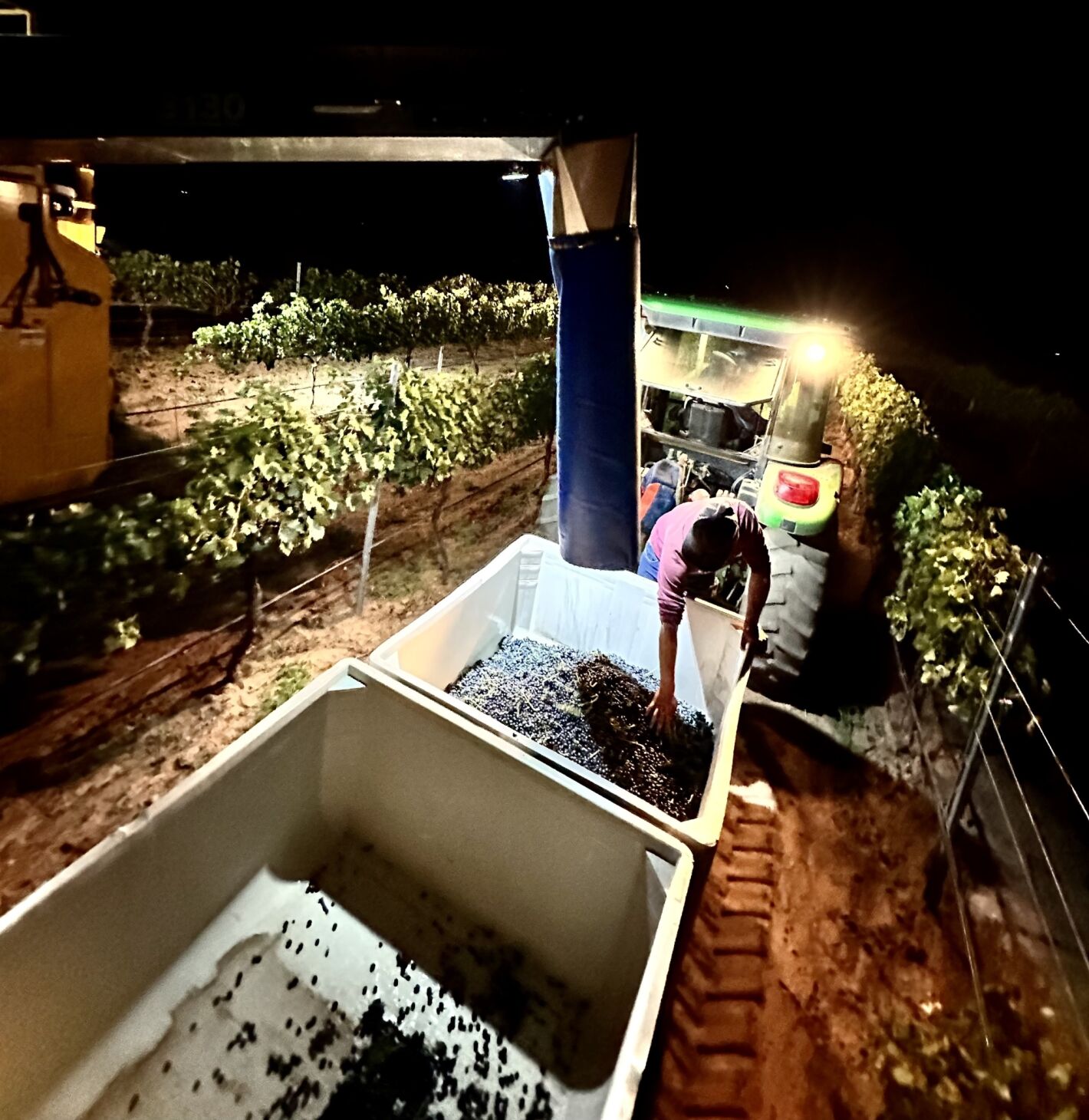
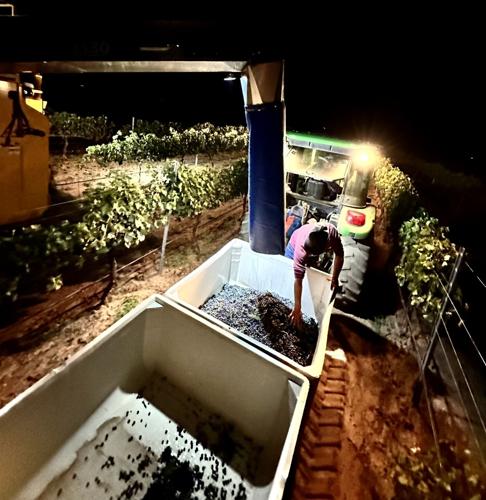
Carlson Creek Vineyard harvests its grapes using an Oxbo harvesting machine that shakes the grapes onto a conveyer belt and into large bins that are processed in the vineyards crush facility.
Vino Stache鈥檚 Ide has been making wine for six years and has seen the industry ebbs and flows. But nothing like this, she said.
鈥淭his feels different to me,鈥� she said. 鈥淚n the last year or so, people who would buy three or four bottles at festivals would buy one or two. Or in the tasting room they are just tasting and not buying bottles of wine. I hope this is a blip on the industry.鈥�
Callaghan has produced 34 vintages since releasing Callaghan Vineyards first in 1991; he鈥檒l be making his 35th with this year鈥檚 harvest, which he was close to wrapping up last week. He said he planned to pick the cream of the crop and leave less quality fruit on the vine.
鈥淓verything looks great and that鈥檚 the irony,鈥� he said. 鈥淓verything so far looks great, but it鈥檚 a tough market.鈥�
Beres said he is hoping to see an uptick in sales in the coming months, which could indicate that 鈥渨e went through the bottom this summer.鈥�
鈥淏ut the basic fact and reality right now is that the Arizona wine market is oversupplied with grapes and too many people growing grapes,鈥� he said. 鈥淚鈥檓 optimistic because markets correct all the time, but it is going to require growers and wineries to make changes.鈥�

Mark Beres inspects Flying Leap鈥檚 petit verdot at his Elgin vineyards.
鈥淭he wine industry has to connect to that market in a way that they haven鈥檛 in the past,鈥� said Southwest Wine Center鈥檚 Pierce, including marketing wine鈥檚 sustainability and wine drinking as a experience, not just an alcoholic beverage especially to younger consumers.
鈥淵ounger buyers want to have an experience just as much as they want to have wine,鈥� he said. 鈥淲ine is not a commodity; wine is very much a luxury. Where there is growth is in the luxury wines, the ones wrapped around an experience like going to Callaghan (Vineyards) and being there.鈥�
Kaiser said the industry also needs to change the narrative around wine. Younger consumers can be easily intimidated thinking they need to be experts to truly enjoy wine.
鈥淚 think the problem that the industry has in terms of reception from the consumers is the intimidation,鈥� Kaiser said. 鈥淚 think some of these younger industries like Arizona is a good example. They are trying to show that you don鈥檛 have to (be a wine expert). These wines are accessible and affordable.鈥�

Carlson Creek Vineyard in Willcox anticipates its 2024 harvest will yield more than 150 tons of fruit 鈥� more than half of which it hopes to sell to other vineyards.
Contact reporter Cathalena E. Burch at cburch@tucson.com. On Twitter @Starburch

Cathalena E. Burch
Reporter