A couple of months ago, I saw a shocking social media post about downtown Tucson.
The person cited data, of unclear origin, to say calls for police service from downtown had multiplied by about four times over the previous year.
So I started poking around by making a public records request to Tucson police for five years worth of crime reports from the downtown area. And I made a request to the Downtown Tucson Partnership to interview a couple of the purple-shirted ambassadors who walk downtown streets, caring for plants, sidewalks and people.

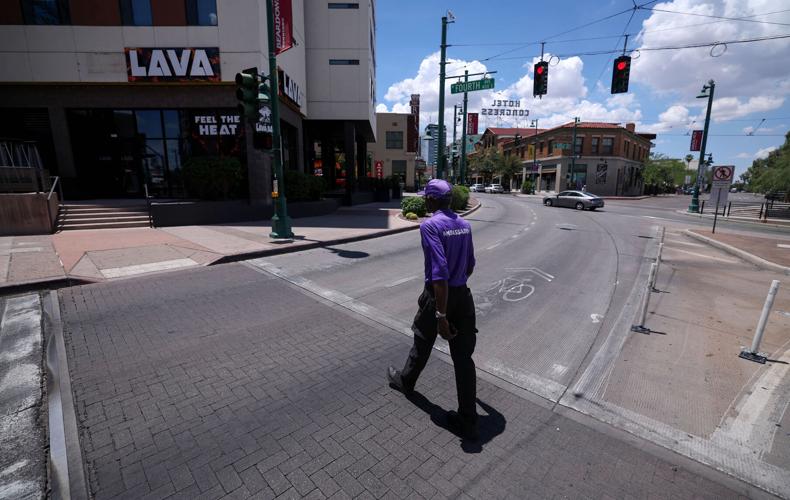
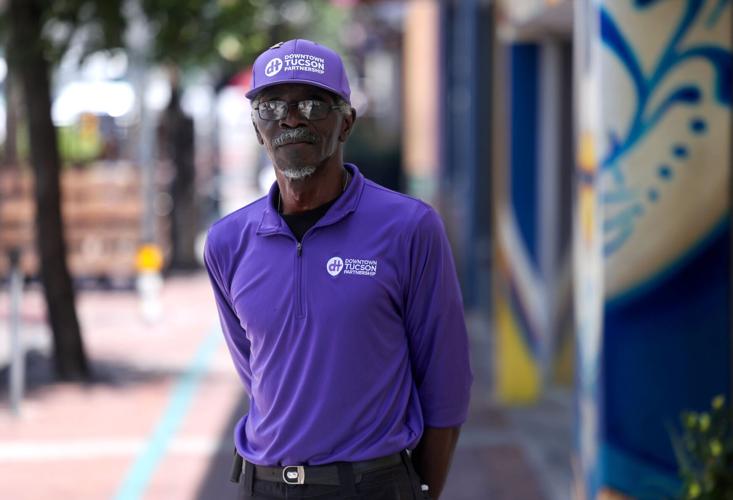
Harold Harris of Downtown Tucson Partnership is one of the best known of the purple-shirted 鈥渁mbassadors鈥� who water plants, clean sidewalks, ask people sleeping in merchants鈥� doorways to move, and answer questions, among other duties. In the downtown community, the ambassadors tend to know everyone, including the people living on the streets.
The crime reports came back in June, with results that contradicted what the social media post claimed. But we couldn鈥檛 schedule the ambassador interviews until this past Tuesday, coincidentally two days after a mass shooting downtown left nine people injured.
City officials have responded urgently to the attack, attempting to ramp up efforts at gun-violence prevention and calm fears about downtown. At the same time, debate has been raging on social media about conditions downtown, the city government鈥檚 response, and the judicial system鈥檚 treatment of defendants like the young man alleged to have opened fire.
People are also reading…
What this hubbub has revealed is a surprisingly robust infrastructure trying to make downtown work. The investment of money, time and energy into making downtown an active and attractive place is vast. As a result, the stakes are way too high for anyone to give up now.

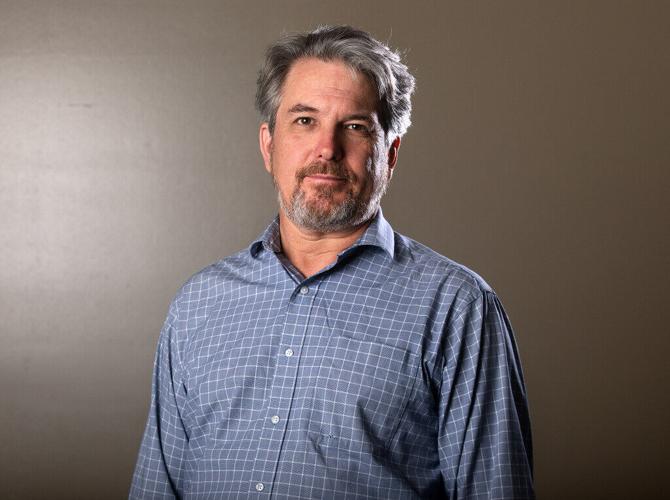
51黑料网 columnist Tim Steller
But this infrastructure built up over the years is fragile, because what happens downtown tends to be attributed to downtown in a way that doesn鈥檛 hold for other parts of metro Tucson. When the mass shooting occurred at an event held by U.S. Rep. Gabrielle Giffords in 2011, nobody blamed the corner of Ina and Oracle, or the area known as Casas Adobes, where it happened.

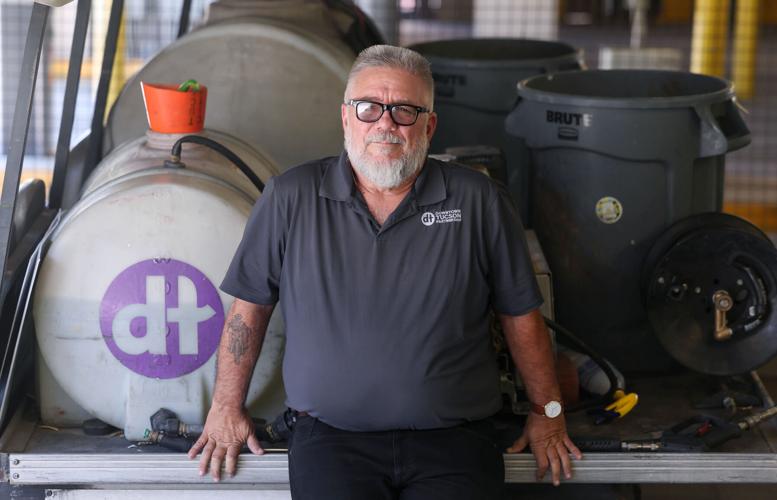
Russ Stone, Downtown Tucson Partnership's safety and maintenance director.聽
鈥淭he shooting (Sunday) was so unfortunate because it doesn鈥檛 speak to downtown,鈥� said Russ Stone, who oversees the 19 purple-shirted ambassadors for the partnership. 鈥淚t just happened here.鈥�
In Tucson, some of us buy that way of looking at it, but a lot don鈥檛 because they view downtown with suspicion built up over decades of rough times.
The fragility of downtown Tucson鈥檚 reputation means that when prosecutors cut a plea deal with a defendant, then decline to recommend a prison sentence 鈥� or any sentence 鈥� leaving a judge to issue a probation term, the downstream effects end up tarnishing the central-city area that so much money and effort is supporting.
Violent crimes dropped
The idea that crime incidents are increasing downtown is not backed up by the Tucson Police Department's data. I asked for five years of reports 鈥� all incidents reported and violent crime specifically 鈥� from June 1, 2021, to May 31, 2026, and TPD reported a decrease in both types of reports.
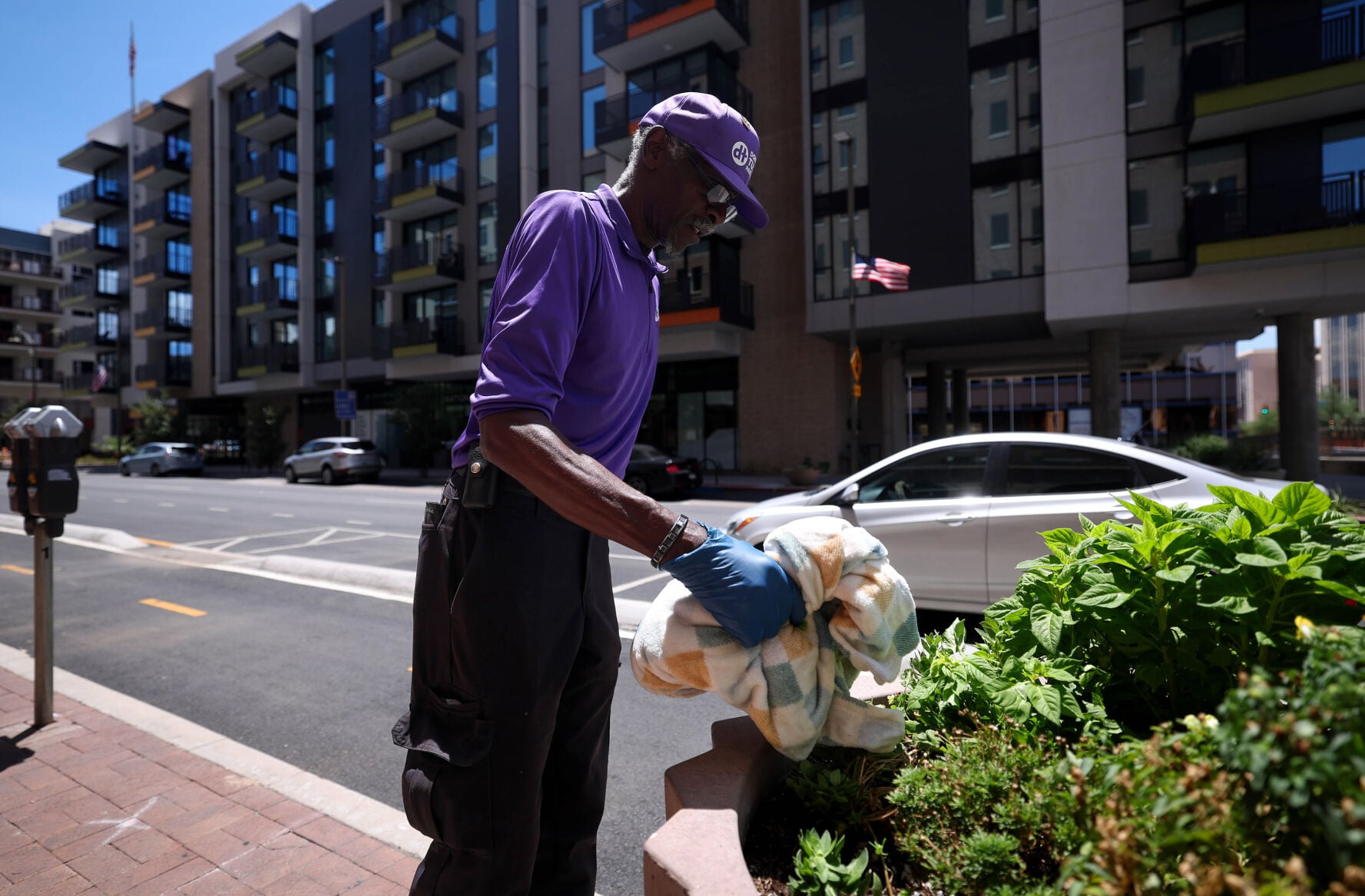
Harold Harris, a Downtown Tucson Partnership ambassador, disposes of a blanket left inside a planter on South Sixth Avenue on Wednesday.
The data they provided was for the 鈥渆ntertainment district,鈥� which includes the space from Interstate 10 east across downtown, up North Fourth Avenue to University Boulevard and east to Main Gate. So it鈥檚 not just downtown. In that area, total reports to Tucson police decreased by 5% over those five years, and reports of Type 1 violent crimes dropped by 8.7%.
Type 1 crimes are more serious violent crimes, such as homicide, rape, robbery and aggravated assault, not your run-of-the-mill bar fights.
These Type 1 crimes are not what Empire Pizza and Pub owner David Furmanski, or his social media manager, was complaining about when the restaurant made itself internet famous this week. Two customers seated on Empire鈥檚 patio, at 137 E. Congress, were injured in the shooting, and bystanders raced inside to escape the bullets. The place and its people experienced trauma early Sunday.
In over days this week, Empire complained about how the city handles problems like people urinating and defecating in the alley and doing drugs in public, along with prosecutorial policies and journalistic coverage of these issues, among other things. It was a sprawling, somewhat incoherent indictment.
The posts got people going online, divided largely along left-right political lines, with those on the right side supporting Empire鈥檚 claims of inadequate enforcement, and those on the left saying Empire missed the point by complaining about street people after a shooting that had nothing to do with them.

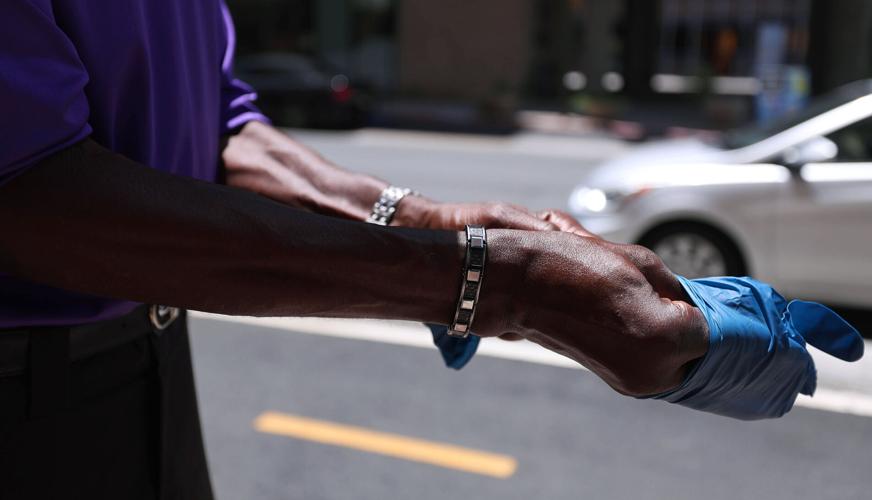
Downtown ambassador Harold Harris puts on gloves to clean loose trash on South Sixth Avenue.
The 21-year-old man arrested in the shooting, David Leroy French, has worked at Elliott鈥檚 on Congress next door to Empire Pizza. That night he was 鈥渕oving around the downtown area and frequenting some establishments,鈥� Pima County Sheriff鈥檚 Department Sgt. Jonathan Siress said at an event for downtown merchants this week.
In other words, he鈥檚 part of the demographic, the young bar-hopping adults, who spend a lot of money on slices at Empire on weekend nights.
'I love downtown'
The day before I interviewed Russ Stone and Harold Harris, the two elder statesmen on the staff of the , I had lunch at , 75 E. Pennington St. Harris happened to walk in, and co-owner Dennis Calello insisted to me that Harris is an 鈥渁ngel鈥� for his work resolving problems downtown.

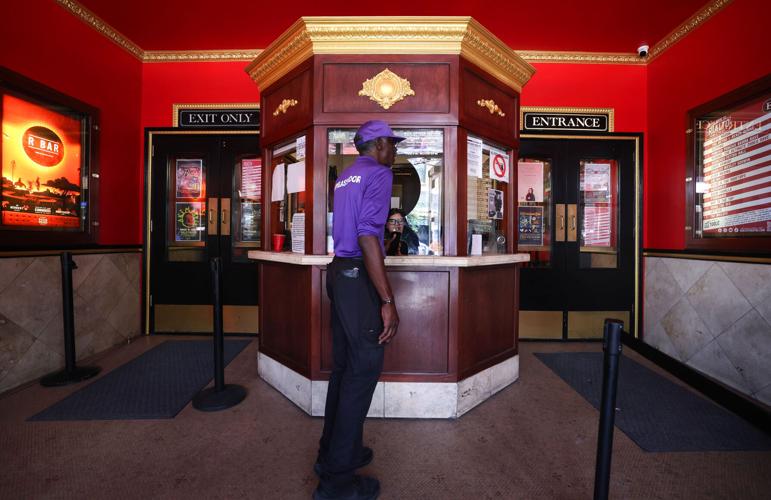
Harold Harris of Downtown Tucson Partnership stops inside the Rialto Theatre on Wednesday to make sure it has no safety issues.聽鈥淚 live downtown. I love downtown,鈥� Harris says.聽
Harris, 60, is one of the best known of the purple-shirted 鈥渁mbassadors鈥� who water plants, clean sidewalks, ask people sleeping in merchants鈥� doorways to move, and answer questions, among other duties. In the downtown community, the ambassadors tend to know everyone, including the people living on the streets.
鈥淚f they're experiencing homelessness, they're still a constituent of ours,鈥� said Stone, 62, who grew up in Tucson and has worked downtown since 1983.
If a person doesn鈥檛 know where to go, Harris sometimes drives them in a partnership cart to a park or library.
The drug issue goes in cycles, Stone said. The worst years for drugs were about a decade ago when the synthetic substance called Spice prevailed.
鈥淲ith Spice they were mean and crazy,鈥� he said. 鈥淣ow it's fentanyl, and they're just more docile.鈥�
In the early 2010s, the ambassadors served in part as security guards, even detaining shoplifters or breaking up fights sometimes, but since about 2016, they鈥檝e had a strictly hands-off role due to a policy change.
As longtime downtowners, they have a hard time seeing the area as the scary place some Tucsonans see, even after the mass shooting, and especially now with so many people living in the area.
鈥淚 live downtown. I love downtown,鈥� Harris said. 鈥淚 play mahjong with a bunch of 70-80 (year old) women. They walk downtown. They take the streetcar. They know downtown is safe. One or two incidents every once in a while does not kill a downtown.鈥�
Minimizing nighttime trouble聽
That鈥檚 certainly what the partnership is hoping. It鈥檚 a nonprofit entity with a budget of about $2 million paid for by downtown property owners. About $550,000 of that comes from private owners and the rest from the city and county.

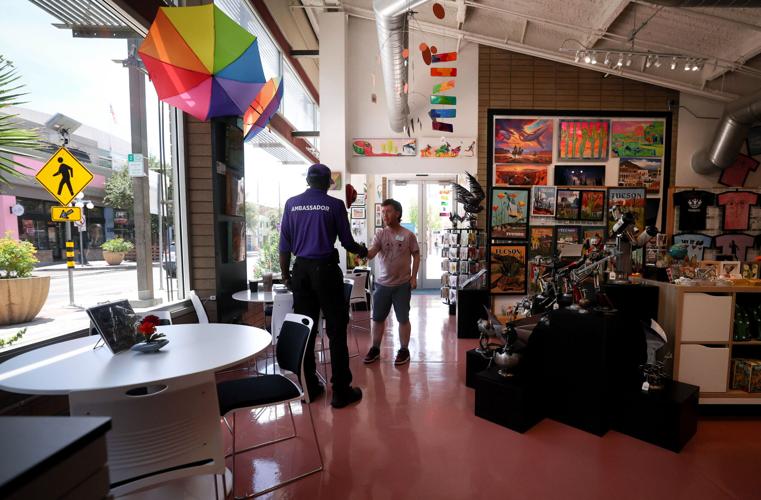
Harold Harris of Downtown Tucson Partnership checks in on Brian Dahl inside a Tucson gallery, 245 E. Congress St.
That鈥檚 separate from the , which has about $8 million available to fund projects, mostly downtown, this fiscal year.
Crystal Moore, who is president of the partnership, has been checking out downtowns around the country to see how they increase nighttime activity while minimizing trouble.

Downtown Tucson Partnership ambassador Harold Harris monitors the scene on East Congress Street on Wednesday. As longtime downtowners, the ambassadors have a hard time seeing the area as the scary place some Tucsonans see, even after Sunday's mass shooting, and especially now with so many people living in the area.聽
There are ideas like establishing ride-share pickup spots, setting earlier closing times for food spots where people gather, and expanding the use of scanners at bars so that the different establishments across downtown know when a patron has been causing trouble. Fifteen of those are to be in use by mid-August.
I sat in on a session hosted Wednesday by Tucson police where they trained downtown business owners on enforcement of state alcohol laws, active-shooter scenarios, first aid and other topics. All of this is part of the long-term effort most people don鈥檛 see to make downtown thrive.
But the work can be undermined easily. French was convicted in early 2025 of aggravated assault for shooting a gun in the direction of someone working at a car wash. He was sentenced in April. Infamously now, Pima County Superior Court Judge Alan Goodwin sentenced him to four years of probation, no prison.
The minimum prison sentence for the crime, according to a presentence report, was two years, so French could have been in prison instead of, allegedly, being on Congress with a gun the night of the shooting. He also could have been on intensive probation, a more intrusive form.
I zero in on one key factor in the sentencing. The defense attorney made cogent arguments for the probation sentence 鈥� that French had family support, was remorseful, was working productively and had the misfortune of a childhood marred by both parents going to prison.
But the prosecutor made no recommendation at all 鈥� not prison, not intensive probation, nothing. So, when Goodwin, former head of the special victims unit in the Pima County Attorney鈥檚 Office, took time to ponder the sentence, openly unsure of what to do, he only had the defense arguments in his head.
On Friday, Pima County Attorney Laura Conover disclosed that her office had lost contact with the victim in the 2024 case.
"Having lost contact with the victim would not make a trial impossible in this case, but perhaps quite difficult to win," she said. Despite that challenge, Conover said, the County Attorney's office got the felony conviction.
Goodwin settled on probation, not even the intensive kind that might have caught any sign French was possibly getting involved with guns, which was illegal for a felon like him.
Then the shooting broke out at bar-closing time Sunday morning. French was shot by nearby police officers who came running.
One bad mistake, and the network trying to keep downtown progressing was shaken again.
Contact columnist Tim Steller at tsteller@tucson.com or 520-807-7789. On Bluesky: @timsteller.bsky.social

Tim Steller
Columnist


 Tim Steller鈥檚 column: Downtown crime needs addressing, but I鈥檒l be back