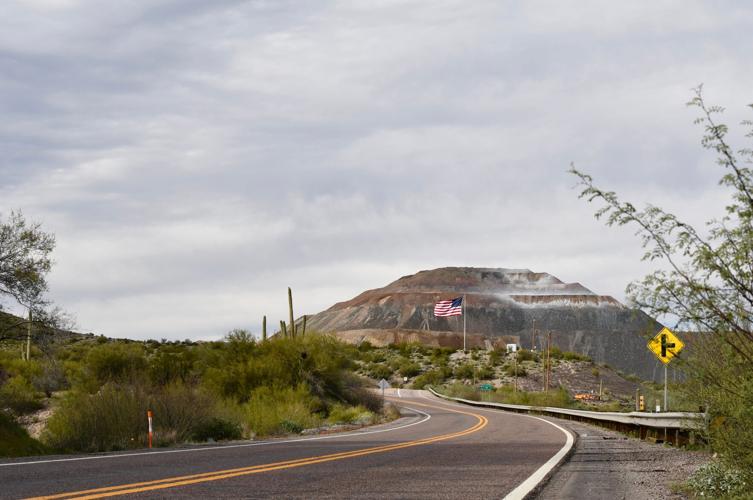
HAYDEN 鈥� Down Velasco Avenue, past Town Hall, the volunteer fire department, a dozen ramshackle bungalows and an empty community pool, stands a 1,000-foot-tall smelter stack 鈥� dormant and casting an unwavering shadow over town.
For a nearly century, the American Smelting and Refining Company operated the smelter in Hayden, providing jobs to over 600 people in its heyday. But with ASARCO's nearby Ray Mine, it has consistently ranked among the most prolific emitters of toxic pollutants, like arsenic and lead, in the country.
In 2020, the smelter went on hiatus after a series of pollution penalties, Environmental Protection Agency settlements and worker strikes. Eventually, it was named an EPA Superfund Alternative site, mandating company-led clean-up of the town.
Now, it could be getting a chance at resurrection.
People are also reading…
ASARCO鈥檚 parent company, mining giant Grupo Mexico, floated plans during a January earnings call to reopen and expand the facility, hopeful to double production in the United States under recent policies giving domestic copper production new vigor.
The future of the smelter depends on a triad of contingencies, including the impending EPA approval of an air quality plan ASARCO helped draft, said James Stewart who works as the director of Environmental, Governmental and Community Affairs at the company.
Arizona has long been the country鈥檚 biggest copper producer. With 9 active mines, it is responsible for 74% of the U.S. copper supply. When copper was king, the state had no shortage of smelters. They towered over towns like Dewey-Humboldt, Cottonwood and Superior, but as environmental regulations tightened and refining moved abroad, they closed up shop.
Since 2020, only two copper smelters operate in the nation: Freeport McMoRan鈥檚 in Miami, east of Phoenix, and Kennecott Copper Company鈥檚 facility in Utah. Though new copper mining projects are on the horizon, without a major investment in domestic smelting most of it will be sent overseas or across the border for processing.
Under President Donald Trump, that could change. In pursuit of all-American copper, his administration has waived a host of environmental policy procedures and handed out exemptions to air pollution standards for big manufacturers. The new policies could give the inactive Arizona smelter a second chance 鈥� and bring jobs back to Hayden, Stewart said.
But it also raises questions about environmental oversight in the towns where copper might be getting a new life.

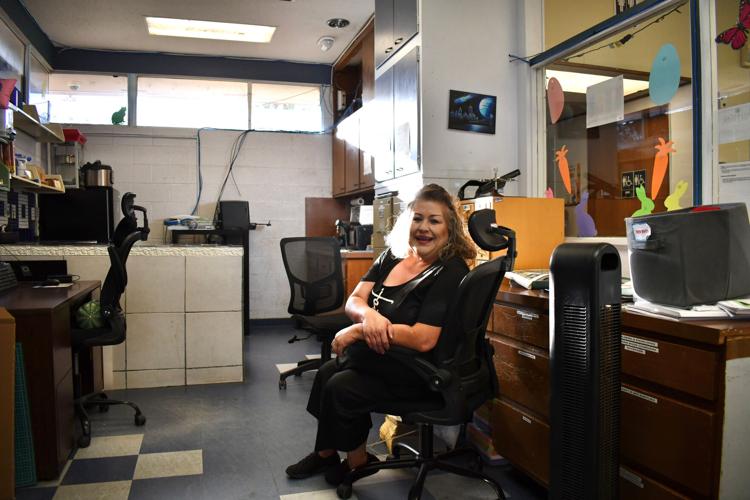
Bea Bejarano, who has worked at the Hayden Public Library for the last seven years, remembers a time when Hayden was a bustling mining town.
In Arizona's 'copper corridor,' questions about pollutants
At dusk, the air around Miami glows brilliantly orange.
Sonia Yanez grew up in town and has long believed the colors are the result of pollutants escaping the smelter stack on the hill. During sunset, small particles hanging in the air scatter and saturate the last of the day鈥檚 light with deep reds and ochres.
鈥淚t's kind of pretty,鈥� she said. Though she doesn't like living so close to the smelter, Miami is the place she鈥檚 always called home鈥攚here her parents, grandparents and great-grandparents staked their futures.
North of Tucson, Miami and Hayden are part of the state鈥檚 鈥渃opper corridor,鈥� a stretch of historic mining communities in south-central Arizona where the mineral has been excavated and processed since the 19th century.
Only about 40 miles apart, Freeport鈥檚 Miami mine and smelter and ASARCO鈥檚 Hayden smelter and Ray mine swapped first and second places on the EPA鈥檚 Toxic Release Inventory for years, making them two of the biggest sources of hazardous air pollutants in the state.
In 2024, former President Joe Biden passed a rule to curb such pollution.
The Copper Rule required smelters to comply with updated national emissions standards for heavy metals by installing new pollution capture equipment.
The San Carlos Apache Tribe, just a few miles away from both smelters, argues that the rule doesn鈥檛 go far enough, especially if copper demand increases and refineries kick into high gear. The demand for copper is expected to rise 50% by 2040 to meet surging energy markets worldwide, according to a new S&P Global report.
From the start, ASARCO and Freeport fought the rule. The companies petitioned the EPA to reconsider it, saying it was too strict and costly. ASARCO in part blamed the "regulatory uncertainty鈥� of the past few years for barring the company from even considering plans to reopen the Hayden smelter, it wrote in a public comment letter from March 2025. The company asked Trump to exempt the smelter from the Copper Rule and suggested he sign an executive order to that effect.
Trump took up the cause. Last spring he set the stage for smelters to apply for exemptions with three executive orders. The first prioritized copper as 鈥渁 critical material essential to the national security, economic strength, and industrial resilience of the United States.鈥� It emphasized copper鈥檚 role in clean energy projects, electric vehicles, and electronics, lamenting the country鈥檚 reliance on foreign copper production. (Right now, China dominates copper smelting.)

Peggy Plews looks out her dining room window of her Miami home, where Freeport-McMoRan owns the only operating copper smelter in the state.
The second order fast-tracked approvals and permitting processes for critical minerals, noting that 鈥渙verbearing federal regulation has eroded our nation鈥檚 mineral production.鈥�
Last year, on the so-called 鈥渂iggest day of deregulatory action in US history,鈥� EPA Administrator Lee Zeldin invited industrial facilities to apply for exemptions under a loophole in the Clean Air Act. The clause gives polluters an out if the technology needed to meet the standards isn't available, or if meeting the new standards isn鈥檛 in the interest of national security. All they had to do was send an email to the EPA making their case.
A third executive order in October extended those exceptions to the Copper Rule. Both ASARCO and Freeport applied. Freeport claimed that the exemption was a national security matter since it produces 70% of the country鈥檚 domestic copper supply and is one of only two operating smelters in the U.S. In its letter to Zeldin, it also argued that the technology it was being asked to invest in was so 鈥渃ost-ineffective鈥� that it鈥檚 essentially unavailable.
Installing pollution measures meant to trap excess emissions would cost Freeport $59.9 million, about what it spent on annual maintenance in 2022, and ASARCO, which wasn鈥檛 operating at the time, $15.4 million, according to EPA estimates.
In an email to The Arizona Republic, Stewart said ASARCO鈥檚 exemption request isn鈥檛 about the smelter鈥檚 ability to meet emissions limits, but rather about the Copper Rule鈥檚 compliance test methods 鈥� which the company says 鈥渃annot practicably or safely be implemented and would frequently produce false indications of exceedances of the limits.鈥�
So far, only Freeport has received the exemption, letting the company off the hook for the next two years. Freeport-McMoRan's Vice President of Communications Linda Hayes said the company remains committed to operating responsibly and protecting the environment and community health. The exemption, she said, allows it to run under pre-existing standards while the EPA reviews and reconsiders aspects of the 2024 Copper Rule.
ASARCO鈥檚 exemption request is still under review, according to Stewart. The White House did not provide comment on the status of the exemption.
Sarah Buckley, a lawyer at the National Resource Defense Council, said the exemption sets a bad precedent.

The Ray Mine, a sprawling copper project, still operates near Kearny, about 15 miles from Hayden where ASARCO used to processes its copper.
鈥漈he statute does not limit the number of two-year periods that a facility can be exempted,鈥� she said. In theory, the smelter could operate under the exemption for more than just those two years if the president allows it.
鈥淚t sets up this unreviewable, unaccountable loophole that is totally divorced from the usual science based, public participation-based approach,鈥� she said. It suggests that even if a rule is on the books, there are ways of curtailing it. But more than that, it also buys Zeldin鈥檚 EPA time to rewrite or overhaul the Copper Rule altogether.
For at least the next two years, residents of Miami will have to breathe in whatever Freeport puts out.
鈥漌e live so close to a Superfund Alternative Site, to Hayden, and nobody knows it,鈥� said Peggy Plews, who lives downhill from the smelter in Miami. If there鈥檚 an opportunity for Freeport to reduce emissions by any amount, why not do it, she wonders, especially when traces of environmental contamination are evident just a few towns over.
'We shouldn't sacrifice any community'
In their early years, smelters across the country operated with little oversight. The first emission controls for smelters came in 1920, but they were minimal. Even after the inception of the EPA and the passage of the Clean Air Act in the 1970s, provisions did little to target the heavy metals released from facilities like ASARCO's 鈥� those wouldn鈥檛 come until 2002, when the agency passed standards specifically for copper smelters.
By that time, residents and federal agencies had started piecing together a picture of contamination in Hayden, where the smelter had been operating for nearly a century.
In the 1990s, the Arizona Department of Health Services and the EPA began surveying the town. Air quality tests showed 60 times more arsenic in Hayden鈥檚 air than areas without smelters. Around 250 residential yards turned up contaminated with heavy metals.
In 2015, the CDC tested the blood of 83 residents in the community. Results showed that children in Hayden and nearby Winkelman had more lead in their systems than the national average. But the report noted that the agency couldn鈥檛 definitively identify the source of the contaminants. That year, ASARCO reported emitting 14 tons of lead into the air from it's smelter and Ray mine, which report jointly to the EPA's Toxic Release Inventory.
鈥漌e have known the dangers of lead for years,鈥� Buckley said. 鈥娾�漌e shouldn't sacrifice any community so that polluters can make a buck.鈥�
A settlement between the EPA and ASARCO in 2015 required the company to spend $150 million on new pollution controls and pay a $4.5 million civil penalty.
ASARCO has an air quality permit renewal under review at the Arizona Department of Environmental Quality, though it鈥檚 allowed to operate under its current permit. A big part of what the company is waiting on to reopen is the EPA鈥檚 approval of new state plans for emissions, Stewart said.
In 2022, the EPA published a finding that the town of Hayden failed to meet air quality standards for lead and sulfur dioxide under the Clean Air Act. As the town鈥檚 primary polluter, ASARCO worked with ADEQ on new plans to come under compliance. For the company, that meant a $30 million investment in additional pollution control technology.
Those plans are still waiting for the EPA鈥檚 final green light, but in March the EPA announced its intention to approve the plans for sulfur dioxide.
Julia Giarmoleo, an EPA press officer for the region, said the reopening would not impact the environmental clean-up the agency is currently overseeing, but that there would be additional requirements ASARCO would have to meet if it reopens.
Since smelter's closure, Hayden is a 'ghost town'
The return of the smelter could mean much-needed jobs for a town on the brink of extinction. Since the turn of the century, Hayden鈥檚 population has dwindled to around 331. At its peak in the 1920s, it was just over 2,000, and in 1978, it was nearly 1,700.
鈥溾�奅verybody just knows Hayden as a ghost town since that smelter shut down,鈥� Plews said.
Bea Bejarano, a librarian who works in a building beside the smelter, remembers when it looked much different. Growing up in another mining town not far away, she often visited family who lived in Hayden.
鈥淭his was the best place,鈥� she said. Every 鈥渘ana鈥� had a pot of beans going or a platter of tortillas for whatever kid walked through their door, she remembered.
It鈥檚 changed a lot since those days. The Bull Pen, a Mexican-American restaurant, no longer serves tamales for 75 cents each and sirloin steak for $5.95. It no longer serves anything at all. Now, the only operating eatery is Maria鈥檚 Family Restaurant, sandwiched between Hayden and Winkelman.
Bejarano could probably count all the open businesses and employers in Hayden on one hand.
鈥淭here鈥檚 nothing,鈥� she said.
ASARCO鈥檚 reopening could generate 400 jobs locally, Stewart said. Freeport鈥檚 Miami operation reported employing 830 employees three years ago.
Since the smelter closed, the town has struggled to fill the space it left behind. The median household income in 2024 was $29,722, according to census data, and nearly 30% of Hayden鈥檚 population was living below the poverty line. Now, the Hayden Winkelman Unified School District is one of the town鈥檚 biggest employers, though ASARCO still employs people at the Ray Mine in Kearney, about 15 miles away.
Even before ASARCO mothballed the smelter, the town was struggling. In 2015, the company cut hundreds of jobs when the price of copper reached new lows. That year, Bobby Smith, a filter plant operator at the smelter who used to moonlight as Hayden鈥檚 volunteer mayor, worried he would lose his job.
鈥淚t鈥檚 pretty much the only major employer in the area,鈥� he said in an interview with The Arizona Republic in 2015.
Dean Hetrick, the current mayor of Hayden who also works as a supervisor at ASARCO, did not provide comment on the potential reopening.
In October 2019, thousands of ASARCO employees in Arizona went on strike. Steelworkers, boilermakers, teamsters and machinists working for the company in towns including Hayden, Tucson and Sahuarita, were advocating for pay raises and more comprehensive benefits. After nine months of negotiations with the unions, ASARCO shuttered the Hayden smelter.
The town designed to die
As a kid in San Pedro, a neighborhood where most of the Mexican employees lived when Hayden was still segregated, Bejarano could earn a trip to the soda shop by cleaning off her grandmother鈥檚 dusty shelves. In town, there was so much dust in the air that by the time she got back from the store it had accumulated again. She attributed that dust to particles blowing off piles of mine waste nearby.
She鈥檚 heard talk about the smelter 鈥渃oming back to life,鈥� but she鈥檚 not sure when it might happen or what it could mean for the town. It doesn鈥檛 change things for her.
鈥淭his is my bread and butter for now,鈥� she said, looking around the library where she鈥檚 worked for seven years. 鈥淚 would stay.鈥�
Residents haven鈥檛 forgotten the mine tailings or the multiple government investigations into Hayden鈥檚 air and soil.
But they also haven鈥檛 forgotten the vibrant communities, supported by copper, that lived in the shadow of the smelter.
In 1956, Hayden turned from a company asset into an incorporated township. One year later, its first mayor, Rod Hastings, wrote that the town was never meant to last, according to a letter in the Hayden Public Library archives. Buildings were constructed with cheap materials, he said, sewer lines were installed temporarily.
鈥淭he place, in short, was admirably designed to die by 1930,鈥� he wrote. 鈥淚t didn't, however.鈥�
And it hasn鈥檛 yet.