Mason Ryan has been studying amphibian declines and extinctions for 20 years. Sometimes, he needs a little hope.
鈥淚t's usually doom or gloom,鈥� said Ryan, who works as a garter snake project coordinator for the Arizona Game and Fish Department. It鈥檚 good to focus on positives 鈥� like the recent release of a threatened snake species into the wild.
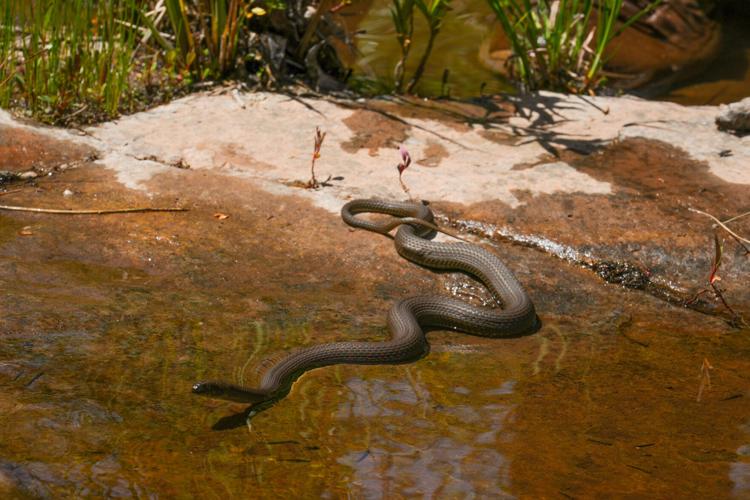
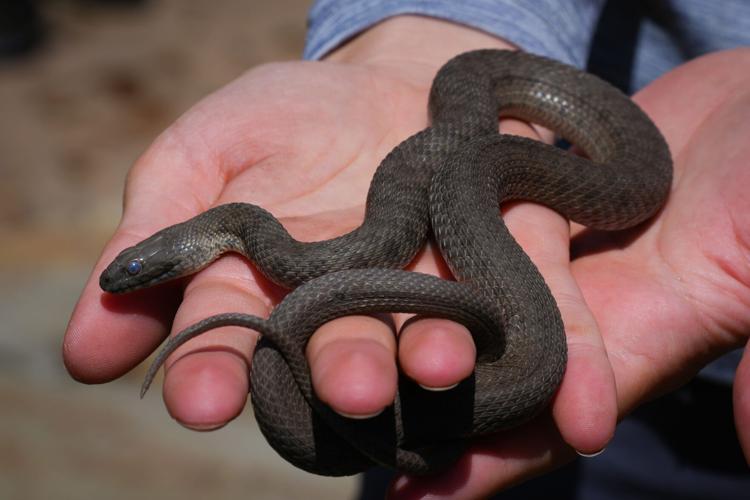
In May, the Arizona Game and Fish Department partnered with the Phoenix Zoo, the University of Arizona and the Amphibian and Reptile Conservancy to put a group of captive-born native narrow-headed garter snakes into the wilds of the Tonto National Forest.

In May, Arizona Game and Fish, Phoenix Zoo, University of Arizona and The Amphibian and Reptile Conservancy released 21 narrow-headed garter snakes at Canyon Creek.
The slithering reptiles are one of the department's "species of greatest conservation need." Habitat loss and predation by invasive species have depleted their populations across Arizona and New Mexico. In 2014, they were listed as threatened under the Endangered Species Act.
People are also reading…
Now, 21 have found a new home in the rocky streams of Canyon Creek.
Since 2009, the zoo has raised narrow-headed garter snakes in captivity to bolster the wild population. Over almost two decades, the zoo has released 118 snakes.
鈥淲hen we started this, we didn鈥檛 know what was going to happen,鈥� Ryan said. 鈥淚t was like some snakes and a prayer.鈥�
Drought, wildfire, predators threaten snakes
From the time the captive narrow-headed garter snakes are born, the Phoenix Zoo houses them in streamlike pools that mimic their natural habitat. Unlike other snake species, they are not hatched from eggs but born as slimy, miniature versions of their adult selves.
Over almost 20 years, the zoo has raised 16 litters. The snakes are released at various ages, sometimes from just two weeks old, to live out the remainder of their lives in riparian oases along the Mollogon Rim.
鈥溾�奧henever we look for spots to release them, we want it to be an area that has flowing water year-round,鈥� said Whitney Heuring, Conservation and Science Manager at the Phoenix Zoo. The snakes are almost exclusively fish-eating, so they need access to flowing creeks and streams.

Habitat loss and predation by invasive species have depleted the garter snake populations across Arizona and New Mexico.
Drought and wildfire can degrade that natural habitat, as can their invasive foes, like crayfish.
鈥溾�奧e're getting habitat loss from climate change, as well as habitat loss by non-native species altering the habitat. All of those things kind of compound and make it harder for the snakes to survive out there,鈥� Heuring said.
As streams dry up or temperatures warm, fish populations could disappear, leaving less food for the snakes. So far, Ryan said, they haven鈥檛 seen much of that.
鈥淏ut it's just going to become more of a factor,鈥� he said.
Species 'more resilient than they're given credit for'
The Southwest is locked in a 30-year drought that鈥檚 drying out forests and water resources throughout the state. AZGFD also works to restore streams and riparian areas after wildfires burn through. Recovering fish populations help bring creatures like the narrow-headed snakes back, too.
鈥淭he species is more resilient than they're given credit for,鈥� Ryan said.
The newly released snakes will be monitored by researchers at the University of Arizona via chips called 鈥減it tags鈥� implanted along their spines that track their movements and lifecycles. In captivity, narrow-headed garter snakes can live up to 13 years, but scientists aren鈥檛 sure how long they live in the wild. That鈥檚 one of the questions researchers are looking to answer.
"All animals have their roles in the ecosystem,鈥� Heuring said. 鈥淗ere at the zoo we want to try to preserve all of the diversity of life.鈥�
Since the start of the snake release program, narrow-headed garter snakes have returned to parts of the state they might鈥檝e otherwise disappeared from.
鈥溾�奧e've learned over the last few years of doing this that we鈥檙e paving the way for getting snakes on the landscape at a much larger scale,鈥� Ryan said. 鈥娾�漌ithout these zoo breeding populations, we could never do that.鈥�
At home, he keeps a photo of a Banksy: a young girl reaching toward a red balloon in the shape of a heart as it floats away. On the wall beside her, spray-painted letters read 鈥渢here is always hope.鈥�


 Rescue plan in works for tiny endangered turtle in path of second Arizona border wall