

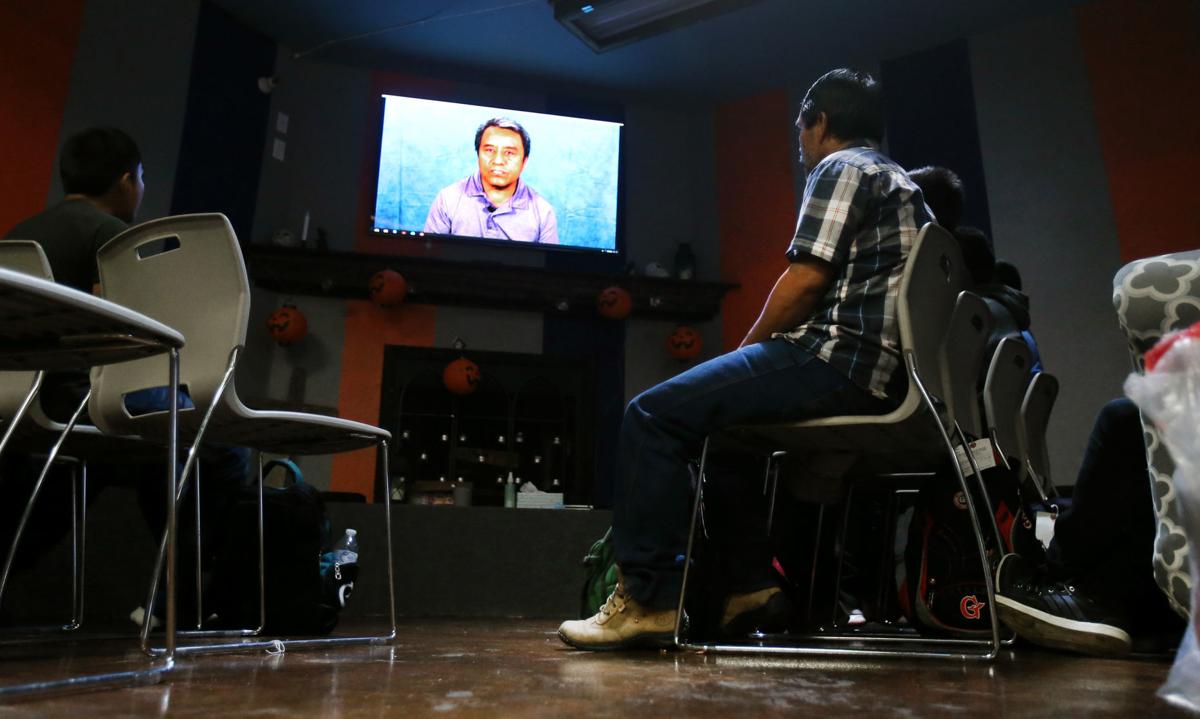
The recent deaths of two Guatemalan children in immigration custody highlight the potential communication breakdowns between border agents and indigenous-language speakers, but advocates say it is far from a new issue.
鈥淚t鈥檚 not the fault of any individual officer because the system is not in place,鈥� said Blake Gentry, a Tucson researcher and advocate with broad experience working in Guatemala. He authored on the indigenous language issue in the U.S. immigration system.
Due to the lack of a comprehensive language assessment system, he said, 鈥渨hen someone comes into custody, if they are under physical duress you need to quickly get to the truth. If you have a parent who is embarrassed or feels stigma, doesn鈥檛 want to speak or thinks that if they speak the language it鈥檚 going to be worse for him, or doesn鈥檛 understand the things being told to him in Spanish,鈥� the consequences can be dire.
People are also reading…
Jakelin Caal Maquin, a 7-year-old Guatemalan girl who died in Border Patrol custody on Dec. 8, and her father were detained in a group of more than 160 migrants who crossed the border into New Mexico two days prior. The Border Patrol said her father, Nery Gilberto Caal Cruz, claimed in an English-language form that his daughter was in good health.
But according to his lawyers, he doesn鈥檛 understand English. Various media outlets reported that his first language is Q鈥檈qchi鈥�, one of Guatemala鈥檚 nearly two dozen Mayan languages.
On Dec. 24, another Guatemalan child died. Agust铆n G贸mez P茅rez, 8, had been in Border Patrol custody in West Texas and New Mexico for nearly a week when he was taken to a hospital after an agent noticed he was coughing and had 鈥済lossy eyes.鈥� A medical examiner said he tested positive for the flu.
Reporters have interviewed the boy鈥檚 mother, who speaks the Mayan language Chuj, using her stepdaughter as an interpreter. An investigation is ongoing in both cases.
Just within Guatemala, there are 22 different Mayan languages, not including dialects within some of those languages.
Since 2000, federal agencies have been required to assess and improve access to services for those with limited English proficiency. But the implementation of comprehensive language programs remains uneven, government officials, experts and advocates say.
found that the Department of Homeland Security didn鈥檛 have a systematic method for assessing its foreign-language needs. Following the GAO鈥檚 report, the department convened a task force and developed a language access plan. But the federal watchdog closed its recommendation as not implemented in 2014, saying the department had not fully mets its recommendations, which included comprehensively assessing needs and identifying any shortfalls.
In 2015, the CARA family detention pro bono project, a network of groups that provide legal counsel to families in detention centers in Texas know called the Dilley Pro Bono Project, filed a formal complaint outlining some of the challenges faced by indigenous language speaking families.
These included inadequate screening at the border and within family detention centers, lack of interpreting assistance for other interactions with government officials and subcontractors (including medical staff), and a lack of translated written material.
鈥淢any of these issues continue today, unfortunately,鈥� said Katie Shepherd of the American Immigration Council, one group in the network.
Immigration and border public affairs officials weren鈥檛 available to comment this week due to the partial government shutdown, but in 2015, they told the 51黑料网 they had systems in place to communicate with those they encounter.
DHS uses an 鈥淚 Speak鈥� poster and cards that include 75 of the most frequently encountered languages, as well as 13 of the indigenous languages of Mexico and Central America with the country鈥檚 flags to the side for people to identify their language to officers.
More recently, an ICE spokeswoman that individuals with limited English proficiency for whom language services are not readily available are also identified during initial processing.
The Border Patrol contracts with interpreter and translating services that offer more than 150 languages and dialects. The Border Patrol also tries to contact consulate officers to help.
But the realities on the ground are different, said Chris Montoya, a former Arizona Border Patrol agent who retired in 2017.
Oftentimes, he said, agents have to rely on others in the group who speak the same language to fill out the initial form that documents the migrant鈥檚 biographical information, where they crossed and whether they fear returning to their country of origin 鈥� a legal piece of paper that follows them through the process.
鈥淎t the ground level, there鈥檚 no time at all,鈥� said Montoya. 鈥淚f it鈥檚 busy and (the migrant) doesn鈥檛 speak any Spanish, you do your best to figure it out. You have 100 more to do.鈥�
It鈥檚 hard for the agent and unfair for the border crosser, he said.
鈥淔or example, you get a guy trying to tell you something important or relevant and you can鈥檛 communicate and it鈥檚 1 a.m. Who is going to be an interpreter? All these little obstacles pop up in the field. What do you do now?鈥� he said.
If the agent doesn鈥檛 speak fluent Spanish, it may be harder to know when there are misunderstandings, he said. Agents are required to take eight weeks of Spanish language classes during their training, if they don鈥檛 speak the language already, which was cut from the 19 weeks or so required when Montoya joined in 1996.
Guatemalans represent the largest share of families and unaccompanied minors apprehended by the Border Patrol nationwide 鈥� so far this fiscal year.
The vast majority come from indigenous communities in rural areas with limited educational possibilities and little exposure to a formal bureaucracy, said Linda Green, a University of Arizona professor of anthropology whose work centers on violence, indigenous people in Guatemala and border-crossers.
While many Guatemalan migrants may speak some basic Spanish and can say their name or where they are from, usually they cannot understand policies and processes explained in more advanced Spanish, Green said. And it goes beyond a literal translation because there might be no equivalent words in their language.
So somebody putting forms in front of them and talking about medical or legal issues in their broken Spanish or in English, she said, doesn鈥檛 really matter 鈥� it鈥檚 likely they don鈥檛 know what鈥檚 going on.
In fiscal year 2017, Mam, Quiche and Qanjobal 鈥� all Mayan languages spoken in Guatemala 鈥� were among the top 20 spoken languages in immigration court proceedings.
Blake estimates the share of families coming across who speak an indigenous language is roughly 40 percent, similar to what he found for his 2105 report, based on interviews with immigrant families, attorneys, court interpreters, shelter workers and others.
鈥淭he problem starts in the beginning and the beginning is first contact,鈥� Gentry said.
鈥淣one of the Border Patrol agents are informed of this or trained on this. They don鈥檛 know to ask what part of Guatemala they are from鈥� in order to know 鈥渨hether they are likely to be an indigenous language speaker.鈥�
Those in family detention who don鈥檛 speak Spanish normally wear tags identifying the language they speak, said Katy Murdza, advocacy coordinator for the Dilley Pro Bono Project. Even so, she said, she repeatedly hears staff speak to them in Spanish.
鈥淲e have clients signing papers they don鈥檛 understand,鈥� said Murdza. Some say they haven鈥檛 spoken to anyone in their native language since they crossed the border.
It is not uncommon to have cases postponed or criminal charges dismissed during Operation Streamline, the federal mass court proceedings, when someone speaks an indigenous language and there鈥檚 no interpreter readily available.
Part of the solution is to track the language the person speaks from the beginning and have that information be systemically shared with the other agencies so they can better assess the need and build capacity, Gentry said.
He is working with a group of Guatemalans in Tucson on an informal interpreting program to try to meet the need locally, he said.
There also need to be more interpreters who officials can reach out to and an interagency working group to set up a single protocol on how communication works from one bureaucracy to the next, experts and advocates said.
The need is growing, not only because more of those coming are Guatemalans. Agents must not only communicate and assess the needs of adults, but increasingly those of children.


