
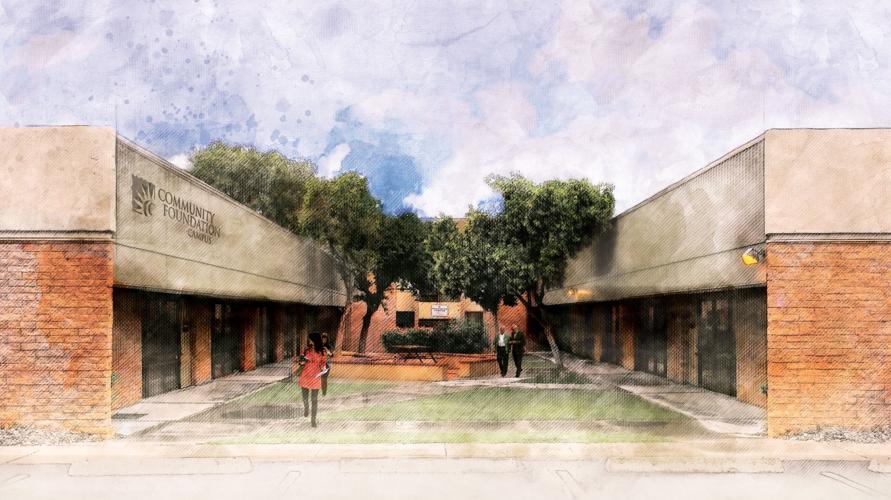
The Community Foundation for Southern Arizona is expanding into a larger campus that will offer small-scale spaces for nonprofits, as well as shared space to foster collaboration within the diverse nonprofit sector.
Tucson鈥檚 vibrant nonprofit community needs access to co-working space that is both centrally located and the right size for fledgling organizations, said Clint Mabie, president and CEO of the Community Foundation, which works with donors to build charitable funds, scholarships and endowments and to award grants.
Currently, 鈥淭here is no central place for the nonprofit community to come and gather, no central place to collaborate and convene, and that鈥檚 what this will become,鈥� he said.
Two years ago the Community Foundation鈥檚 board determined the nonprofit had outgrown its 5,000-square-foot space at 2250 E. Broadway and started a search for a larger campus.
People are also reading…
鈥淲e couldn鈥檛 achieve our mission of convening the community in that space,鈥� Mabie said.
The foundation commissioned a market survey in 2015 to gauge local interest in a campus for nonprofits and got an enthusiastic response, Mabie said.
Mabie said the foundation鈥檚 location search concluded this year with a serendipitous twist. The Boy Scouts of America鈥檚 Catalina Council was looking to downsize from its 24,000-square-foot space at 5049 E. Broadway, at the intersection with North Rosemont Boulevard.
That spot was ideal for the Community Foundation in terms of its size and central location, presenting the perfect opportunity for a swap, Mabie said. The foundation bought the Boy Scouts鈥� building in April and the Boy Scouts moved into the Community Foundation鈥檚 former space over the summer.
Research shows shared working space can improve cost savings and efficiency, as well as the quality of service delivery for nonprofits, Mabie said. In Tucson, the new campus will also aim to help nonprofits connect with one another and ensure they鈥檙e not duplicating efforts, he said.
鈥淭his is geared primarily for the smaller nonprofit, because they do not have access to good space and they don鈥檛 have access to a quality meeting space,鈥� he said. 鈥淭hey can become very isolated from other nonprofits doing work in the community.鈥�
The United Way of Tucson and Southern Arizona offers space for larger nonprofits and other organizations to rent at its Diamond Resource Campus, but the Community Foundation鈥檚 campus will fill an unmet need for smaller agencies, said Tony Penn, United Way president and CEO.
鈥淭here鈥檚 a big difference in the constituency we鈥檒l wind up serving,鈥� he said. 鈥淲hat Clint and the Community Foundation are doing there is very complementary.鈥�
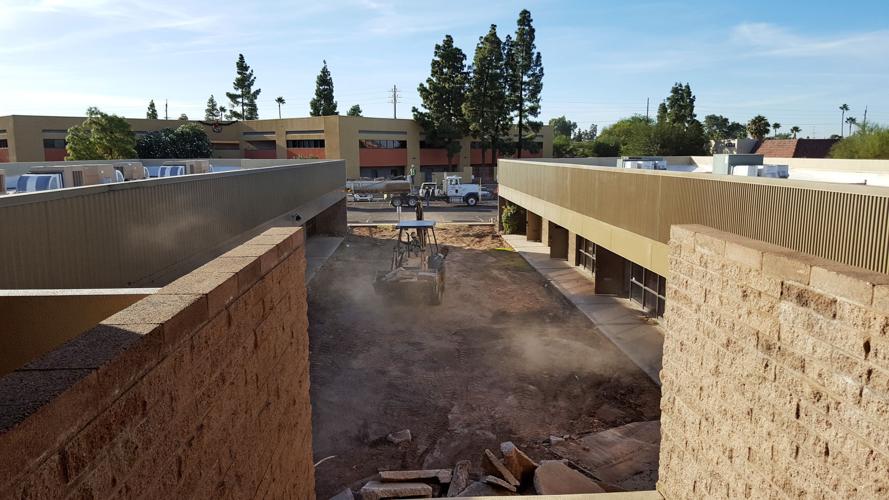
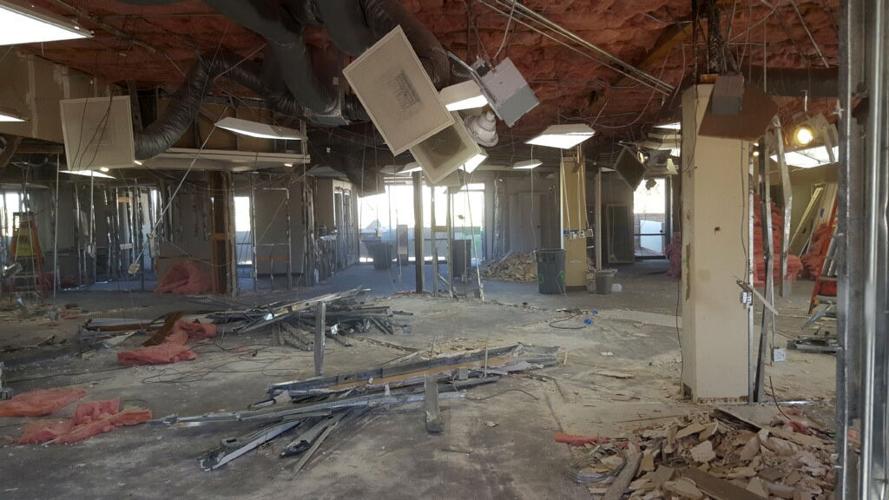
Demolition has already begun on the interior of the existing structures at the new site. The Community Foundation is working out of a temporary space and will move to the new campus when construction is complete, which is slated for summer 2018. The campus is expected to be open to the public by fall of 2018.
The new location has three buildings, including a two-story structure with 8,000 square feet on each floor. The Community Foundation鈥檚 operations will take up the second floor, and the ground-level floor will house collaborative working space where small operations can rent a desk or a cubicle and utilize shared meeting space.
They鈥檒l also have access to an on-site technical assistance center that will offer commonly needed services for nonprofits, such as board development, staff management training, financial sustainability, marketing and web development services, Mabie said.
The other two buildings will each offer four, 1,000-square-foot spaces for larger nonprofit tenants to lease. PICOR will be the site鈥檚 property manager.
The Community Foundation is in the midst of a campaign to raise $4 million for the new campus and has already raised more than $1.5 million, said Phil Amos, chairman for the building鈥檚 fundraising campaign and former chairman of the Community Foundation鈥檚 Board of Trustees. About $3.1 million will go toward the building purchase and renovations.
Amos鈥� father, George 鈥淏uddy鈥� Amos, was one of the founders of the Community Foundation. He envisioned the foundation as a steward for charitable giving so that donors鈥� contributions could be combined and managed for long-term growth, and ultimately have a more lasting impact, he said.
The Community Foundation was started in 1980 with a roughly $1 million administrative endowment. Today, the endowment is $150 million and the foundation gives out $7 million in grants each year, Amos said.
鈥淲e鈥檙e big enough now that we can really start to have an impact on needs identified,鈥� he said. 鈥淲ith $7 million, you really can start to make an impact.鈥�
Contact reporter Emily Bregel at ebregel@tucson.com or 573-4233. On Twitter: @EmilyBregel

Emily Bregel
Border reporter