The people鈥檚 priest was laid to rest Friday.
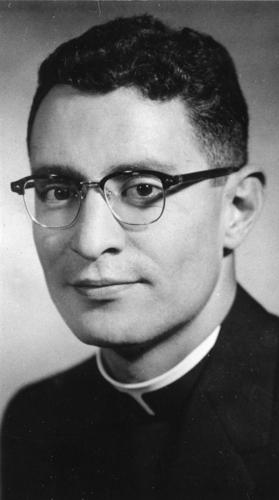
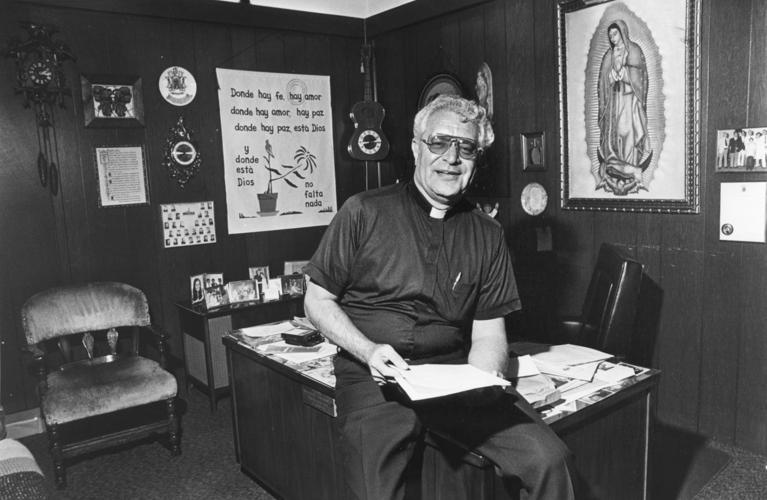
Monsignor Arsenio Sotomayor Carrillo, who for nearly 50 years ministered to Roman Catholics in Tucson and Southern Arizona, was eulogized and celebrated at St. Augustine Cathedral in downtown, where he first served as an assistant pastor in his initial assignment after ordination in 1956, and later as pastor and rector for more than 30 years beginning in 1969.
Monsignor Thomas Cahalane, pastor of Our Mother of Sorrows Parish, remembered his longtime friend and mentor for his humility, humanity and heart. The two priests met in 1969 and served together at the Cathedral, forming a deep bond of friendship and loyalty that extended over the years.
鈥淚 share the pain of your grief,鈥� Cahalane said to the Carrillo-Sotomayor families at the beginning of his homily.
Carrillo, who was known to many as Padre Cheno, died April 26 at the northeast home where he had lived in his later years cared for by his family. He had turned 87 on April 2. He was one of the first Tucson-born, Mexican-American priests to serve in the Diocese of Tucson.
People are also reading…
On the city鈥檚 west side two murals 鈥� one in Barrio Anita on the freeway frontage road and the other at the underpass of West St. Mary鈥檚 Road and the freeway 鈥� carry Carrillo鈥檚 images, a reminder of the spiritual and secular roles he played in many Tucsonans鈥� lives.
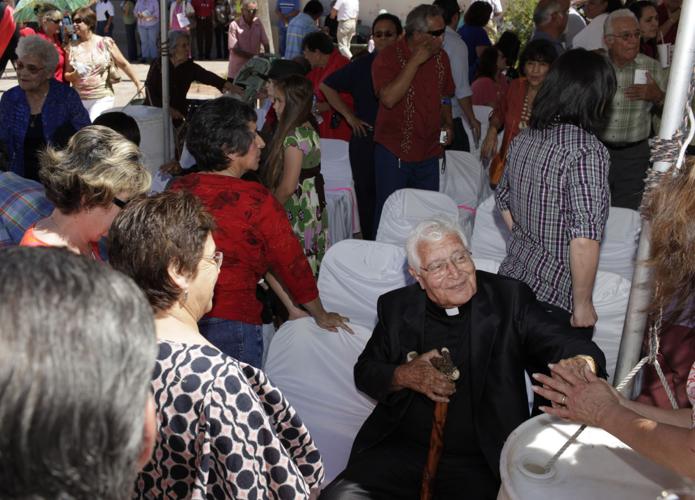
About three dozen priests and deacons, including Tucson Bishop Gerald F. Kicanas, led the funeral Mass attended by Carrillo鈥檚 extended family, many friends and acquaintances, some of whom were baptized or married by Carrillo.
Carrillo, was a 鈥淧ope Francis priest鈥� long before the Pope Francis era, said Cahalane, referring to the current pope known for his pastoral ways and support of social issues.
Carrillo鈥檚 cousin, Frank Sotomayor, eulogized Cheno as a 鈥渄edicated priest of the people and for the people.鈥� He said Carrillo 鈥渉ad a common touch that he exercised in an uncommon and remarkable manner鈥� and 鈥渁lways had the right words鈥� to share with someone in grief, troubled or in need of compassion.
Cheno always had a joke or a funny story to kick off his homilies, Sotomayor said, regardless if the punchline had any connection to the scriptures heard at the same Mass. But Carrillo had a talent and a touch for connecting with people with his meaningful and masterful homilies. He would lean into the pulpit, roll up the sleeves of his priestly garb and talk, simply and directly to churchgoers. And when he finished, Carrillo always asked those in the pews to pray for him.
鈥淗e was a giant of a priest,鈥� Kicanas said.
While leading the Cathedral parish, Carrillo steered the congregation to a more active social role. He created CROSS, Christian Responsibility in Sharing and Service. He was a founding member of the Pima County Interfaith Council and promoted numerous parish activities such as the annual Christmas Posadas at San Cosme Chapel on West Simpson Street in Barrio El Hoyo just south of the Cathedral.
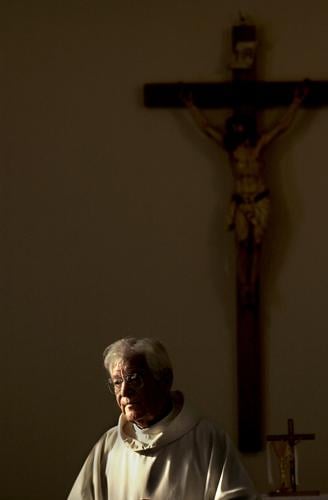
Above all, Carrillo relished being a priest, humble and devoted, taking Holy Communion to the sick or the elderly in their homes. He didn鈥檛 seek attention nor did he look to advance in the church hierarchy.
鈥淎s priests, Monsignor Carrillo said, 鈥榃e are ordained to be with the people,鈥欌�� Sotomayor said.
Carrillo was born in Barrio Anita, just north of downtown. He wasn鈥檛 expected to live. He and his twin sister Maria were born underweight and weak. She didn鈥檛 survive. Carrillo entered an Ohio seminary when he was 14 years old and was ordained on May 26, 1956. He celebrated his first Mass with his family at Holy Family Church where the family worshipped, and where Carrillo and his brothers were altar boys.
He was profoundly proud of his Mexican-American barrio roots.
And if Carrillo鈥檚 priestly contributions were not enough, credit him for the role he had in the growth of mariachi music in Tucson. A lifelong lover of mariachi music, Carrillo shared the music with a fellow priest, Charles Rourke, assigned to the Cathedral. Rourke, a musician, took to the music and formed a youth ensemble in 1964. Los Changuitos Feos, with two of Carrillo鈥檚 nephews, Randy and Steve, was the incubator for Tucson鈥檚 youth mariachi movement which thrives today.
To understand and appreciate Tucson is to have known Cheno. For in his life he was a spiritual leader and friend to countless Tucsonenses over several generations whose experiences reflected their hard work, perseverance, and faith in family and God. Cheno鈥檚 steady hand, dry and razor-sharp wit, and uncompromising devotion to his church and congregations, were his hallmarks.
He was Tucson鈥檚 priest.

Arsenio Carrillo graduated from a seminary in Ohio in 1956.
Ernesto Portillo Jr. is editor of La Estrella de Tucsón. He can be reached at 573-4187 or netopjr@tucson.com. On Twitter: @netopjr