

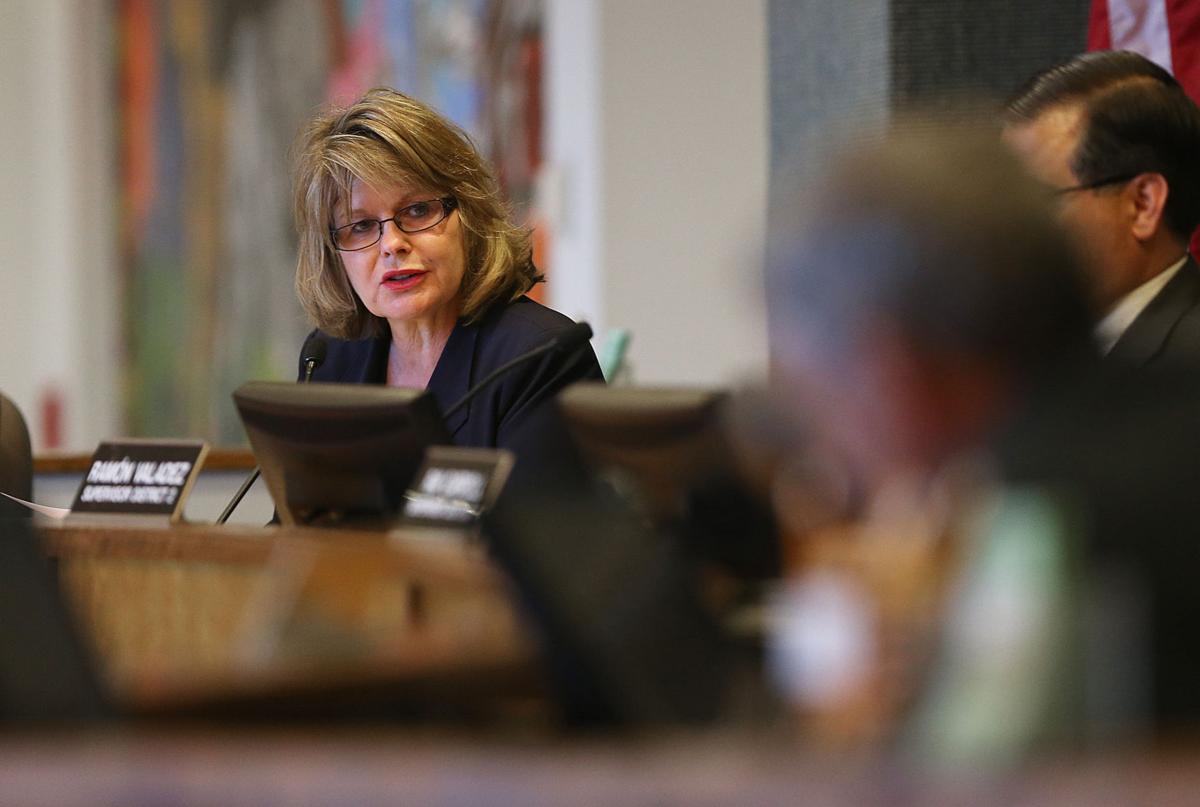
Supervisor Ally Miller鈥檚 effort to have two private memos from the Pima County Attorney鈥檚 Office released to the public went 1 for 2 Tuesday.
With a unanimous vote, the board released a November 2015 memo that gives an overview of the County Attorney鈥檚 Office鈥檚 responsibilities and relationship to the county board and other officials.
But on a 3-2 vote, the board chose not to release a June 2015 memo dealing with a proposed direct flight between Tucson and New York City.
鈥淚 just think in the name of transparency, it鈥檚 always important to release the information that we have in these privileged memorandums,鈥� Miller said. Supervisor Richard El铆as said he tries to 鈥渁lways be about transparency when it comes to private communications from our attorneys,鈥� but in this case, he felt 鈥渋t was important鈥� to maintain that privacy.
People are also reading…
While the June 17 flight memo was not released, another memo sent the following day was inadvertently released by the county in response to a previous records request, according to County Administrator Chuck Huckelberry. He said the released version summarizes the one Miller wanted made public, but has less detail. The Star obtained it through a separate public records request in May.
In the June 18 memo, Deputy County Attorney Regina Nassen tries to answer whether county participation in a revenue guarantee deal with an airline providing the service might violate the Arizona Constitution鈥檚 gift clause. That Article 9 section of the constitution prohibits any government body from giving or lending 鈥渋ts credit in the aid of, or make any donation or grant, by subsidy or otherwise, to any individual, association, or corporation.鈥�
In April, the Board of Supervisors approved the release of the county鈥檚 $100,000 share of a largely privately sponsored $3 million revenue guarantee with American Airlines, which had been providing nonstop flights to New York since the previous October. It burned through the fund much faster than was anticipated, and the flights were ended in May. Miller voted against the measure, citing concerns that the original commitment had not been made in public and questioning why taxpayers should subsidize what she described as a 鈥渂ad deal.鈥�
To comply with the gift clause, any use of public funds must be 鈥渇or a public purpose鈥� and 鈥渋n exchange for reasonable consideration,鈥� Nassen wrote.
Meeting the first bar requires showing that public benefits will result from the expenditure, but to clear the second, 鈥渙nly the objective 鈥榝air market value鈥� of the other party鈥檚 promises can be considered,鈥� according to the memo.
Nassen concedes that 鈥渋t is entirely possible that a court would take a simplistic approach and conclude that protecting a business entity鈥檚 bottom line falls squarely within the basic definition of a 鈥榮ubsidy鈥� and is therefore prohibited by the gift clause.鈥�
That could be avoided, though, if the deal is 鈥渁ppropriately structured.鈥�
In a situation in which potential earnings are insufficient to induce an airline to provide a certain flight, a promise to provide that service 鈥渄oes have a market value,鈥� Nassen argues.
鈥淚f a public entity determines that such a commercial activity will result in a public benefit, that entity should 鈥� be able to provide the funding necessary to induce the business to engage in that activity, so long as it provides no more than necessary, and provided that the amount of the funding does not so clearly dwarf the anticipated public benefits that the expenditure can鈥檛 rationally be said to serve a true public purpose,鈥� she goes on to write.
鈥淭he modest amount of money the county is considering putting at risk, the fact that it may never be drawn upon, and the fact it will be drawn upon, if at all, only after the service has actually been provided, also makes it less likely that a court would be inclined to strike the deal down,鈥� Nassen concludes.
The county, and the other fund sponsors, ultimately did pay out to American.


