It鈥檚 extremely rare for a jaguar to walk in front of a trail camera in Southern Arizona, but don鈥檛 tell that to the region鈥檚 newest spotted star.
For the second time in two weeks, a Tucson-based group has released clear, unmistakable video of Cinco the jaguar, so nicknamed because he is just the fifth of his endangered species to be recorded in the U.S. since 2011.
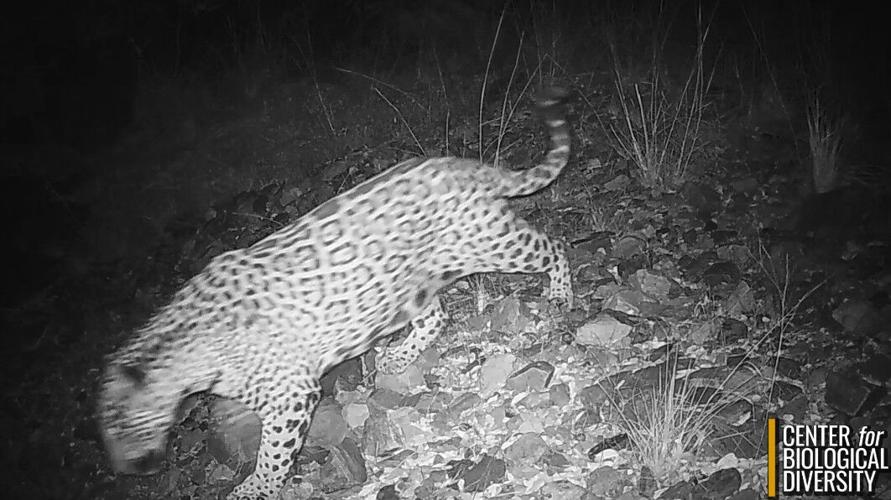
The black-and-white footage unveiled Tuesday by shows the healthy-looking apex predator moving across a rocky slope聽鈥� first one way, then the other聽鈥� in an undisclosed mountain range somewhere south of Tucson.
鈥淪eeing this incredible jaguar roaming in Arizona鈥檚 wild sky islands is a powerful reminder that these cats belong in the American Southwest and northern Mexico,鈥� said Russ McSpadden, Southwest conservation advocate for the environmental group.
People are also reading…

A wild jaguar known as Cinco appears in a remote-camera image taken in Southern Arizona in March and released last month by the University of Arizona Wild Cat Research and Conservation Center.
Cinco showed up in three clips recorded by the center鈥檚 remote, motion-activated cameras in March and April. The cameras also caught a bear, a mountain lion, a bobcat, a deer, a ringtail and a fox crossing the same patch of rocky ground.

A still image from a video captured by the Center for Biological Diversity shows a jaguar known as Cinco at an undisclosed location in Southern Arizona.
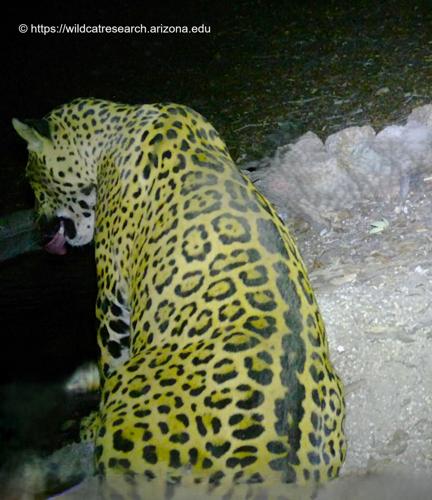
Last week, released its own footage of Cinco, filmed in full color and with sound as the cat sniffs the ground and licks his lips at a site where the scientific group previously captured still photos of him in February and March.
鈥淲hat makes this (video) especially compelling is that it captures the jaguar actively using scent as it returns to the same location, a behavior we rarely get to document this clearly,鈥� said Susan Malusa, director of the Wild Cat Research and Conservation Center.
As part of its federally permitted, long-term scientific work, the group has now detected Cinco more than 20 times, many of them repeat visits to familiar places, suggesting 鈥渟ite fidelity鈥� by an animal that isn鈥檛 just passing through, Malusa said.
The research and conservation center conducts monitoring year-round using an array of remote cameras and a network of scientists, students and trained volunteer researchers. Since 2012, the team has racked up more than 240 detections聽鈥� including photos, videos and DNA samples聽鈥� from all five known jaguars in the U.S. The group has also captured more than 50 detections of ocelots, Southern Arizona鈥檚 other, smaller rare cat species.
鈥淥ur research contributes long-term data that can inform land managers and decision-makers on the importance of maintaining permeability across these systems, not only for jaguars, but for a wide range of species that depend on connected habitats, including those that are threatened or endangered,鈥� Malusa said.
But that permeability is currently under serious threat, McSpadden warned.
鈥淭ragically, jaguars鈥� northern range is being ripped apart by Trump鈥檚 border wall construction, along with mining, groundwater depletion and climate-driven drought,鈥� he said. 鈥淲e need to take urgent action to protect our vital cross-border ecosystems so jaguars can continue prowling the Southern Arizona landscape alongside bears, pumas and ringtails. A landscape this wild is too precious to sacrifice.鈥�

Cinco the jaguar shows off his distinctive pattern of spots in a trial-camera image captured in March by the University of Arizona Wild Cat Research and Conservation Center.
In 2015, the Center for Biological Diversity teamed up with the environmental group to release the first-ever video of a wild jaguar in Arizona, a male that lived for a time in the Santa Rita Mountains and came to be known as El Jefe.
Two years later, the center released video footage of another wild jaguar, a male cat nicknamed Sombra, in the Chiricahua Mountains.
A total of nine individual cats, distinguished by their distinctive patterns of spots, have been documented in Southern Arizona and Southeastern New Mexico since 1996, including one caught on camera multiple times in 2023 in the Huachuca and the Whetstone mountains.
In 2025, the San Xavier District of the Tohono O鈥檕dham Nation passed a resolution recognizing the jaguar as a sacred animal and calling for stronger habitat protections and the reintroduction of the species across parts of its historic range in the U.S.
鈥淚 have prayed for the return of jaguars to these mountains, part of the ancestral lands of the O鈥檕dham鈥� said Austin Nunez, chairman of the tribe鈥檚 San Xavier District in a written statement. 鈥淛aguars are protectors of the people and are a part of our spiritual life and our connection to this land. Seeing a jaguar still moving through these mountains gives me hope for future generations and reminds us of our responsibility to protect these majestic animals and the places they depend on.鈥�