MAMMOTH 鈥� Garland Speight stood cliffside, listening to a mechanical whir echoing around a canyon that could one day become a sprawling open-pit copper mine.
鈥淚t might sound faint from up here,鈥� he said, looking over the edge far below where drill rigs tunnel into the rock. 鈥淏ut those noises can disturb wildlife.鈥�
In the sky, a Swainson鈥檚 hawk soared. It鈥檚 not the only bird species that calls the canyon home, he said.
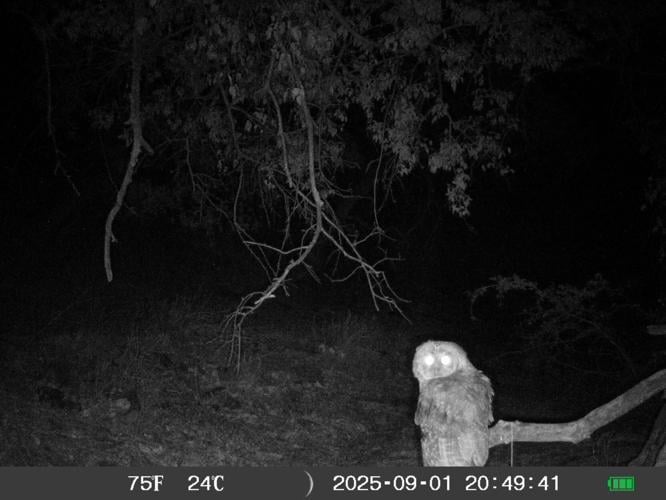
An elusive threatened owl species also lives in Copper Creek Canyon, according to trail camera footage captured by the Lower San Pedro Watershed Alliance. The canyon is flanked by the Coronado National Forest less than a mile east and Galiuro Wilderness Area, two miles south.
Last summer, the Bureau of Land Management greenlit a copper exploration project on public land in Copper Creek. Speight, who works with the alliance, said that in approving the project, the bureau ignored evidence that Mexican spotted owls were present in the area. Now, the alliance, the San Carlos Apache Tribe and the Center for Biological Diversity have filed a notice of intent to sue the federal government for violating the Endangered Species Act.
People are also reading…
The landmark law exists to protect imperiled species from threats and requires federal agencies to work toward their recovery. But the conservation groups allege that the government approved the project without considering their evidence. Emails between the bureau and an Arizona wildlife agency also reveal that the project鈥檚 timeline was expedited 鈥� leaving staff members scrambling to complete the environmental assessment in time.
鈥溾�奧e really just want our federal agencies to be held accountable and to follow the rule of law,鈥� said Melissa Crytzer Fry, the chair of the Lower San Pedro Watershed Alliance.
What the聽assessment concluded
Four years ago, Crytzer Fry visited the Mammoth post office, the 鈥渨ater cooler鈥� of her small community, where everyone goes to hear the latest news. On the bulletin board, a flyer announced an open house for a copper exploration project in the western slopes of the Galiuro Mountains, just about 10 miles from where she lives.
Redhawk, the U.S. arm of Canadian company Faraday Copper, was already operating in the area on privately owned parcels and state land, but wanted to expand.
In 2022, Redhawk submitted a plan to the BLM to assess 1,324 acres of public land in and around Copper Creek Canyon, which holds a tributary that meets the Lower San Pedro River.
With 67 drill pads, Redhawk planned to reach deep into the earth in search of leftover copper deposits that went unmined in the previous two centuries. Each rig could use up to 70,000 gallons of water a month, but only two are allowed to run at any given time. The project would take two to three years.
Last summer, the bureau completed its environmental assessment, a process intended to consider all possible risks to the surrounding ecosystems 鈥� especially those where creatures protected under the Endangered Species Act live.
Crytzer Fry said the assessment failed to do that.
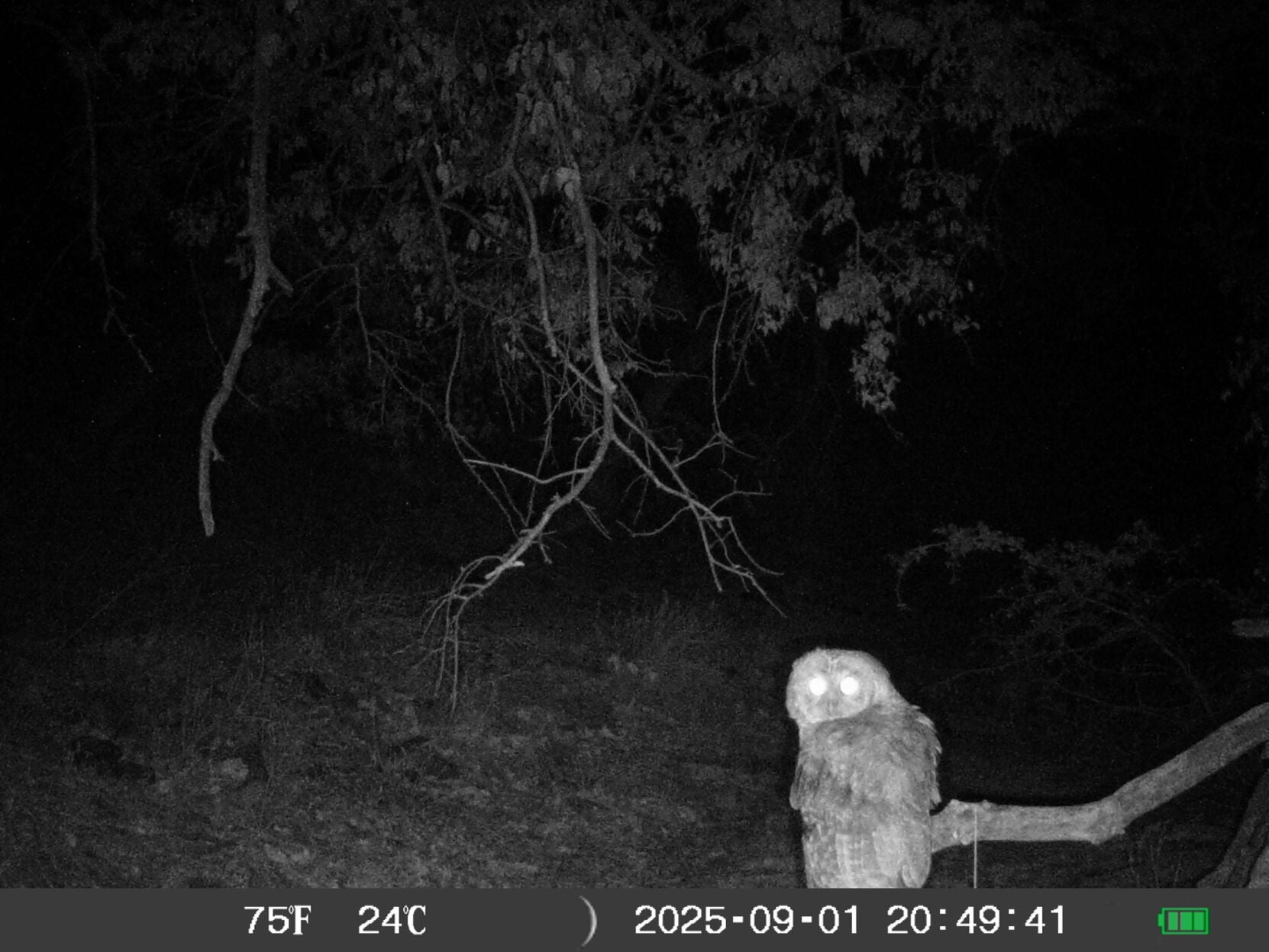
A Mexican spotted owl was captured on trail cameras in Copper Creek Canyon. The owls are listed as threatened under The Endangered Species Act.
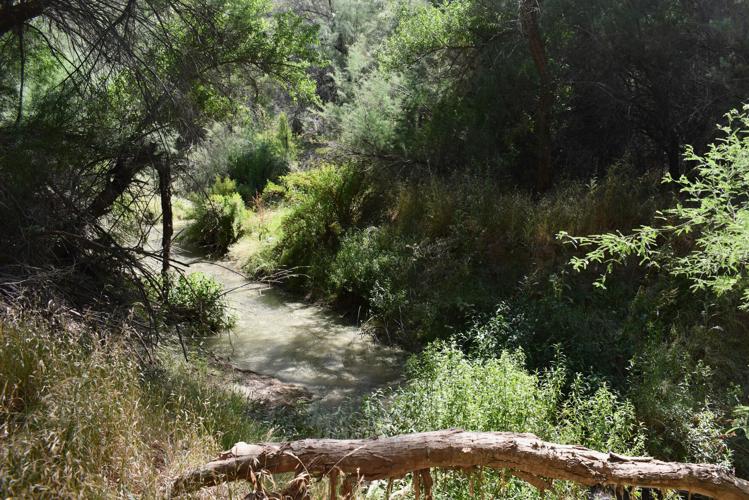
Copper Creek is a 鈥渓ittle oasis鈥� where water is available year-round, Speight said. And it鈥檚 part of the second-largest unfragmented landscape in the state 鈥� a rare expanse where the Santa Catalinas and Rincons meet the Gailuro Mountains and Aravaipa Canyon.
鈥淭here's this vast amount of wildlife movement back and forth between all these valleys,鈥� he said. 鈥溾�奣here are no major obstructions.鈥�
Black bears, mountain lions, birds聽and Gila monsters all traverse the rocky cliffsides.
The adjacent Lower San Pedro River is a globally recognized Important Bird Area with rare and precious riparian habitat, said Jennie MacFarland, the director of bird conservation at Tucson Bird Alliance.
But drilling, helicopter surveys, light pollution and groundwater depletion could jeopardize them, Speight said, especially Mexican spotted owls, which were listed as threatened under the Endangered Species Act in 1993.
Mexican spotted owls breed at higher elevations, MacFarland said. 鈥溾�奣hey have this real specific need for steep, narrow canyons and cliffs."
They travel between mountain ranges across Southeast Arizona and up into Colorado and Utah. But habitat loss is a big deal for them. Drought and wildfire limit their habitat, but so can large-scale industrial projects.

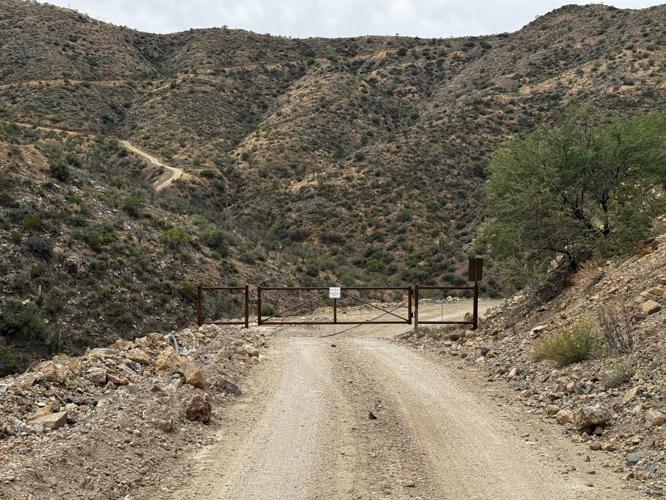
A public access road to Copper Creek is closed off on May 9, 2026.
鈥淭hey are very sensitive to disturbance,鈥� she said. Mexican spotted owls are secretive birds. They live in remote areas, hunt at night and sleep during the day. Often, they are only spotted on trail camera footage, in eerie night vision, or heard hooting a song that almost sounds a haunting repetition of 鈥渨ho cooks for you."
Threatened and endangered species are like canaries in the coal mine, MacFarland said. 鈥淚f they鈥檙e not being protected, the larger habitat is not being protected.鈥�
Are there owls at the site?
Scientists don鈥檛 know exactly how many Mexican Spotted owls remain in the wild, but they estimate around 1,300.
鈥漈hat alone makes them worth saving and worth caring about because any time we lose a species, humanity loses something too,鈥� Crytzer Fry said.
In its February 2025 draft environmental assessment, the bureau determined that the project posed no risk to the owls because there weren鈥檛 any around Copper Creek.
A few months later, during a public comment period, the Center of Biological Diversity and Lower San Pedro Watershed Alliance submitted photographic evidence to the bureau of the owls half a mile away from the site. The photos were taken in 2023, 2024 and 2025.
鈥淏LM completely ignored our responses in the final environmental assessment,鈥� Crytzer Fry said. 鈥淭hey disregarded the law surrounding the Endangered Species Act.鈥�
Other agencies, like the Arizona Game and Fish Department, did not have time to comment on the assessment, according to emails obtained by the Center of Biological Diversity and shared with The Arizona Republic.
Communication between the bureau and AZGFD shows that the review timeline was expedited by three months.
鈥淥ur office was notified in mid-May that we needed to adjust the overall Copper Creek project schedule from expected completion 9/30/2025 to 6/30/2025,鈥� wrote a BLM staff member in an email to AZGFD. 鈥淣eedless to say we have been sprinting to accommodate this schedule change between responding to public comments, consulting with US Fish and Wildlife (USFWS), and preparing an administrative environmental assessment (EA).鈥�

The Galiuro Wilderness Area is a protected habitat along the Lower San Pedro River just two miles from Copper Creek.
In another email to AZGFD, the聽same staff member apologized on behalf of the bureau.
鈥淚 completely understand the position BLM has put AZGFD in. Due to the timeline and pressure with this project, I really don't think there is space to work out additional requirements,鈥� she wrote in regards to AZGFD鈥檚 inquiry about pre-drilling surveys on the property.
The wildlife agency was notified only a few days before comments were due. A staff member at AZGFD replied that providing additional comments 鈥渏ust wouldn鈥檛 be realistic given the expedited timeline.鈥�
That means expert opinions at AZGFD weren鈥檛 included in the final assessment, said Russ McSpadden, a Southwest conservation advocate at the Center of Biological Diversity. That鈥檚 troubling because the bureau has a duty to protect threatened and endangered species, he said.
Three days after comments were due, the bureau announced that any impact the exploration would have on the environment would be negligible, though it recognized that the project could decrease habitat quality for other threatened species, like the yellow-billed cuckoo, in the short-term due to groundwater pumping and surface disturbance. Still, it approved the project.
It鈥檚 unclear exactly why the project was fast-tracked. The bureau did not respond to The Republic鈥檚 request for comment. But under the current presidential administration, the agency has prioritized industrial use of public lands by repealing conservation rules and expediting permits, reviving an old moniker: 鈥渢he Bureau of Logging and Mining.鈥�
鈥淲e鈥檙e seeing the same thing on a national scale,鈥� Speight said of Arizona, where foreign-owned companies are coming to capitalize on copper鈥檚 new designation as a 鈥渃ritical mineral.鈥�
Last year, President Donald Trump redesignated copper as a critical material essential to the national security, economic strength, and industrial resilience of the United States, which opened up new opportunities for mining.
If the water runs out, the landscape changes
On a recent afternoon, Speight stood under the shady canopy of mesquite bosque less than two miles away from Copper Creek. Dappled sunlight shifted on the forest floor. Birds chattered and flitted between the gnarled branches.
The bosque is one of the nearby ecosystems he worries could experience cascading consequences from the exploration project 鈥� and eventually from mining if the project is successful.
Mesquite trees, like cottonwood, depend on underground water reserves to thrive. But because they have roots that reach further down into the water table, they are more drought-tolerant than other desert-adapted trees.
Speight said that mesquite forests could prove an important refuge for wildlife in the face of climate change as other parts of the landscape dry out. But if the water table drops too much, due to mining or other demands, forests along the Lower San Pedro could suffer too.
Besides their importance to wildlife, they are places where people come to escape the unrelenting heat of summer, to bask in a wilder Arizona. There鈥檚 an intrinsic value to remote areas like the Bosque and Copper Creek, he said.
Since Redhawk has started drilling, access roads to public land in Copper Creek have been intermittently closed off by the company 鈥� even though the bureau repeatedly stated in response to public comments that the project would not result in the "temporary or permanent closure鈥� of any of the main access roads.
Residents nearby first noted the road closures in early May. When Speight visited on May 13, the roads were open again.
鈥淣o closures on public land roads have occurred in conjunction with Redhawk's activities,鈥� said Angela Johnson, the vice president of external affairs at Faraday Copper. 鈥淭he company owns a number of private inholdings surrounded by federal lands. As we have on occasion, the company may close the roads over our private land to ensure public safety.鈥�


 New effort could ID dozens of USS Arizona unknowns