

You remember the third week of June?
It鈥檚 hard to believe now, but it was 110-plus for eight straight days 鈥� a record heat wave. It was so hot I could hardly drag myself off the couch in my air-conditioned home to go and interview people living on the street in the life-threatening heat. They were barely making it.
It felt like, after 18 months of intensifying drought, Tucson鈥檚 future livability was in serious doubt.
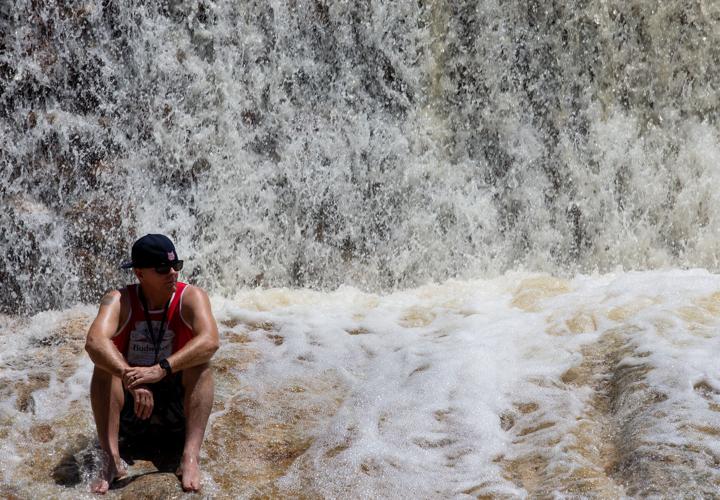
Then the last week of June came. Temperatures moderated and some rain fell. And it has rained more or less ever since. We went abruptly from the hottest June ever to the wettest month in Tucson history in July.
Tuesday night, as storms ran rampant over Tucson, I lay in bed wondering how much rain it took for Hurricane Harvey to turn Houston streets into raging rivers. Up to 5 inches fell on the east side that night.
People are also reading…
This may be what the future looks like. It鈥檚 not just extreme heat, though that will be more common. It鈥檚 extreme weather in general, sometimes one type right after another.
In fact, American climate experts have coined a term for the abrupt shifts between extremes that our hotter climate causes 鈥� 鈥渨hiplash weather.鈥�
They don鈥檛 use that phrase in the new Intergovernmental Panel on Climate Change report that came out Monday. But the concept is in there, as Jessica Tierney, a co-author who is a professor at the University of Arizona, explained to me Friday.
鈥淥ne of the major takeaways from the water-cycle chapter that I worked on is that as greenhouse gases increase, the water cycle intensifies,鈥� said Tierney, a paleoclimatologist in the geosciences department. 鈥淚t means that you get heavier precipitation events, and you get more extreme droughts, and you flip back and forth.鈥�
That feels familiar.
UA climate scientist Chris Castro confirmed, 鈥淥ur monsoon seems to be falling into that same kind of paradigm.鈥�
Castro, a professor in the department of hydrology and atmospheric sciences, researches the North American monsoon. He explained that in our warming climate, an increasingly large, intense ridge of high pressure builds over the West during the summer.
鈥淲e experienced record high temperatures in June. Then that ridge migrated to the north and west and caused a massive heat wave in the Pacific Northwest,鈥� he said.
But that same northward migration brought us a favorable flow of moisture, something we didn鈥檛 get last year.
鈥淭he result is that precipitation is becoming more extreme, more intense,鈥� he said. 鈥淭he reason is basic thermodynamics 鈥� a hotter atmosphere can hold more water vapor.鈥�
鈥淣atural variability controls the regime of hot or wet,鈥� Castro added. 鈥淏ut when you鈥檙e in the regime, you get more of whatever you鈥檙e going to get.鈥�
The results have been largely good so far this monsoon. The heaviest rain has been spread out enough in time and space to avoid large-scale flooding.
So we have intensely green mountains, lush parks and frequently flowing streams. It鈥檚 been great, mostly. We also have weed patches that need to be whacked along practically every street.
I bicycled Friday morning in Isabella Lee Natural Preserve, a Pima County property on the northeast side along Agua Caliente Wash. The last time I was there, in the winter, the place was not just dormant but dead, it seemed. As in the mountains and deserts around Tucson, life seemed to have slipped away.
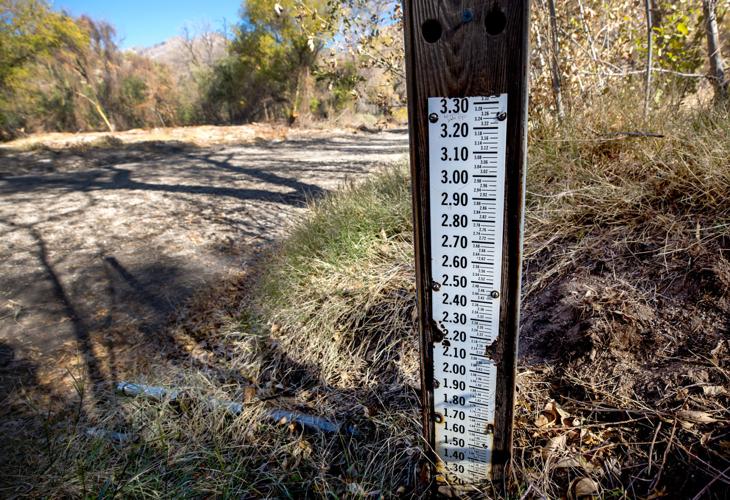
We had below normal precipitation in Tucson from January 2020 through June 2021, and 2020 was the driest year ever recorded here. No wonder it seemed to have died.
It hadn’t. On Tuesday, 4-5 inches of rain fell in this area, according to , where citizens report the precipitation from their gauges.
On Friday, my friend Tyler Pierce and I sat underneath hearty, happy Arizona walnut trees in a moist wash still creased by recent flows. Then we cycled paths ever narrower as plants up to our chests impinged on the route. It was a riot of life.
But as with anything good, you can have too much rain. Even in Arizona, even amid a long-term megadrought that began around 20 years ago.
That鈥檚 what I started worrying about Tuesday night amid the shocking thunder and waves of rain thumping on my roof.
We鈥檙e planning for extreme heat, of course. The mayor鈥檚 plan to plant a million trees is part of a broader effort to build 鈥渃limate resiliency鈥� in Tucson. But what about extreme rain?
鈥淚f we鈥檙e going into this more extreme world, we鈥檙e going to hit those fail points more and more,鈥� Castro told me.
The crazy whiplash weather we鈥檙e going through shows we also need to plan for rain so extreme it鈥檚 too much, even for drought-suffering desert dwellers.
Tim Steller is an opinion columnist. A 25-year veteran of reporting and editing, he digs into issues and stories that matter in the Tucson area, reports the results and tells you his conclusions. Contact him at tsteller@tucson.com or 520-807-7789. On Twitter: @senyorreporter

Tim Steller
Columnist


 Tim Steller's opinion: Rebellious schools are right, Ducey's wrong, on mask mandates


