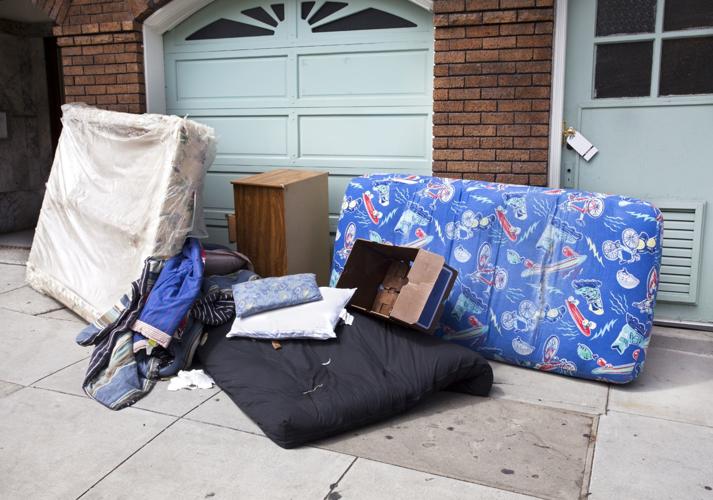

People have worked hard, admirably, to stop evictions and keep residents housed during the pandemic.
That鈥檚 totally justified. We don鈥檛 want people to lose their homes, especially because of pandemic problems that are no fault of their own.
And it鈥檚 worked, to an extent 鈥� homelessness in the Tucson area has not surged, at least not as much as feared.
But the blunt tool used to stop evictions 鈥� imposing a moratorium 鈥� is worn out. The Biden administration deployed it again last week, in a last-ditch effort to work around a Supreme Court decision that ended a previous moratorium July 31.
Congress could have acted, but it didn鈥檛, so the Centers for Disease Control and Prevention tweaked the previous moratorium to make it a little different from the one the court ruled on. The new moratorium applies to places like Pima County where there is substantial spread of COVID-19, but it might be overturned by a judge by the time you read this.
People are also reading…
The funny thing is 鈥� there would be no real need for the blunt instrument, the moratorium, if all levels of government would make its more specialized tool work better and faster.
The federal government has allocated up to $46.55 billion nationwide in two rounds of rental assistance as part of broader bills passed in December and March.
That is probably enough money to prevent evictions if we would just spend it fast enough, and if the rules worked.
Arizona has about $923 million available for rental assistance. That compares to an estimated total of $500 million-plus in total rent owed statewide, according to the Arizona Multihousing Association.
You see those figures? We have more than enough federal money available now to pay all the overdue rent in Arizona, and even have money to pay future months. As a state we don鈥檛 even have to contribute any of our own money, except to run the programs.
Pima County and Tucson officials are pretty proud of how well they鈥檝e done. U.S. Rep. Ra煤l Grijalva and officials from Tucson, Pima County and local nonprofits held a press conference Friday to trumpet their success and ask for more support from the state.
The last week of July, the joint Pima County-Tucson program allocated more than $1.5 million, the most ever for one week, noted Dan Sullivan, director of Pima County Community & Workforce Development.
鈥淲e have a really good thing going on,鈥� he said.
Pima County Administrator Chuck Huckelberry said the joint effort has spent or committed almost 70% of the $31 million the city and county received in its first round of funding.
鈥淚鈥檇 like to spend 100% by September and ask for more money,鈥� he said.
But still, and local nonprofits, has received 16,414 eviction-prevention requests while paying out for 3,287 of them. There are 100 inquiries a day and a waiting list of 2,700. It鈥檚 helping but not yet solving the problem.
City of Tucson Housing Director Liz Morales warned: 鈥淲e can鈥檛 downplay the crisis we鈥檙e in. We鈥檙e in a housing crisis, and we鈥檙e in a crisis with evictions.鈥�
Landlords feel it, too. They can鈥檛 be ordered to absorb unpaid rent month after month. This rental assistance program is also for them, and in fact, local landlords can initiate applications for rental assistance themselves.
But there鈥檚 a key problem with it, as well-funded as it is. Families with incomes up to $200,000 qualify for the eviction moratorium. But the maximum a family can make to qualify for rental assistance is 80% of an area鈥檚 median income.
In the Tucson area, a family of four can鈥檛 make more than $54,700 per year and still qualify for rental assistance.
鈥淚t鈥檚 really easy to qualify for the eviction moratorium and very difficult to qualify for rental assistance,鈥� said Courtney LeVinus, president and CEO of the Arizona Multihousing Association.
It鈥檚 unclear what percentage of unpaid rent is owed by people making more than the upper limit, but that鈥檚 one problem that ought to be fixed by raising the income cap.
The other problem becomes clear when you realize the state is receiving $511 million in money 鈥� apart from that received by large jurisdictions like Phoenix, Tucson and Pima County 鈥� for rental and utility assistance but has spent only $16.7 million so far.
That鈥檚 dangerous in part because the first portion, at least $229 million, is supposed to be spent by Sept. 30 or risk being 鈥渞e-allocated鈥� 鈥� in other words, taken back by the feds. There鈥檚 a good chance that deadline will be extended, but there鈥檚 urgency to hurry up and pay off rent.
One explanation for the low spending on the state鈥檚 part, LeVinus said, is that the state government received most of the rental assistance money destined for Arizona from the federal government, but it is primarily responsible for the rural areas and smaller towns and cities. In other words, the areas with most population 鈥� the metro areas 鈥� received less money than the outstate areas, and most are running their own programs, while the state has money sitting around.
That would be a scandal, except for two things: Most of the cities still haven鈥檛 spent what they received, and the state is willing to help out.
Indeed, if you dig into the figures, only the city of Mesa has spent all the money it received in the first round of federal rental assistance. It asked the state for more and is getting more.
The point of the press conference was to ask the state to help and cater to areas like the Tucson-Pima County metro that have done a good job allocating money.
鈥淐ut it loose, man,鈥� Grijalva said, in comments directed at the state. 鈥淒o a direct allocation. They (the counties and cities) are accountable. They鈥檙e accountable to elected bodies and to the feds.鈥�
The state should loosen the purse strings, and it is totally willing to do so.
鈥淎s local jurisdictions exhaust their resources, the State stands ready to provide additional assistance to protect renters and landlords,鈥� Department of Economic Security spokeswoman Tasya Peterson said in an email.
So the money is there, and the state is willing to help out, but we still have to move faster and more broadly to cover the back rent. Then we won鈥檛 have to resort to a legally dubious moratorium.
Tim Steller is an opinion columnist. A 25-year veteran of reporting and editing, he digs into issues and stories that matter in the Tucson area, reports the results and tells you his conclusions. Contact him at tsteller@tucson.com or 520-807-7789. On Twitter: @senyorreporter

Tim Steller
Columnist


 Anxiety high in Tucson as eviction ban ends