The commissioners were drilling deep into 鈥榮 efficiency efforts Thursday when they struck a favorite: The tree giveaway program.
Arizona Corporation Commissioner , who was elected in November, questioned the utility representative鈥檚 assertion that the company checks on where customers plant their trees.
鈥淵ou mentioned you go out and spot-check these trees. Is that part of the cost of the program? Where is that cost recovered?鈥�
Myers鈥� colleague, new Commissioner , had proposed an amendment to end the program, which only cost about $6,000 in 2022.
鈥淚 don鈥檛 want to put the giveaway of shade trees on the backs of consumers across the board, across the utility鈥檚 territory,鈥� Thompson said, going on to bring up a Dr. Seuss reference. 鈥淚鈥檝e got nothing against trees, but I鈥檓 not the Lorax, so it鈥檚 time to pull the plug.鈥�
People are also reading…
Thompson and Myers ran as a team of conservative Republicans who would focus on establishing regulatory stability for the utilities, and on eliminating mandates and subsidies. In January, they joined Republicans Jim O鈥機onnor and Lea Marquez Peterson on the commission, along with Democrat Anna Tovar.
In the months since they took office, the new commission majority has been following through with special zeal in questioning whatever might look like a subsidized efficiency or renewable program.
Thompson鈥檚 critique of the tree program holds together logically: Perhaps customers in the UniSource Energy service areas 鈥� in western Arizona and Santa Cruz County 鈥� are paying a penny each toward a tree program that doesn鈥檛 directly benefit most of them. And it was part of a broader critique of the company鈥檚 energy efficiency programs: That its surcharge for the program isn鈥檛 big enough to cover them, and that they don鈥檛 focus enough on low-income and needy people.
But the new majority鈥檚 focus may be disproportionate, and draw money away from efficiency and renewable programs, even as the effects of a climate warmed by burning fossil fuels start hitting home.
鈥淭here鈥檚 been considerable change since Myers and Thompson joined the commission and (Democrat) Sandra Kennedy went off the commission,鈥� said Sandy Bahr, the director of the Sierra Club鈥檚 Grand Canyon chapter and a longtime advocate for environmental causes before the commission. 鈥淭here was a Republican majority anyway, but these two have brought lots of anti-renewable energy, anti-energy efficiency rhetoric.鈥�
鈥楾ree socialism鈥�
Their positions have won them plaudits from the public, now that conservative activist and colleague have dedicated themselves to speaking repeatedly at commission meetings. Hamilton, who runs a group called and is director of Kari Lake鈥檚 , rails regularly against renewable programs.
When I talked to her Thursday, Hamilton called the UniSource Energy tree-giveaway program 鈥渢ree socialism.鈥� She fit that program, which she also termed 鈥渢ree equity,鈥� into a broader plot she envisions, led by the World Economic Forum, to control people through climate-oriented energy programs.
When she voted for Myers and Thompson, she said, 鈥淚 voted for low-cost, reliable, affordable energy that doesn鈥檛 come with World Economic Forum climate-tyranny strings attached.鈥�
To be clear, renewables and energy efficiency have been on the commission鈥檚 agenda for decades, long before the World Economic Forum became the focal point of conspiracy theories about world domination. That鈥檚 because we have a real problem with a warming world that is aggravated by our power plants burning fossil fuels, and energy efficiency is the easiest way for consumers to cut consumption.
Myers and Thompson don鈥檛 go so far as people like Hamilton in their rhetoric, though stopping 鈥淕reen New Deal鈥� programs was part of Thompson鈥檚 platform. But their actions reflect similar priorities. When Tucson Electric Power was going through the final hearing of its rate case Aug. 8, Myers went after an obscure TEP program that gives electric car owners a slight discount during off-peak hours.
Under the program, electric car owners are eligible for a 5% discount on the price of fuel and other components of the total rate paid for electricity used during off-peak hours. The idea is to encourage people with electric vehicles to charge their cars at night, TEP official Dallas Dukes said during the hearing. But it turns out the discount also applied to other off-peak times.
鈥淚t is my understanding that this is nothing but a subsidy,鈥� Myers said. 鈥淭he fact is, if they鈥檙e playing 95%, the 5% has to come from somebody else.鈥�
But Dukes explained that if the customer charges their car at night, that鈥檚 not true, because the price of fuel is lower at that time than what the customer pays.
鈥淗aving that small discount, that鈥檚 still above cost,鈥� he said. 鈥淚t鈥檚 not negatively affecting other customers.鈥�
After confirming the discount applied during off-peak periods outside the nighttime hours, the commission voted to eliminate the program.
Rooftop solar cuts
This focus on programs for managing electricity demand and for energy efficiency strikes Caryn Potter as disproportionate. Potter is the Arizona representative of the and a frequent speaker before the commission for five years.
鈥淭here seems to be this focus on zooming in on costs, that are, in comparison to the entire cost of running the electric system, small, because of the concerns of paying for something that your neighbor may be getting that you鈥檙e not benefiting from,鈥� she said.
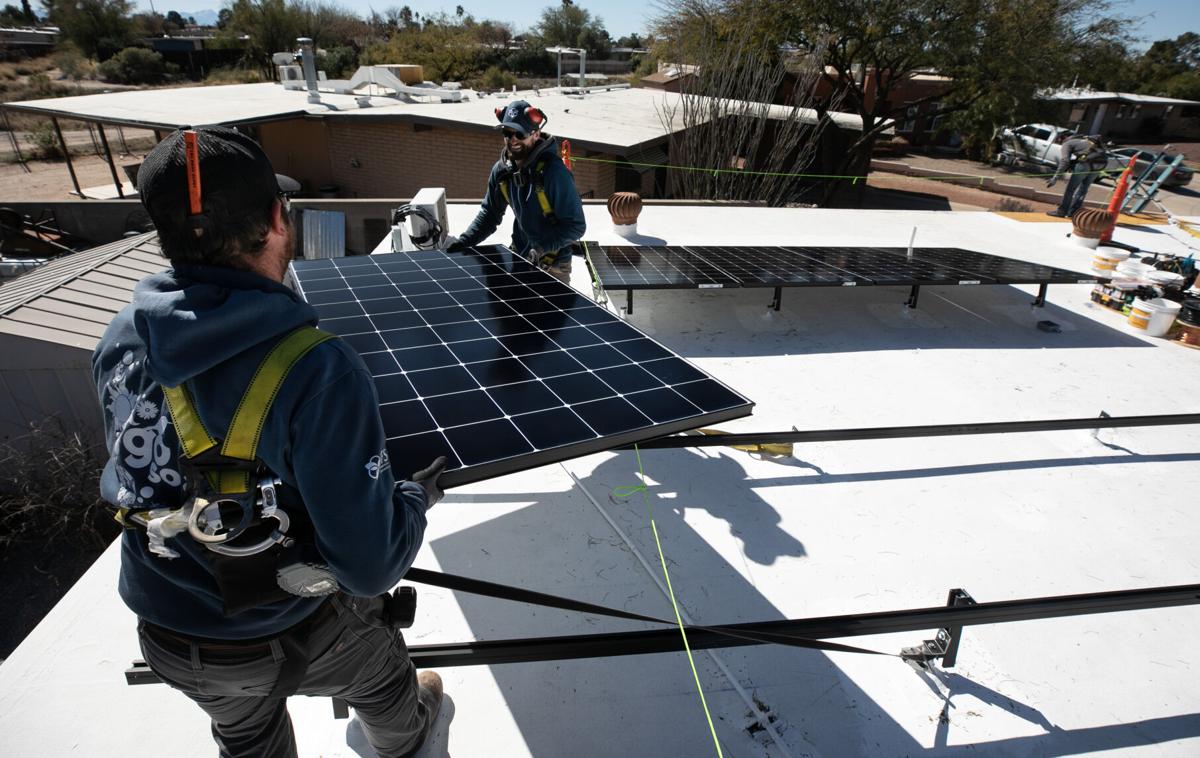
This conflict came into play again Thursday when Myers tried to cut deeply the amount that customers with rooftop solar are paid for the energy they export into the grid. Previous commissions decided that the price could only be cut by up to 10% per year, but Myers wanted more.
He argued that other utility customers are functionally subsidizing rooftop solar customers and the industry, because the amount paid by the utilities is higher than it should be. He wanted to cut the reimbursement rate by 20% or more.
Solar industry attorney Court Rich explained that any cut beyond the 10% that the previous commission dictated would be unfair and possibly illegal. He also threw the concept of 鈥渞egulatory reliability鈥� back at the commissioners who used the phrase in winning last year鈥檚 election, noting the solar industry needs that, too.
They ended up cutting the rate by the maximum of 10%.
Marquez Peterson, the only Tucsonan on the commission, told me every new commissioner brings their own particular interests to the job, so it鈥檚 not unusual Myers and Thompson would. The big questions of renewable energy, she noted, will come with each utility鈥檚 鈥渋ntegrated resource plan,鈥� due later this year.
In the meantime, they鈥檙e putting efficiency programs under the microscope as if they really were part of a global effort at 鈥渃limate tyranny.鈥�
Get your morning recap of today's local news and read the full stories here:
Tim Steller is an opinion columnist. A 25-year veteran of reporting and editing, he digs into issues and stories that matter in the Tucson area, reports the results and tells you his conclusions. Contact him at tsteller@tucson.com or 520-807-7789. On Twitter: @senyorreporter

Tim Steller
Columnist

 Tim Steller's column: Development effort fails again at key midtown Tucson site