For 33 years, Deb Kovacs sold sandwiches the old way. Customers talked and local ads ran. When the message reached the right audience, word spread.
Then in 2025, Kurt Williams put a camera on her face to make videos for TikTok and Instagram.
The 28-year-old social media strategist introduced the 71-year-old owner of Speed's Hangar Deli in Prescott to smart glasses: eyewear with built-in cameras that could record her work from her point of view.
The result reached far beyond the sandwich shop walls.

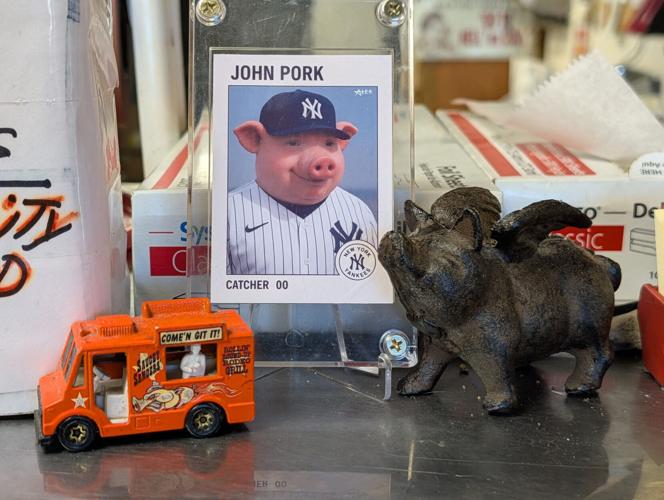
A "John Pork" baseball card is displayed inside Speed's Hangar Deli in Prescott. The meme became part of the deli's online content after owner Deb Kovacs began posting first-person videos recorded with smart glasses.
Williams estimated Speed's Hangar Deli videos have generated 25 million to 30 million views across platforms, including one YouTube video that reached close to 13 million views as of June 2026.
Kovacs made sandwiches and bantered with her longtime customers. Williams watched hours of footage and searched for what he called 鈥渓ittle bits of gold.鈥�
People are also reading…
He clipped funny customer exchanges and sandwich-making moments, then layered in internet jokes, video game references and humor to turn Kovacs鈥� daily work into a new kind of small-business marketing.
鈥淚 don鈥檛 do social media. Period,鈥� Kovacs said. 鈥淪o it鈥檚 all new to me. Sometimes, I absolutely hate tech.鈥�
In Phoenix, Eddie Sanchez, co-owner of Black Top Motors, is trying something similar. He uses smart glasses to show how he talks about vehicles, promote inventory before it is formally listed and capture unscripted moments on the lot. Sanchez said one video generated more than 100 inquiries about a truck that was not the focus of the clip.
The videos are part of an emerging trend among small-business owners tapping smart glasses to create first-person social media content and promote themselves. Experts say the glasses are a tool that lets businesses turn everyday work into content, while raising a bigger question: What happens when real customers become part of the marketing?
How smart glasses became small-business marketing
Ray-Ban Meta glasses, made through Meta's partnership with EssilorLuxottica, have helped lead the smart-glasses category. Meta, the parent company of Facebook and Instagram, also sells Oakley Meta smart glasses through the partnership.
EssilorLuxottica said more than 7 million AI glasses were sold worldwide in 2025, according to the company鈥檚 annual earnings report. For scale, that is larger than the Phoenix metro area鈥檚 population of about 5.2 million.
The impact on small businesses is harder to measure. Kovacs and Sanchez said they have explored ways to monetize their videos, but neither said the content has yet to produce direct revenue. Instead, they pointed to new customers, increased visibility and more inquiries about their businesses from the videos created with the smart glasses.
The technology also has practical limits. Williams said the glasses used at Speed's Hangar Deli can record for only about three minutes at a time, requiring users to repeatedly start new recordings throughout the day.
Arizona State University marketing professor Nancy Gray said the technology is increasingly being adopted by founder-led businesses and local operators because it offers a relatively inexpensive way to create behind-the-scenes content.

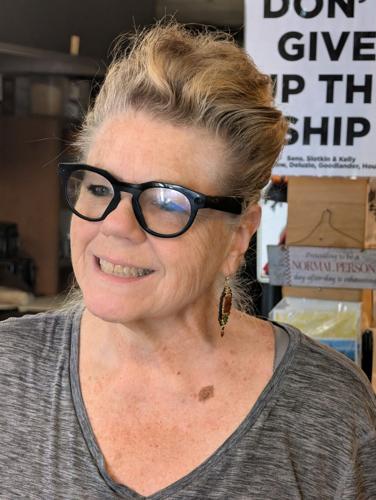
Deb Kovacs, owner of Speed's Hangar Deli in Prescott, uses her Oakley Meta HSTN smart glasses at her deli to record first-person videos that she shares on social media.
Prescott deli went viral with smart glasses. Why did it work?
Kovacs began using smart glasses in late 2025 after partnering with Williams, founder of Kurdie Content.
Williams would meet his father for lunch at Speed's Hangar Deli near Embry-Riddle Aeronautical University in Prescott, when he said it first struck him that Kovacs' personality 鈥� a transplant from New York who is equal parts warm, funny, honest and tough 鈥� was something that could work in front of an audience online.
Kovacs did not immediately embrace the idea. Williams said there was 鈥渁 lot of skepticism鈥� at first when he proposed using smart glasses to film life inside the deli. But curiosity eventually won, and Kovacs agreed to test the concept. She purchased the glasses herself and later hired Williams to edit and package the footage for social media.
But the project did not fully click until Williams said he stopped trying to make safe, generic videos.
鈥淚nstead of me overthinking things, let me just make content that I personally would enjoy,鈥� he said.
So he leaned into internet culture and mixed lunch service with customer interactions, video game references and Gen Z humor to create an entirely unique form of content.

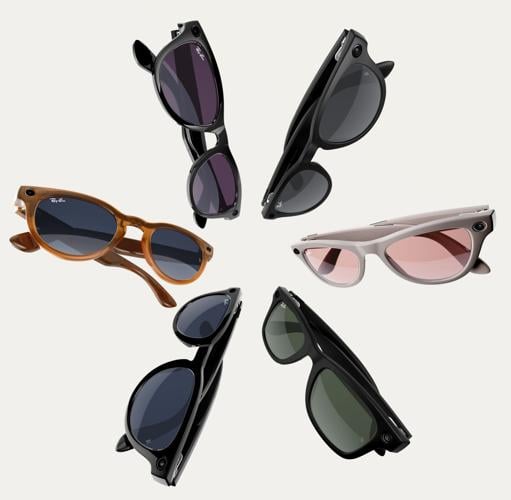
Ray-Ban Meta glasses.
How John Pork helped Speed's Hangar Deli find customers
Some of Speed鈥檚 Hangar Deli鈥檚 most popular clips include recurring references to John Pork, a pig-faced meme character popularized on social media, according to Know Your Meme.
"I looked it up, and the genre is called brain rot," Kovacs said of John Pork. "The way I understand the John Pork . . . It's just a free-for-all version of a soap opera, but they're using the cartoons, and they make their own story up," Kovacs said.
Now, customers from across the country, and as far as London, come in asking for the John Pork sandwich, a loaded bacon-lettuce-tomato that requires a password customers can find on their social media pages to order.
Kovacs embraced the attention. But she did not want the joke to swallow the deli.
鈥淚 don鈥檛 want it to take over who I am,鈥� Kovacs said. 鈥淚 don鈥檛 want it to be a John Pork deli.鈥�
The walls of Speed鈥檚 Hangar Deli read like a military scrapbook. Photos, patches and memorabilia cover the Prescott deli, anchored by a custom steel P-40 Warhawk in the front window. History is the heart of the place, even as memes and smart glasses bring a new generation through the door.
When the videos started working
Kovacs said only a handful of customers came in because of the content at first. By spring, she said, visitors were traveling from around Arizona and beyond after discovering the deli through social media.
But for her, the appeal reaches beyond marketing. The videos allow Kovacs to show what she describes as a community space, where customers can go for conversation as much as food.
"No matter who you are, you know you鈥檙e safe in here," she said.
How Black Top Motors uses smart glasses to sell cars
At Black Top Motors, brightly colored flags wave above a used-car lot in the hot central Phoenix sun.
Lately, Sanchez has shifted to just selling trucks in one of metro Phoenix鈥檚 crowded auto markets. Like Kovacs, Sanchez is not trying to create polished advertising.
Since he picked up a pair of Ray-Ban Meta smartglasses a year ago, Sanchez said viewers respond to the way he talks about vehicles and discloses their flaws.
鈥淧eople like to hear how I present things, how I talk about the cars, how I鈥檓 honest about the cars,鈥� he said. 鈥淚f there is a problem, how I disclose it.鈥�
One of his most useful marketing videos was not really about a vehicle at all. In the video, a potential customer stood on the lot and told a tall tale about putting jet fuel in a Chevrolet Spark and racing a Lamborghini. Sanchez, behind the glasses, mostly listened.
In a later video, featuring the same storyteller, a truck in the background stole the show, Sanchez said, drawing a wave of inquiries from viewers.
Sanchez, 37, opened Black Top Motors in 2024, and is a self-described car fanatic.
Before the dealership, he imported vehicles from Japan. Now the smart glasses give him another way to share that enthusiasm while helping his business stand out, Sanchez said.
Why customers watch smart glasses videos
Nancy Gray, a marketing professor at Arizona State University, W.P. Carey School of Business, said customers are responding to the feeling of access they get from the glasses created video.
鈥淲e, as customers, we want access to the people and processes behind the brands,鈥� Gray said.
For Kovacs, that means watching sandwiches getting made and hearing her talk with customers. For Sanchez, it means watching him explain what he does and does not know about a vehicle.
鈥淧eople are often more interested in seeing real work happen than in just watching some polished ad,鈥� Gray said.
Gray said the glasses can help owners document their work, but the device itself does not determine whether customers connect with a business.
鈥淭hey鈥檙e not a marketing strategy, they鈥檙e a tool,鈥� Gray said.
Kovacs uses the glasses to document life inside her deli. Sanchez uses them to show customers how he talks about vehicles and runs his dealership.
The privacy concerns around smart glasses
The same videos that make businesses feel more open can also make customers part of the content.
Gray called it a 鈥渢rust paradox," meaning a business can gain trust from viewers while also making some customers wonder whether they will end up online.
Sanchez said he has seen both reactions. Some customers enjoy appearing in videos, while others have asked not to be shown, but he said he is willing to delete videos when someone objects.
Sarah Igo, a Vanderbilt University historian who studies privacy in American life, said smart glasses fit into a long history of technologies that make it easier to capture people unexpectedly.
鈥淥nce instantaneous photography developed, suddenly people could take pictures on the fly, could catch people unaware,鈥� Igo said.
Smartphones accelerated that shift event more, and now smart glasses are a step in the same direction, Igo said.
But Igo said Americans' relationship with privacy has always been double-sided.
鈥淎mericans say that they're really worried about their privacy, but they love peering into other people's private lives,鈥� Igo said, pointing to reality TV and other forms of entertainment built around watching people.
What smart glasses mean for small-business marketing
Business owners like Kovacs and Sanchez spent most of their careers relying on traditional advertising and word of mouth.
Williams grew up clipping video game streams and finding ways to reach an audience online.
Together, Kovacs and Williams built an audience around something neither invented. A deli owner making sandwiches, talking to customers and building relationships.
Questions about privacy and smart glasses remain unsettled. Kovacs has tried to navigate them by asking permission before filming customers and giving people the chance to stay off camera.
The videos helped turn Speed's Hangar Deli into a destination. But when the crowds arrived, Kovacs noticed something unexpected.
"Everybody started talking to each other instead of on their phones," she said.