PHOENIX聽鈥� Arizonans will be asked in November to decide who can participate in girls' sports, what identification people need to vote, and whether to ban DEI-type programs.
In a series of last-minute decisions, the Republican-controlled Legislature gave final approval to the mostly controversial measures before adjourning for the year Saturday morning.
Some are amendments to the Arizona Constitution, which can be enacted only with voter approval. But others are being put on the ballot to avoid possible vetoes by Democratic Gov. Katie Hobbs, who gets the last word on statutory changes but not on ballot measures.
In total, Republicans in the Legislature referred 10 measures to voters.
And there may be three more proposals on the ballot, all dependent on whether their citizen sponsors can get the required signatures.
People are also reading…
Here's a quick analysis of what's coming:
Voting rules聽
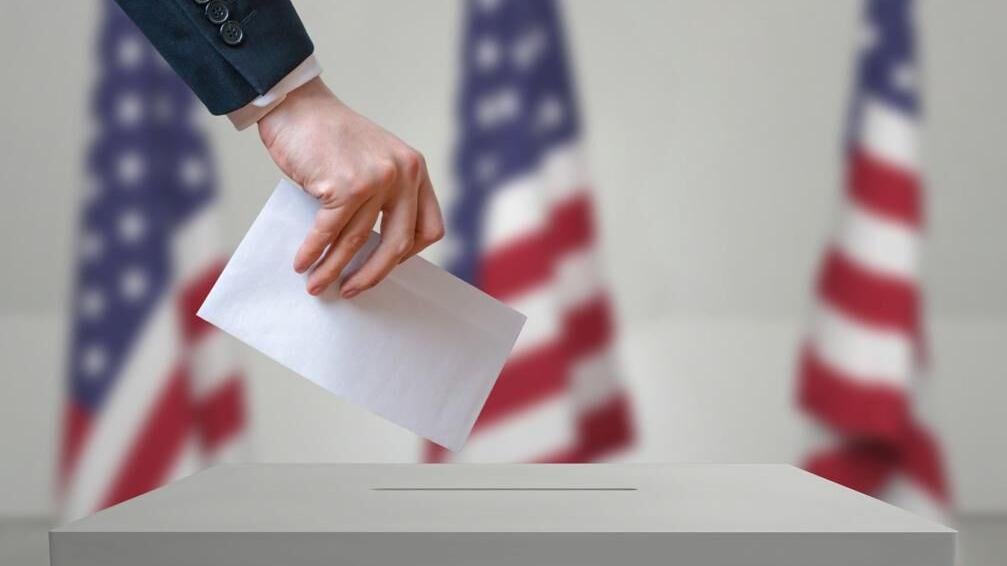
This measure would put language into the Arizona Constitution to say that only citizens can vote and that foreign nationals cannot spend money to influence Arizona elections.
But all that already is the law in Arizona, said Tempe Democratic Sen. Mitzi Epstein. She said the measure is聽designed to bury the fact that a key provision could make it harder聽鈥� if not impossible聽鈥� for people to cast their ballot by mail, a practice that for years has been used by more than 80% of voters statewide.
The applicable language spells out that ID must be presented "in each election, whether voting in person or by any other method.''
That's how the system works now for those who vote in person. But it's not the case for mail voting.
Instead, voters must sign the ballot envelope. Then the law requires that signature to be compared with that voter's signatures that election officials have on file, whether from when people first signed up to vote or from other documents, including prior early ballots.
Rep. John Gillette said the mandate is justified. The Kingman Republican said polls show that more than 80% of Americans support voter ID.
"This is what my constituents want,'' added Rep. Lisa Fink, R-Glendale.
But Phoenix Democratic Rep. Stacey Travers said what's missing is exactly how that would work for mail-in ballots. That is left to a future legislature to decide, he said.
Scottsdale Republican Rep. Alexander Kolodin said there are options. For example, he said county election officials could issue each registered voter a unique identification number. Then they would have to put at least the last four digits of that number on the ballot envelope.
Rep. Lydia Hernandez, D-Phoenix, worried that the yet-to-be-determined system could be more complicated, as in requiring people to make copies of identification documents and send them in with their ballots. That doesn't help those who don't have easy access to a copier, she said.
The bigger fear among some Democrats is that the Republican-controlled Legislature, echoing the will of President Donald Trump, who has called for an end to all early voting, would instead enact a law to require people to show up in person at the polls with their ballots and IDs, effectively ending all early voting.
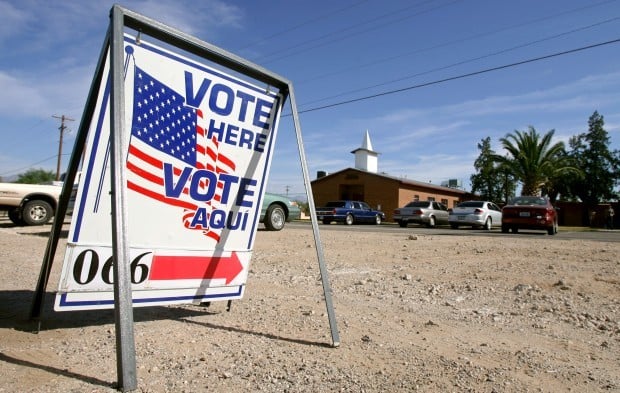
The Republican-controlled Arizona Legislature is referring 10 measures to voters to decide in November. Another three proposals might be on the ballot, depending on whether their citizen sponsors collect the required signatures.
Rep. Rachel Keshel, R-Tucson, said adding that identification to the Arizona Constitution will "instill trust in our elections.''
But Tucson Democratic Rep. Alma Hernandez wondered exactly why Republicans think elections have been affected by people voting who should not.
"You all still won,'' she said, pointing out that Republicans outnumber Democrats in the House and Senate. "So I don't know what election was 'stolen'.''
Of note is that there is a separate initiative drive that would put a provision into the Arizona Constitution guaranteeing the right to vote by mail. Backers need 383,923 valid signatures on petitions by July 2 to put that plan on the November ballot.
If both were to pass, the measure that got more votes would take precedence if courts conclude any provisions are in conflict.
Girls sports聽
Also on the ballot is the hot-button issue of who can play in girls' sports.
The debate revolves around transgender females, those assigned as male based on their biological features at birth but who identify as females.
"It is not fair to allow biological males to compete in competitive sports against biological females,'' said Senate Majority Leader John Kavanagh. The Fountain Hills Republican said they are inherently stronger than girls of their own age, having "God-given testosterone'' that results in more muscle mass.
But others argue that isn't necessarily true, particularly among transgender girls who have not gone through puberty.
Sen. Analise Ortiz proposed to alter the measure to allow a sponsoring athletic association to make rules to determine who can participate in certain sports based not on gender but on other factors relevant to the sport, including age, essentially to determine whether one sex would have an inherent advantage.
The Phoenix Democrat said that would take care of situations of transgender children who identify with a gender different from the one they were assigned at birth and want to play sports with other girls. But that was rejected by the Republicans.
Arizona already has a voter-approved law that spells out that teams designed for women or girls "may not be open to students of the male sex.'' This measure rewords some of that and adds some new definitions and restrictions, including listing who can use which locker room based on sex.
It also defines "sex'' to mean "the individual's biological status as male or female as recorded at birth on the individual's original birth certificate.'' That would get around a court ruling that says the state must issue amended birth certificates to transgender individuals.
It also is unclear whether any of this would overturn the ruling of a federal judge who has allowed two transgender girls to participate in girls' sports.
The judge said the Arizona law cannot be applied to them because there was evidence the plaintiffs either had not entered puberty or were given puberty blockers, meaning they had no more inherent strength than boys of the same age.
That ruling was upheld by the 9th Circuit Court of Appeals. But the last word could depend on how the U.S. Supreme Court rules on similar claims out of Idaho and West Virginia.
Photo radar聽
Foes of photo radar have been trying to get it outlawed for years. But they run into opposition from local officials who say the use of cameras makes their streets safer.
The counter from foes is that the cities are really interested in the revenues generated, with speeding tickets often drawing fines in excess of $200.
This ballot measure gives voters in each of those communities a voice.

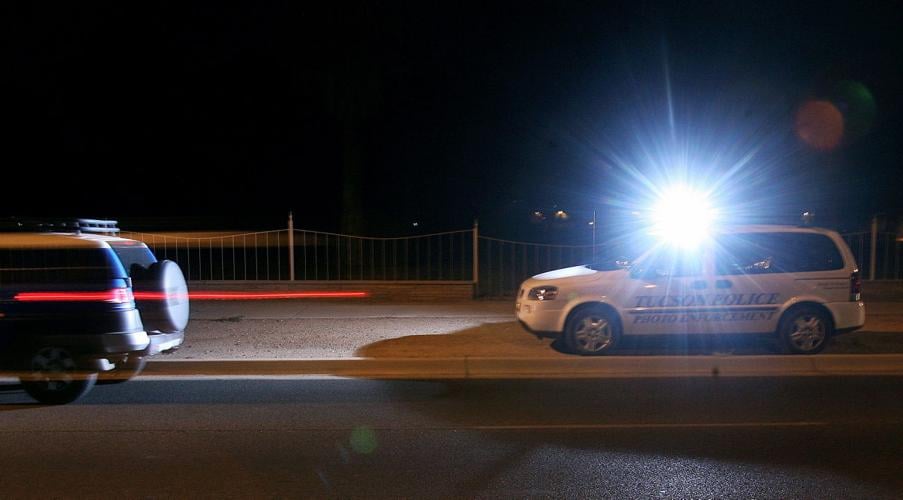
One of the measures on Arizona's November ballot says that if it's approved, no community could install a new photo enforcement system unless local officials first got approval from voters in a local ballot measure.聽
If approved, no community could install a new photo enforcement system unless local officials first got approval from voters in a local ballot measure. Existing communities could keep their cameras. But those contracts would expire every 10 years unless there is a new public vote.
Part of the reason this is going to the ballot is because Hobbs has vetoed other proposals to limit photo enforcement.
The Legislature separately approved a bill聽鈥� one not contingent on voter approval聽鈥� to cap the fines for photo radar violations at $75. The state could not forward information about citations to insurance companies, and the citations could not be used to suspend anyone's license.
Lawmakers did carve out exceptions, though, for citations for criminal speeding聽鈥� meaning more than 20 miles over the posted limit聽鈥� as well as for speeding through school crossings and for running a red light.
Classroom spending聽
The Arizona Auditor General's Office produces an annual report of how much of each dollar every school district gets goes to instructional expenses. That mainly involves salaries and benefits for teachers, aides and substitutes, plus general instruction supplies, field trips and athletics.
Rep. Matt Gress pointed out that the most recent report shows that, on average, schools in Arizona spent just 52.1 cents of every dollar on instruction. That's the lowest figure in the two decades that such reports have been prepared.
So the Phoenix Republican got a measure added to the ballot to require each district to get that figure up to at least 60%. He said that would force schools to put more dollars into teacher salaries.
Foes said the problem with a hard-and-fast formula is it does not account for districts that have higher-than-average costs, like geographically large districts with transportation costs. And it comes at a time when the state's major utilities are looking to impose increases in the price of electricity.
But Gress insisted that some costs can be reduced. He said some districts have high utility costs because they are not closing schools despite declining enrollment, resulting in high utility costs.
A measure added to the ballot would require each school district to spend at least 60% of its money on classroom instruction.聽聽
The measure would require any district below that 60% level to improve instructional spending by at least a half a percentage point a year. Gress said that's not an unreasonable ask.
So, for example, Glendale Elementary School District, which the report showed put 49.8 cents of every dollar into instruction, would have more than 20 years to comply.
The teeth in the measure is that those who don't make progress would lose some of their state funds, though there is an option for the state superintendent of public instruction to issue up to two waivers every decade.
The 60% mandate also would apply only for school districts in Pima, Pinal or Maricopa counties and for districts of at least 7,500 students in the other 12 counties.
Diversity and discrimination聽
Also going to the ballot is a measure proponents said is designed to tighten up existing laws to prevent preferential treatment based on race, sex, color, ethnicity, or national origin in public employment, education or contracting.
House Speaker Steve Montengro noted that Arizona voters approved a measure in 2010 to ban racial discrimination in public employment, education and contracts. But the Goodyear Republican said there have been efforts to find "loopholes to advance practices and programs that end up classifying individual students based on their race or their skin color.''
"I think we can all agree that it is never, never OK to discriminate based on race or sex or ethnicity,'' he said.
The measure seeks to add new provisions like barring spending public money to operate any office in public education that is responsible for promoting preferential treatment.
Also forbidden would be using race or ethnicity as a factor in admission, graduation, hiring, promotion, certification or any employment function or scholarship opportunity. It also would outlaw any training of public employees about the concept of diversity, equity and inclusion.
It also takes aim at what proponents say are questions asked of job applicants about DEI, a move they say lets agencies screen out certain people.
But Senate Minority Leader Priya Sundareshan said the net effect would be broader.
The Tucson Democrat spoke of going to law school at the University of Arizona and getting support by being a member of the Women Lawyers Association and the Asian Pacific American Law Students Association.
She said those organizations helped members complete their education, saying they could "reach out to each other.'' Sundareshan said she believes those kinds of organizations would be banned.
Sen. Sally Ann Gonzales, D-Tucson, said she feared broader implications, saying it would prohibit teaching "the history of my people.''
Vehicle taxes聽
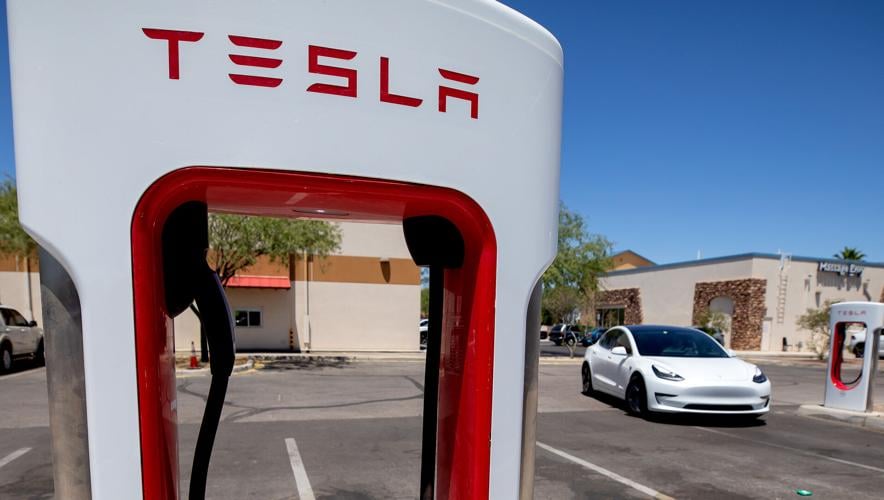
Arizonans will get a chance to decide whether to outlaw a method being considered to make sure聽 owners of electric vehicles pay their fair share of the cost of building and maintaining roads.
Such construction now is funded largely by the state's 18-cent-a-gallon gasoline tax. But there is no equivalent levy against those who charge up their vehicles by plugging them in.
One idea is to have a tax based on the number of miles racked up each year by an electric vehicle.
There have been various proposals to come up with an equivalency formula. All have been defeated.

Arizonans will get a chance to decide whether to outlaw a method being considered to make sure owners of electric vehicles pay their fair share of the cost of building and maintaining roads.
This measure would put a provision into the Arizona Constitution barring state and local governments from imposing any tax or fee "based on the vehicle miles traveled.''
Sen. Jake Hoffman is framing the issue as one not of finance but of privacy.
"It stands on the very simple principle that government should not be tracking or taxing your miles,'' said the Queen Creek Republican.
The Arizona Department of Transportation, noting the increasing trend away from gasoline, has contracted for a study to put a number on how many electric vehicles are driving in the state, and how that figure might change in the future. That study also will help ADOT determine how this shift will affect fuel use tax receipts.
Food taxes聽
The ability of local communities to impose their sales taxes on food would be constrained if voters approve another ballot measure.
Arizona does not tax food. But that option still remains for cities, many of whom say they are dependent on the revenues generated.
What Rep. Leo Biasiucci crafted is a compromise of sorts. If approved in November, the measure by the Lake Havasu City Republican would spell out that, beginning on July 1, 2027, the sale of food items intended for human consumption could not be taxed.

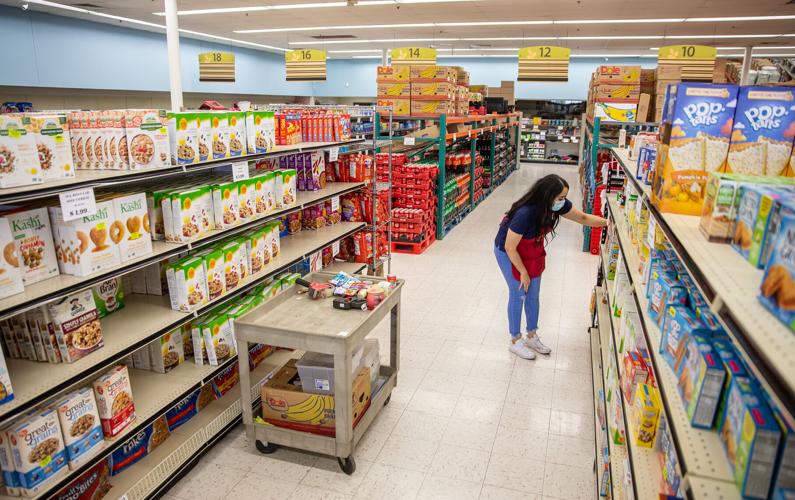
The ability of local communities to impose sales taxes on food would be constrained if voters approve another ballot measure.
But it says cities that have such a levy could keep them聽鈥� with certain restrictions. If the tax is 2% or more, it could remain, but could not be increased.
Communities with a tax rate lower than that could go up to the 2% figure, but only if they first got approval from local voters. The same rule would apply to any city or town with no sales tax now on food that wants to impose one.
In all cases, any increase in the food tax would be prohibited if the community increased any other sales, use or other taxes after July 1, 2027.
Terrorist organizations聽
Voters will decide whether to designate drug cartels as "terrorist organizations.''
There's more to that issue than a name.
The measure drafted by Montenegro, the Republican House speaker, also would require the Arizona Department of Homeland Security to do "everything within its authority to address the threat posed by drug cartels.''
It defines those as any organization, formal or otherwise, engaged in human smuggling, drug trafficking for profit, or any act of terrorism.
Montenegro said the measure follows voter approval in 2024 of Proposition 314, a measure that allows state and local police to arrest people who enter the country at other than a port of entry.
That law has yet to take effect. It was modeled after SB 4, a similar law in Texas that has been subject to court challenge over whether it illegally interferes with the right of the federal government to control immigration. Rather than draw another fight, Prop. 314 said it would take effect only if that Texas law ultimately is determined to be constitutional.
A federal appeals court has upheld the Texas law. But that is not the last word, with the issue now pending before the U.S. Supreme Court.
Voucher protection聽
Lawmakers also want voters to put a provision in the Arizona Constitution that would overrule any new restrictions enacted by voters on school vouchers.
On paper, it would provide some protection for children of military personnel who get vouchers of state dollars to go to private or parochial schools or for home schooling. It spells out that no future initiative could take away dollars that these children have not spent at the end of any school year, cementing into the Constitution the existing practice that allows voucher dollars to be carried forward year after year.
That language, however, is a direct response to a proposed citizens' initiative for the November ballot that would curb the vouchers, known as Empowerment Scholarship Accounts. One of the changes would bar any recipients from banking those unused dollars, some of whom save their annual allocations for college.聽
But the measure GOP lawmakers put on the ballot also contains a provision designed to kill the entire voucher reform initiative being pushed by the Arizona Education Association and Save Our Schools. It says that if any future measure is approved that would take unused funds from military children, that entire initiative and all its restrictions would be declared void, not just the part about leftover dollars.
Backers of the legislative measure made no secret of their motive. It was crafted only after a proposed deal fell apart between the Republican legislative leaders and the AEA to drop the organization's comprehensive voucher reform proposal, one with strict limits on the use of voucher dollars and an income limit on recipients.
"This is a scam,'' said Rep. Alma Hernandez. The Tucson Democrat said it shows the Republicans who control the Legislature know that voters support the AEA initiative and are doing whatever they can to make sure it never takes effect.
While the legislative vote sends the voucher protection measure to voters, backers of the AEA/SOS measure have until July 2 to gather the necessary 255,949 signatures to put their voucher plan on the November ballot.
There also is a separate petition drive by Fortify AZ to revamp rules on vouchers. It lacks one key thing in the proposal backed by education groups: a cap of $150,000 on how much families can earn and still qualify for vouchers for their children.
Teachers' unions聽
Also sent to the ballot by the Legislature is another measure affecting the Arizona Education Association.
If approved, it would prohibit a school district from using any resources to support the operation of a labor organization. That includes distributing union information or political materials through the school's internal communications system.
It also would end the ability of the union members to have their AEA dues deducted from their school paychecks. And teachers could not take paid leave for labor activities.
Backers said there is no reason for public dollars to be used to subsidize the union.
Howard Fischer is a veteran journalist who has been reporting since 1970 and covering state politics and the Legislature since 1982. Follow him on X, 聽and Threads at @azcapmedia or聽email聽azcapmedia@gmail.com.