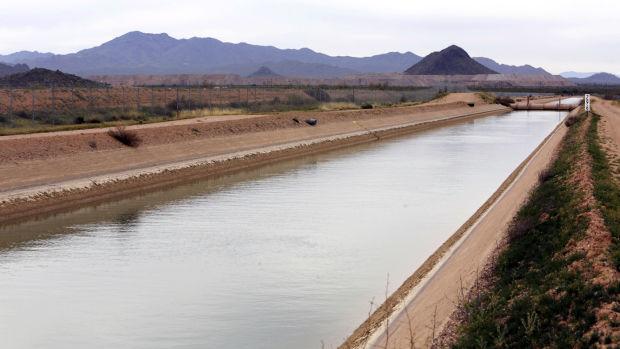
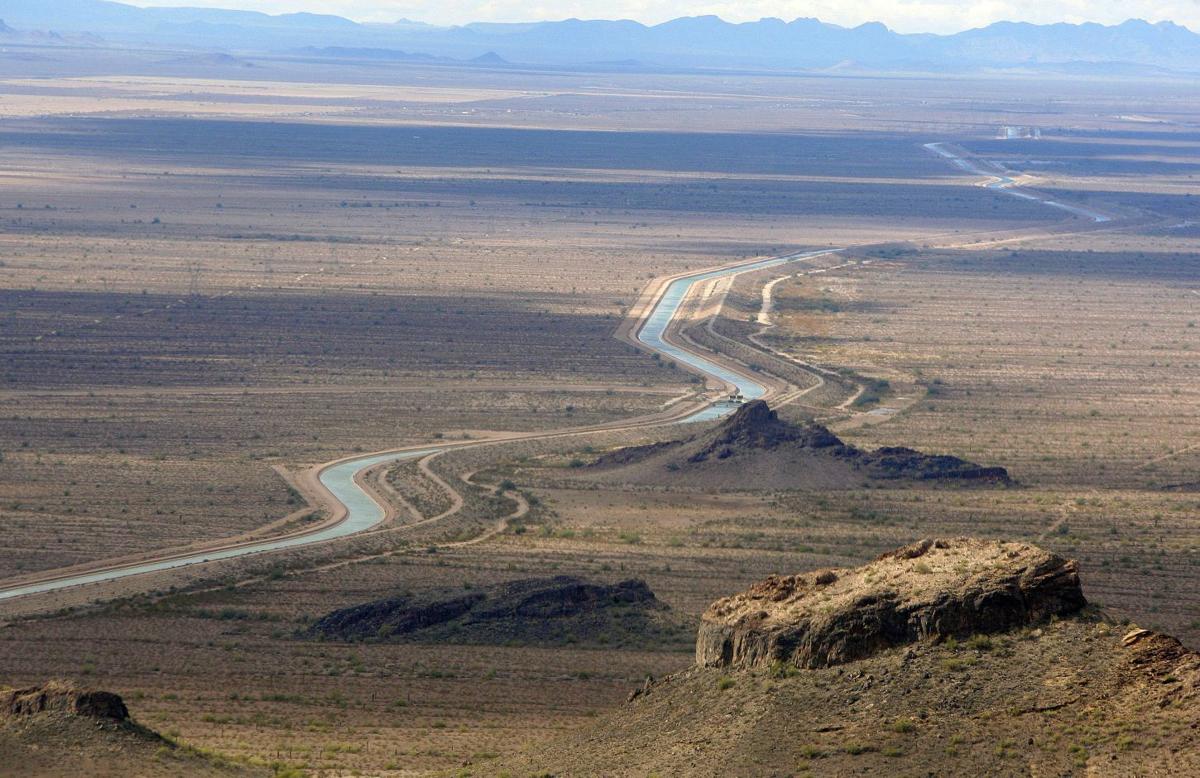
The agency that operates the CAP must look elsewhere for water for future suburban growth, now that it鈥檚 killed a proposed $34 million deal to buy land and water rights in rural Mohave County along the Colorado River.
Officials of the Central Arizona Water Conservation District aren鈥檛 ruling out the possibility of trying to acquire water rights from Mohave or other rural areas on a shorter-term basis. Most likely, the district would pay to temporarily fallow farmland to get water for new subdivisions in the Tucson and Phoenix areas.
The district鈥檚 governing board voted unanimously Thursday to halt efforts to purchase seven farms totaling 2,203 acres and nearly 13,900 acre-feet of Colorado River water rights that exist in the Bullhead City area near the river. The farms are owned by two New York City-based hedge funds.
The proposed deal, in the works since October, sparked vocal and emotional opposition from Mohave County officials and other residents who feared it would bleed their economy and stifle future growth. Mohave County has about 207,000 people, compared to 5.7 million in the three counties served by the Central Arizona Project: Pima, Maricopa and Pinal.
People are also reading…
CAP officials said they would have mitigated at least some of the impacts to the rural community by setting up a fallowing program to compensate farmers who give up water.
鈥淭he land sale is off the table, but I believe the search for water is still present,鈥� said Lois Wakimoto, a Mohave County supervisor who led the charge against the CAP purchase. 鈥淲e won the first skirmish. I don鈥檛 think the battle is over.
鈥淚t鈥檚 the water we have and it鈥檚 also water for our future growth,鈥� Wakimoto said in explaining Mohave鈥檚 opposition.
Wakimoto and other county officials had rounded up opposition to the deal at town halls held at least monthly since January in Lake Havasu City, Kingman and Bullhead City. Local chambers of commerce and realtors joined the fight.
Lack of community support was a factor behind the CAP board鈥檚 decision not to pursue the $34 million deal, said Jim Holway, the water district board鈥檚 vice chairman. Various board members have also raised concerns about whether they wanted to have the district own land, and whether the land price was 鈥渁ppropriately assigned,鈥� he said.
鈥淭he most critical thing鈥� was that an irrigation district in the area decided not to allow a fallowing program longer than 30 to 35 years, Holway said. The Mohave Valley Irrigation and Drainage District controls the allocations of Colorado River water in the area, and it has a longstanding policy of not allowing that river water to be transferred out of the county.
鈥淭hat really raises questions of why you would purchase the land, when there鈥檚 no guarantee of what would happen the next year,鈥� after 30 to 35 years ran out, Holway said.
Mohave irrigation district officials didn鈥檛 want a fallowing program lasting more than 30 years because that would start to look like a permanent water transfer, said Perry Muscelli, a district board member.
鈥淲e were interested and still interested in a fallowing program. It鈥檚 a benefit to farms economically and a benefit to the soil which needs to rest. But we鈥檙e not trying to transfer our water rights to Phoenix,鈥� Muscelli said.
At Thursday鈥檚 CAP board meeting, county Supervisor Wakimoto said, 鈥淲e feel it is Mohave County鈥檚 time to grow. We feel this water will enable us to do this. We hope you are able to find water ... in the three counties you represent.鈥�
CAP board members made it clear their quest for additional water is far from over. Chairwoman Lisa Atkins reminded members that the water district鈥檚 sister agency 鈥� the Central Arizona Groundwater Replenishment District 鈥� is required by state law to acquire renewable water supplies to replenish aquifers that are pumped for future growth.
The replenishment district has enough water to serve current member subdivisions in SaddleBrooke, Green Valley and other unincorporated areas in Pima County and Phoenix suburbs. But it鈥檚 far short of having enough water rights signed up to serve all future growth that鈥檚 expected to happen there.
While the Central Arizona replenishment district was going through its "due diligence" efforts to determine if the Mohave water deal was feasible, it and the Mohave irrigation district have made progress in developing a better understanding of what a fallowing program could look like without an agreement in place for it to buy land and water rights outright, the district said in a statement. The replenishment district "will continue to be a collaborative and responsible partner in pursuing its water supply acquisition program," the district said.
Since 2013, the CAP water district has been on record saying that when it considers buying rural water rights for growth, it would consider the purchases' impacts on local communities and would negotiate with local irrigation districts, board chairwoman Atkins said. In the Mohave Valley case, "the record reflects that we held firm to both of these principles," she said.
Contact reporter Tony Davis at tdavis@tucson.com or 806-7746. On Twitter@tonydavis987

Tony Davis
Reporter