If you鈥檝e ever wandered through the Arizona desert and thought, 鈥淲hy is that wild pig glaring at me from a cactus patch?鈥� chances are you spotted a Javelina.
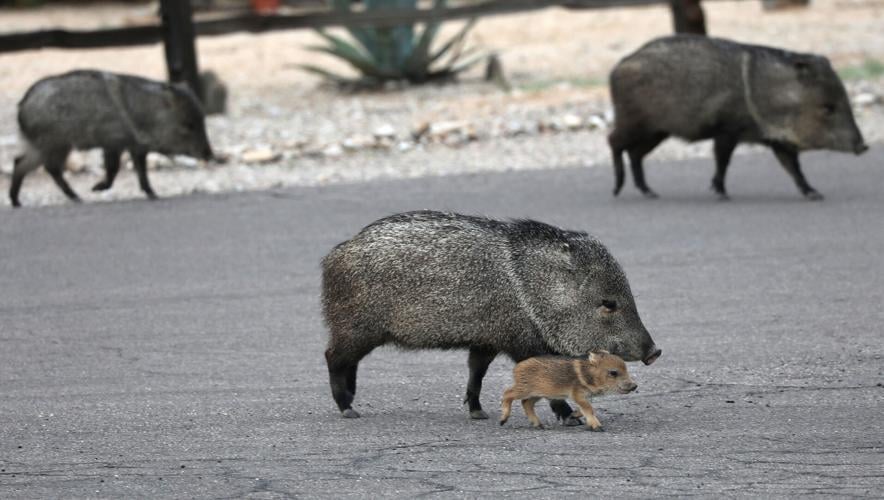
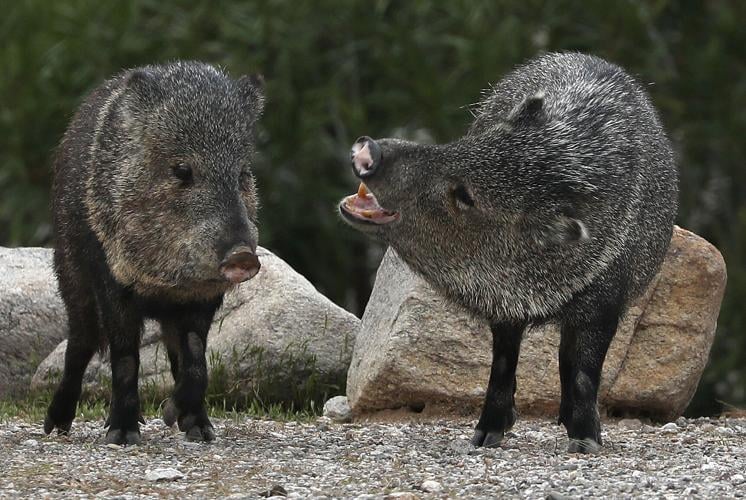
They鈥檙e compact, scruffy, with coarse gray-brown fur, tiny eyes, sharp tusks and a faint collar of lighter hair around their shoulders.
They also travel in noisy little herds called squadrons, which sounds far more military-like than the reality of them rummaging through yards for snacks.

A squadron of javelina stroll in Suffolk Hills near North Oracle and West Magee roads in Oro Valley.
Javelinas are most active during cooler parts of the day, especially in the fall, winter and early spring when Arizona temperatures are less likely to melt your flip-flops. In the brutal summer heat, they switch to nighttime activity and spend daylight hours hiding in shady washes or under thick desert vegetation.
You鈥檒l commonly find them across the deserts of Arizona, especially around Phoenix, Tucson and other Sonoran Desert communities. Here鈥檚 everything you need to know about them and what to do if you encounter one.
People are also reading…
Is a javelina a rodent or a pig?
A javelina is neither a rodent nor a pig. While it looks like a wild pig, it is actually a peccary, which is a distinct, New World hoofed mammal native to the Americas
David Mizejewski, naturalist with the National Wildlife Federation, told The Arizona Republic that peccaries look similar to pigs, but they are a totally different type of animal.
鈥淭hey have different tails, different feet, different digestive tracts, different social structures, and different behaviors than pigs," Mizejewski said, "Peccaries are found exclusively in the Americas. There are three species. The species that ranges into the US in Arizona, New Mexico and Texas is the collared peccary, which is also known as the javelina."
How aggressive are they?
We also talked to Darren Julian, urban wildlife specialist for the Arizona Game and Fish Department, who told us javelinas are not very aggressive under normal circumstances.
鈥淗owever, as they encounter humans without receiving any negative stimuli from us, over time, they lose their fear of us. Almost every time we see aggression from javelina it is directed at our pet dogs,鈥� said Julian. 鈥淲hen javelina no longer have any fear of humans and we are no longer a direct threat, they can go after our pet dogs that may pose a threat to themselves, the herd or their young. Javelina see our pet dogs like coyotes; a canid that is a potential threat, such as a predator.鈥�
Are javelinas only in Arizona?
Javelinas are found in Arizona, New Mexico and Texas and everywhere south of the U.S.
鈥淭hey are a tropical species that has adapted to climates further and further north,鈥� said Julian.
What to do if you see a javelina?
Julian mentions that if it is in a natural space and not showing any sign of aggression, leave it alone. If it is in a human-dominated space, like your yard or neighborhood, do whatever it takes to make it or them run away.
鈥淲e need to let them know that we are at least a potential threat. If javelina are not responding, pepper spray is a good option if you are away from your house but be cognizant of the wind,鈥� said Julian. 鈥淎round your home homeowners have had great success using diluted household ammonia in a SuperSoaker-type squirt gun to haze javelina from their yards. A 10-20% solution of ammonia diluted with water is not only effective but cost-effective.鈥�
Julian says you are effectively doing two things by squirting them with ammonia: conditioning that animal or animals to associate the location with a negative experience. If they know that a human has caused them this irritation, you are reinstalling that human fear response.
鈥淏ottom line, javelina should be fearful of humans and know that we are at least a potential threat,鈥� said Julian.

Javelinas, like most wildlife, avoid humans and are not generally aggressive unless they are threatened, startled or cornered.
What if you're attacked?
Javelinas, like most wildlife, avoid humans and are not generally aggressive unless they are threatened, startled or cornered.
鈥淯nlike many wildlife species, however, they鈥檝e adapted to live alongside people," said Mizejewski. "They sometimes show up in people鈥檚 yards and can be somewhat destructive to gardens as they forage for plants and small animals to eat. Prickly pear cactus and agave are preferred foods."
And most of the time when you see any critters like snakes or bugs, many say to stay away and give them space. But when it comes to javelina, do the opposite.
鈥淔ight back. Stay upright. Call 911. Seek medical attention,鈥� said Julian.
Are javelinas a problem in Arizona?
A lot of people like seeing them; some even feed them. Other people are scared of them, while others may be upset if they are eating their plants and causing property damage.
鈥淚n the Phoenix area, javelina are the number two animal that we receive calls about, behind coyotes and ahead of bobcats," said Julian. "Most callers are provided with information and self-help options. Javelina are the only big-game species that we allow to be trapped and relocated by a Wildlife Service License holder."
Are coyotes afraid of javelinas?
No, coyotes are generally not afraid of javelinas. In fact, coyotes are natural predators of javelinas, particularly hunting young. Because of this, off-leash dogs are seen as a threat by javelinas, which will defend themselves if chased.
鈥淭hey have sharp tusks that can inflict significant damage. But if dogs are kept on leash and under control, javelinas will avoid them too. Javelina attacks on humans are extremely rare and totally avoidable as long as people don鈥檛 approach or try to feed them,鈥� said Mizejewski.
Can javelinas be eaten?
Since javelinas can be legally hunted and are classified as big game animals, many hunters in the Southwest enjoy it. The meat is very lean and dark and many describe the taste as somewhat rich, earthy pork or rabbit. Because it is extremely lean, many prepare it in stews, chili or slowly cooked as pulled meat.
Can you shoot a javelina on your property?
You generally cannot shoot them on your property outside of a regulated hunting season or without obtaining a specific depredation permit from the Arizona Game and Fish Department.
鈥淎long with other species, wildlife are simply reacting to their environment," Julian said. "Humans have created opportunities for wildlife by creating livable communities for ourselves. Green grass and constant water sources are a draw to many species. Within our yards, we have fallen fruit, seeds, nuts, bird feeders and water features that attract a variety of wildlife."
鈥淥ur message has always been 'keep wildlife wild!' The main component to doing that is don't feed wildlife. There is a state law that makes feeding of wildlife illegal with a few exceptions; ARS 13-2927. There are also 'no feed' laws at the county level and city level where the state law does not apply to,鈥� said Julian.
What is the lifespan of a javelina?
Javelina lifespans depend on their natural habitat and the extent to which environmental conditions and predators influence them. But on average, javelinas can live between 7 to 10 years, though some can live up to 15 or 20 years in captivity.


 BioBlitzers catalog wildlife in U.S., Mexico as walls go up along border