Six months after Tucson launched a safe sleeping site for homeless women, officials are seeing early success and gaining the attention of Arizona鈥檚 governor.
Tucson launched a year-long pilot program to create a transitional outdoor sleeping space with services for homeless people who aren鈥檛 ready for permanent housing. The program is set to be extended one more year if the Tucson City Council passes a proposed budget for Fiscal Year 2027, which designates $300,000 for the safe sleeping site.
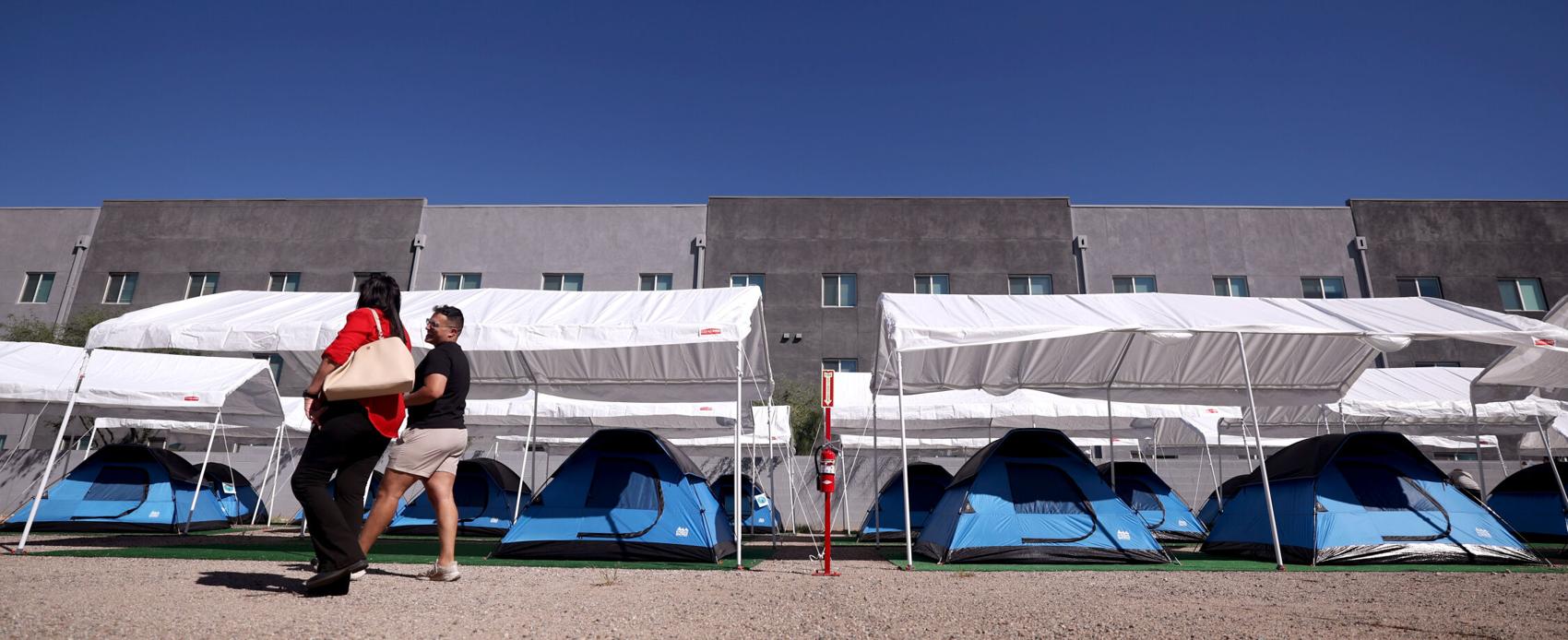
An extension for Star Village, a one-year pilot outdoor sleeping center located on East Grant Road, is included in next year's proposed budget for the city.
STAR Village is mostly always at its 25-person capacity, said Tisha Tallman. She's the chief executive officer of The Primavera Foundation, which runs the shelter with the city and with Old Pueblo Community Services.
Since it opened, 82 people have received services at STAR Village. This number includes some who left after intake and did not stay but still receive services.
People are also reading…
For people who became residents of STAR Village, about a quarter left to move into more stable housing. This includes temporary shelters, which is considered a step forward for residents, especially those who lived on the streets for many years, Tallman said.
The city said the program has reduced crime in the area by 35%.
Tallman called the pilot program a 鈥渉uge success,鈥� at a public meeting on April 21.
Tucson Mayor Regina Romero said the program has attracted attention from Arizona Gov. Katie Hobbs. Hobbs鈥� staff toured the facility on April 17.
Romero said Hobbs offered help to write letters of support for grants.
鈥淪he is a fan of STAR Village, happy that we have this here as a city, as a service,鈥� Romero said.
What is STAR Village?
STAR Village is a low-barrier safe sleeping site, that offers tents and areas with air conditioning and heating, as well as services.
Some of the services include case management, behavioral health support, housing navigation, meals, showers and on-site laundry. The site also provides transportation to appointments, and clothing and hygiene supplies based on availability.
To be eligible to stay in STAR Village, participants must be unaccompanied and 18 or older and able to complete daily activities independently. They can bring only one pet with them, and the pet must be vaccinated. Residents cannot be sex offenders or in an active mental health crisis.
Tallman highlighted the collaborative effort of the program, including participation from several nonprofits as well as volunteer-led programs.
In addition to nonprofit staff, volunteers have worked hundreds of hours at the site.
What has been the impact on the residents and surrounding area?
Since the STAR Village opened, crime in the area has decreased by 35%, city officials said.
鈥淲e haven鈥檛 had a single complaint from neighbors since it鈥檚 been operating,鈥� said Councilmember Kevin Dahl. 鈥淭here was concern it would bring in more homeless, and it hasn鈥檛. It has taken the most vulnerable from that area and the city and brought them into service.鈥�
Tallman said 21 residents per month participate in work, with some participating in the Tucson Homeless Work Program. They also participate in community clean up events.
Half of the residents who joined the program when it began are still there six months later, Tallman said.
鈥淭hey all have a pathway to permanent housing. That鈥檚 not the problem,鈥� she said. 鈥淭here are other things that are standing in the way as barriers for them.鈥�
Some of the issues include the time it takes to obtain identification or clear up evictions on their records. Tallman said it can take up to three months to obtain a birth certificate.
Dahl said this safe sleeping site is critical for people who don't yet feel safe in congregate shelters and other situations.
"This step along the way of getting people off the street is an important step for some people," Dahl said. "This gives these women a chance to receive services."
Number of homeless counted in Tucson shows slight decrease from year before
Tucson鈥檚 annual point-in-time count shows a slight decrease in homelessness in 2026.
The count identified 2,130 people on the night of Jan. 27 who were experiencing both sheltered and unsheltered homelessness across Pima County.
Sheltered homelessness includes people who live in temporary housing like shelters and hotels. Unsheltered homelessness includes people who live on the street or places not designed for sleeping like abandoned buildings, according to the U.S. Department of Housing and Urban Development.
That's a 4% decrease from the total in 2025, and the first decrease in sheltered homelessness since 2022.
The report noted this number is an estimate and requires further data to determine if it is a sustained trend.
The 2026 Housing Inventory Count, conducted alongside the point-in-time count, indicated a loss of nearly 200 available shelter beds between 2025 and 2026.
The loss was primarily due to decreased funding from the Arizona Department of Housing, which provided hotel vouchers for emergency shelter beds. Some beds were also temporarily unavailable because of shelter renovations.
The housing count 鈥渋dentified 881 shelter beds, while the PIT counted 861 people staying in shelter, which indicates extremely high utilization and limited excess capacity within the system,鈥� stated the report.