
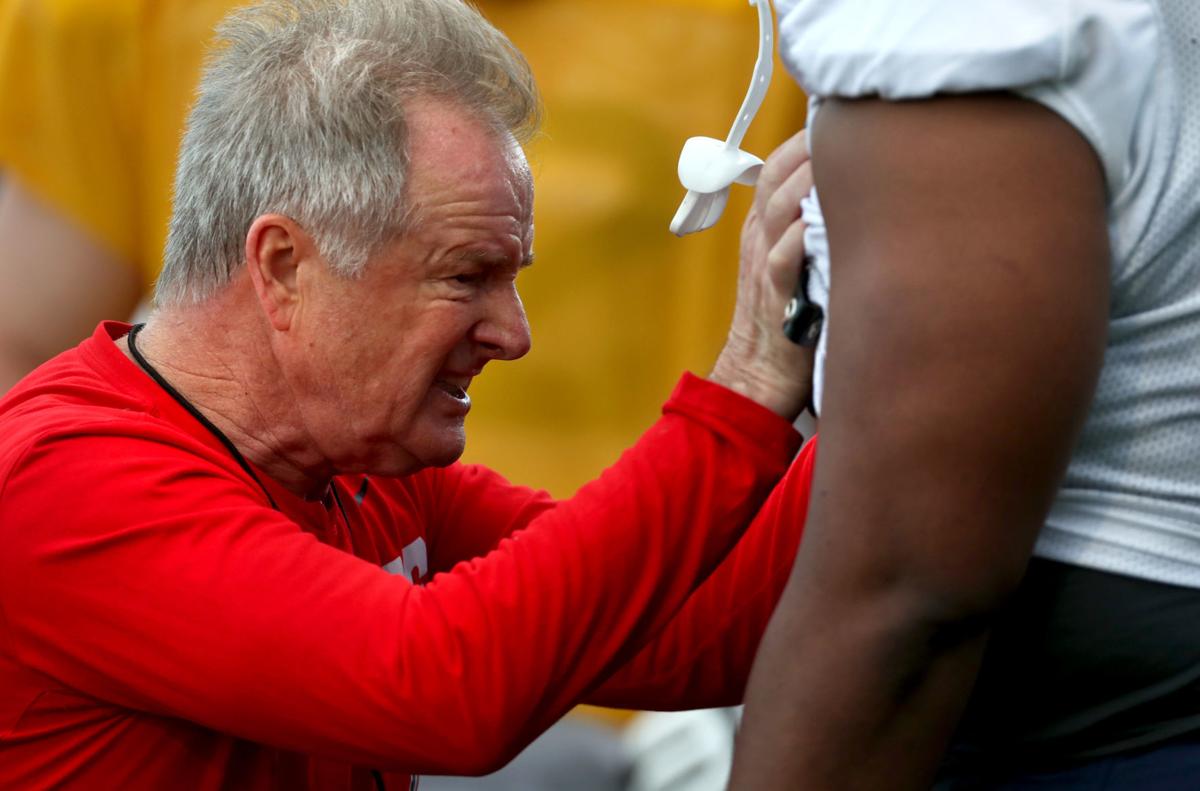
Editor鈥檚 note: Over the next two weeks, the Star will profile the four new Arizona football assistants who haven鈥檛 met with the local media. Today: defensive line coach Stan Eggen.
Stan Eggen has reached the point in his coaching career where working with 鈥渢he right people鈥� is the most important consideration.
It鈥檚 no secret that the Arizona Wildcats are rebuilding. They鈥檙e 9-15 in two seasons under Kevin Sumlin, who made reconstructing the UA defensive staff his No. 1 offseason project.
Sumlin鈥檚 first step came in December, when he hired defensive coordinator Paul Rhoads. Sumlin worked with Rhoads to assemble the rest of the staff.
A little over two weeks later, Arizona hired Eggen. It wasn鈥檛 by chance.
Eggen worked under Rhoads during his final two seasons as the head coach at Iowa State. The two also were part of the same staff at Utah State in 1989 and 鈥�90. Rhoads was just starting his coaching career as a graduate assistant; Eggen was the recruiting coordinator and inside linebackers coach.
People are also reading…
Eggen said their relationship played a 鈥渉uge鈥� role in his coming to Arizona after spending the previous four years at New Mexico. Eggen, Rhoads and first-year outside linebackers coach Andy Buh even lived together for a while in Tucson.
Arizona is Eggen鈥檚 16th stop in a coaching career that spans more than 40 years. Eggen, 67, has tutored several players who went on to play in the NFL, including three-time All-Pro Von Miller of the Denver Broncos.
Rhoads, Miller and working during the coronavirus pandemic were among several topics Eggen discussed in a recent video chat with the Star. The conversation has been lightly edited for context and clarity.
How would you describe Paul Rhoads鈥� coaching and leadership style?
A: 鈥淚 would say hands on, very detailed, organized. Has a plan. Understands what he鈥檚 looking for. I have tremendous respect for him. Disciplined. Expects players to play hard and be tough.鈥�
You seem like a hands-on coach too. How hard has it been to coach your players without being able to interact with them in person?
A: 鈥淥bviously, it鈥檚 been very different. It鈥檚 a challenge. All of us have had to improvise, adjust and not overreact. I think we鈥檝e done that. I鈥檝e been very pleased with our guys鈥� attention.
鈥淓ven though we don鈥檛 have the ability to improve on the field together, through our Zoom meetings and being able to watch video and communicate 鈥� having time to talk to them individually and as a group. It鈥檚 been good. It鈥檚 not ideal, because I鈥檇 rather have them in a room with me. But it鈥檚 been very pleasing to see the development.
鈥淲e communicate. We keep our mics open so that I can ask them questions. I do my meetings, typically, in our meeting room, so I鈥檝e got the video and I鈥檝e got the whiteboard available. I don鈥檛 know if that helps them any, but it helps me.鈥�
How well do you feel like you鈥檝e gotten to know their personalities?
A: 鈥淎s well as can be expected. I like to have some fun in there. I鈥檝e always said I like to coach characters that have character, that have a little personality.
鈥淚t鈥檚 a little different because it鈥檚 not face to face. I want them to keep their video open so that I can see the feedback.
鈥淭o be a good or great listener, being coachable 鈥� you don鈥檛 just listen with your ears 鈥� you listen with your eyes and ears. I like to communicate that way.
鈥淢y expectations are for them to pay attention, to be locked in and to be as close to being in a meeting as we can be. This is the best that we can do. Let鈥檚 make the best out of it.鈥�
What is the role of the interior defensive linemen in this scheme? What are their responsibilities?
A: 鈥淲e鈥檙e gonna be aggressive, first of all. We鈥檙e gonna hopefully be great technicians and be accountable to our defense, and then have the ability to cut it loose and go make plays.
鈥淧aul and I have been together (at) a couple different stops. I think he鈥檚 got confidence that the D-linemen are going to be where they鈥檙e supposed to be 鈥� yet also be able to play off a block and go make a play, not just be robots. I don鈥檛 like that, and that鈥檚 why I feel comfortable working with Paul; he doesn鈥檛 want robots.鈥�
鈥淲e鈥檙e not just out there to fill a gap. We鈥檝e got to be in our gap, our eyes need to be there and we need to control it. Now let鈥檚 go make a play.
鈥淧layers generally enjoy that structure. My personality kind of brings out playing aggressive and having some emotion.鈥�
What do you think you were able to get done in those four practices before spring sports got shut down?
A: 鈥淗opefully we showed them what our expectations are. 鈥� Obviously, we didn鈥檛 get enough time to really put it all together. But I think now through meetings, they鈥檙e seeing what we started installing as a defense.
鈥淚 think they understand that I鈥檓 demanding. I want them to understand there鈥檚 a sense of urgency to whatever it is, whether it鈥檚 a drill, whether they鈥檙e on the sideline, paying attention to what鈥檚 going on. All of that helps them in preparation to be the best they can be on Saturday evenings when we鈥檙e on.鈥�
You had background with one player, grad transfer Aaron Blackwell, who played for you at New Mexico. What does he bring to the table if he鈥檚 healthy?
A: 鈥淗e鈥檚 coming off an injury (torn ACL suffered in August 2019), so he was not able to do as much; he was still gaining confidence, and the training staff was finding out exactly where he was in the rehab process. But his understanding of knowing me will help as this thing continues. He鈥檒l (bring) a toughness, a physical presence and a good knowledge and understanding of what we expect as a defense.
鈥淚鈥檓 excited about his ability to help us not only on the field but off the field and help the other players (in) knowing what my expectations are. Sometimes they鈥檒l look at me and think I鈥檝e got 10 heads. He can get them to understand what the message is. Not necessarily the delivery, but the message.鈥�
How many linemen would you like to have as part of the rotation in a game?
A: 鈥淎t least six. But I鈥檓 hoping we get seven or eight. I don鈥檛 know if that鈥檒l be the first game or not.
鈥淚t鈥檚 not just about the fourth quarter of the game, but I talk about depth helping you in the fourth quarter of the season. I learned this a long time ago, especially with D-line.
鈥淵ou feel good when you鈥檝e only got a 330-pound guy (going against you), because a lot of them are going to have 650 or more pounds on 鈥檈m at the snap, two guys punching 鈥檈m. You do that for 60-70 snaps, it鈥檚 gonna take its toll physically and mentally.鈥�
You have coached several NFL players in the past. What is the key to finding those types of guys?
A: 鈥淭he biggest thing, and I talk to this in recruiting, it鈥檚 not wanting it or having the ability 鈥� it鈥檚 the willingness to work hard enough to maximize what you鈥檝e been blessed with. The two words I use are 鈥榟ungry鈥� and 鈥榟umble.鈥� If you stay hungry and you鈥檙e humble, then this thing can be good.
鈥淢ost of them, in the end, realized this is really what they wanted to do. And when they found that out, it wasn鈥檛 about game day. I always chuckle about these guys that come in sometimes from different places (and say), 鈥業鈥檓 a gamer, Coach.鈥� Stop right there. There are no gamers.
鈥淭hese guys in the NFL, they understood that practice reps were important. And once they realize they can get better every day, and if you have a good attitude about it, it鈥檚 easier. Nothing鈥檚 easy, but it鈥檚 easier.鈥�
Did you recognize many of those traits you just described in Von Miller at Texas A&M?
A: 鈥淰on was unique. He was 212 pounds (as a recruit). But a great young man. When it was ready to go, he was ready, but he was learning as a freshman a little bit in terms of what it took to play at the next level.
鈥淵ou never know how (a) guy鈥檚 gonna turn out, You don鈥檛 look at him in high school and say, 鈥楾his guy鈥檚 gonna be a great.鈥� He had ability. He was a twitchy guy. You could see it was important to him.
鈥淰on obviously had some physical traits 鈥� yet was still what a lot of people would call a 鈥榯weener.鈥� I felt like he could get big enough. I didn鈥檛 know how big, how good, but he had enough and he competed.鈥�