WASHINGTON 鈥� The Republican-majority U.S. Senate backed legislation Tuesday to halt U.S. military action against Iran, but it was not immediately clear how it would affect the conflict as President Donald Trump's administration negotiates a peace agreement with the Islamic Republic.

Trump
The Senate voted 50-48 in favor of the concurrent resolution, which passed the House of Representatives this month, reflecting growing concern even among some of Trump's Republicans about the unpopular conflict that began with Feb. 28 U.S.-Israel strikes on Iran.
The war became a political liability for Trump and his fellow Republicans in Congress as midterm elections loom in November.
The vote was nearly along party lines, with four Republicans joining all but one Democrat in favor. Two Republicans did not vote.
The resolution directs Trump to remove U.S. armed forces from hostilities with or against Iran, but is likely to remain merely a symbolic vote.
People are also reading…
Under the 1973 War Powers Act, the measure does not get sent to the White House for Trump's signature. The White House insisted the legislation is not constitutional and thus not binding. Legal experts say it remains a contested legal question likely to be settled in the courts.

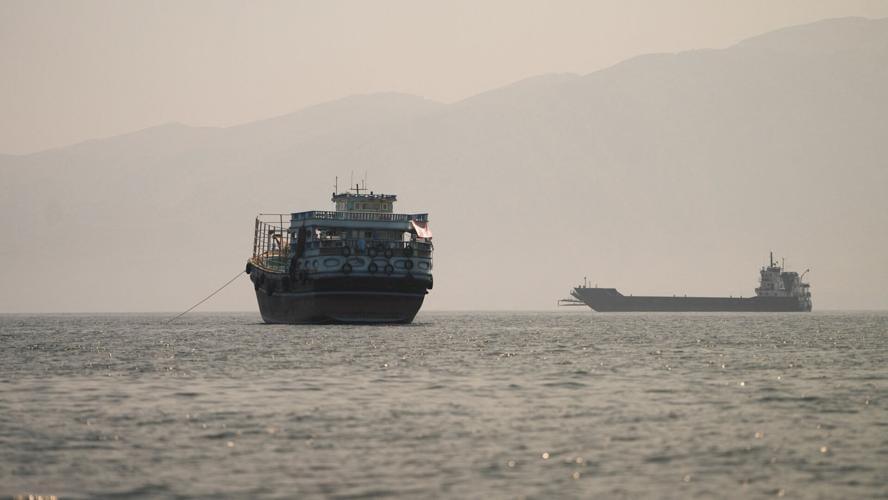
Vessels are seen Monday in the Strait of Hormuz from Musandam, Oman.聽
Earlier, Trump claimed聽Iran agreed to nuclear inspections into "infinity," despite Tehran's denials, as the U.N. began efforts to evacuate hundreds of ships from the Gulf in a tentative return to calm after a fragile peace deal.
The U.N. shipping agency said an evacuation plan to enable about 11,000 seafarers stuck aboard vessels in the Persian Gulf to sail through the Strait of Hormuz was underway after the ceasefire deal between Washington and Tehran.
"We have now started contacting the ships to start the evacuation," a spokesperson for the U.N.'s International Maritime Organization said, without providing a time frame, adding the agency secured "the necessary safety guarantees" and verified conditions for safe navigation.
IMO Secretary-General聽Arsenio Dominguez said the "large-scale operation" would unfold in close cooperation with Iran, Oman, other coastal states, the U.S. and the maritime industry.

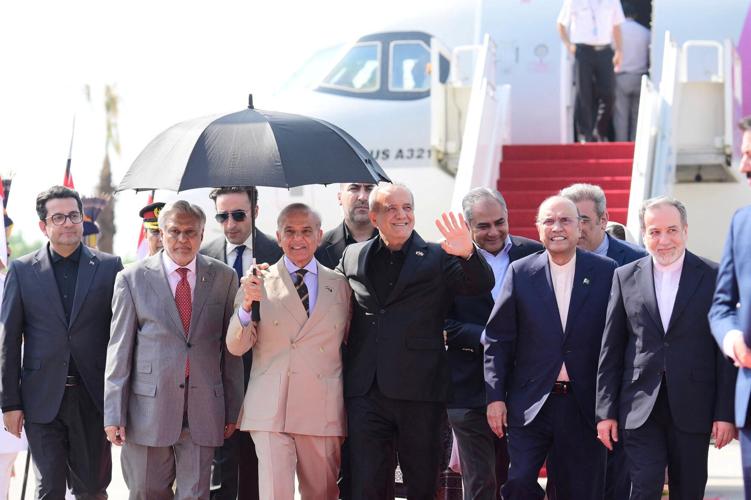
President of Iran Masoud Pezeshkian waves Monday as he is received by Pakistan's Prime Minister Shehbaz Sharif and President Asif Ali Zardari upon his arrival at Nur Khan Airbase in Rawalpindi, Pakistan.
In another sign of聽de-escalation, Washington agreed to waive sanctions on Iran for 60 days from Monday after the first round of talks under last week's nascent peace deal to end the war.
Vice President JD Vance said the talks with Iranian officials in Switzerland laid a good foundation for a final accord and claimed Tehran agreed to allow nuclear inspectors back into the country.
Iran denied it discussed its nuclear program at the talks, mediated by Qatar and Pakistan, and said it didn't agree to invite International Atomic Energy Agency inspectors back.

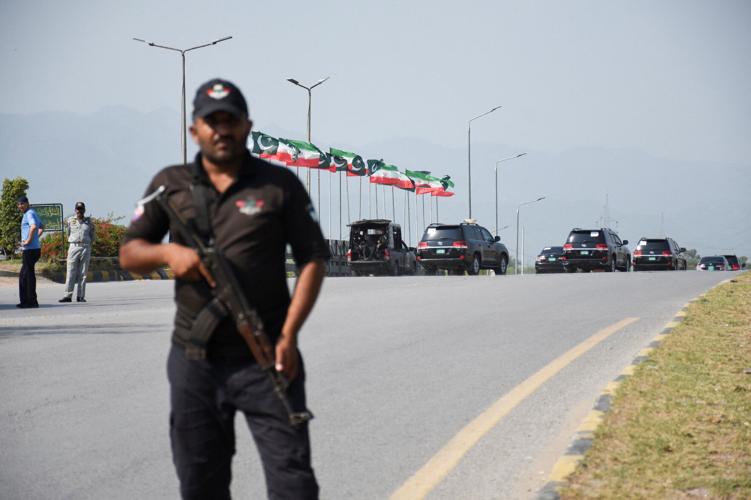
Security stands guard Monday as Pakistan's Presidential security squad vehicles carrying Iran's President Masoud Pezeshkian move past Iranian and Pakistani flags on a street in Islamabad, Pakistan.聽
Iranian assets
Foreign Ministry spokesperson Esmail Baghaei said Tuesday Iranian officials didn't hold a meeting with IAEA chief Rafael Grossi and had no plans for the U.N. nuclear watchdog to inspect Iran's damaged nuclear facilities.
Trump hit back Tuesday at what he said were Iran's "protestations and false statements."
"Iran has fully and completely agreed to highest level Nuclear inspections long into the future (Infinity!!!)," Trump said on social media.
He also claimed any Iranian assets unfrozen under the deal would be placed in an escrow account and used to buy food and medical supplies from the U.S. "including Corn, Wheat, and Soybeans from our great American Farmers."
Iran's ambassador to the U.N. in Geneva, Ali Bahreini, denied there was such an agreement.

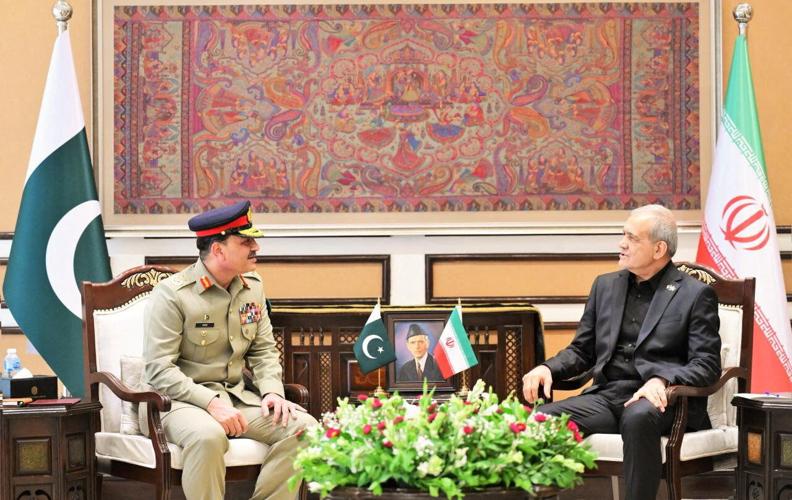
Field Marshal Syed Asim Munir meets the President of Iran, Masoud Pezeshkian, on Monday in Rawalpindi, Pakistan.聽
Road map for talks
The conflicting statements highlighted the uncertainty facing negotiations to halt a war that upended the Middle East.
On Monday, the sides agreed on a mechanism to end fighting between U.S. ally Israel and Iran-backed Hezbollah in Lebanon, and opened a communications line to help ensure safe passage for commercial ships through the Strait of Hormuz. Iran blocked the waterway, which is聽vital聽for about a fifth of the world's oil supplies, during the war, pushing up oil prices and global inflation.
In the first of several steps to provide economic relief to Iran, the U.S. Treasury announced a waiver until Aug. 21 on sanctions, allowing Tehran to sell oil and related products and receive payment.
Bahreini said "good progress"聽was made in the talks and two working groups would be established in coming days to focus on the removal of sanctions and Iran's nuclear activities.
He told reporters five parts of the initial deal need to be fully implemented before negotiations begin on the nuclear dossier and a role for the IAEA.

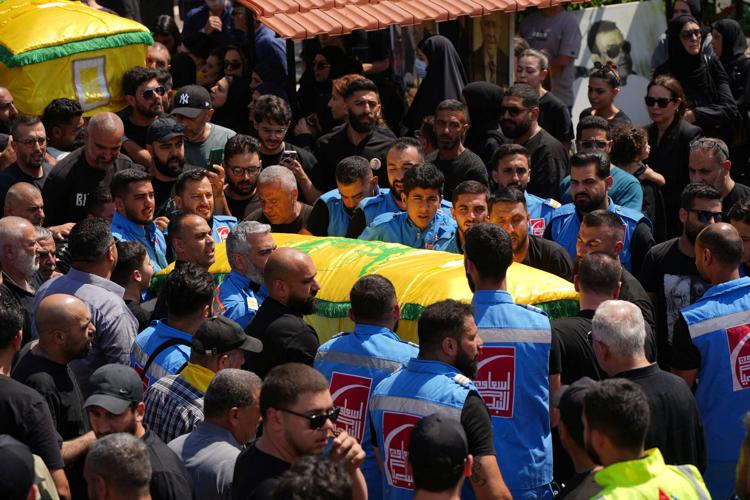
Mourners attend the funeral of two Hezbollah fighters, who were killed before an interim deal between the U.S. and Iran, on Tuesday in Nabatieh, Lebanon.聽
Conflict in Lebanon
The ambassador said Lebanon was an "unquestionable" part of the interim accord between the U.S. and Iran, and it included the withdrawal of Israeli troops from Lebanon.
A ceasefire largely held in southern Lebanon since Sunday, but Lebanon's Civil Defense and state media said Israeli gunfire killed two people there Tuesday. Hezbollah said the incident violated the ceasefire.
Israel says it will maintain a security zone in southern Lebanon and continue to act to "neutralize" threats against Israeli soldiers and citizens.
Israeli strikes against Hezbollah in Lebanon killed thousands of people and displaced millions.聽Israel and Lebanon were due to start a new round of talks Tuesday in Washington.聽

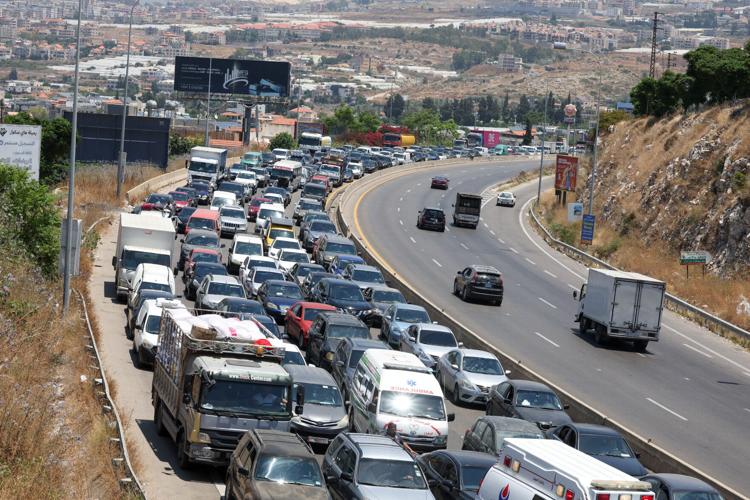
Cars line up Monday as displaced people make their way back to their homes in southern Lebanon following an interim deal between the U.S. and Iran, in Sidon, Lebanon.聽
Tanker traffic through Hormuz started to pick up Monday, though Iran and Oman suggested in a joint statement that there may be costs involved in using the strait.
Oman and Iran said a joint working group would seek agreement on administrating navigation in the strait, the services provided and associated costs. An arrangement, they said, must respect their "sovereignty and sovereign rights."
Iran's Fars news agency quoted a military source as saying only a limited number of vessels are permitted to transit Hormuz in coordination with Iranian forces, adding the number allowed through will vary daily, depending on conditions.