Junior college football in the state of Arizona as we knew it ended on Dec. 2, when Eastern Arizona College lost to Jones College 27-7 in the Mississippi Bowl at A.L. May Stadium in Perkinston, Mississippi.
Earlier that year, the dominoes had begun to fall.
In February, the Maricopa County Community College District said it would be eliminating football at the four county schools that still played it: Glendale, Mesa, Phoenix and Scottsdale. In June, Pima College followed suit. Three days after EAC鈥檚 last game, Arizona Western College announced it would be dropping football. Six days after that, EAC 鈥� the last school standing 鈥� reluctantly fell in line.
The Maricopa schools cited financial issues. Pima did as well. Arizona Western and Eastern Arizona no longer had enough opponents to put together a fiscally responsible schedule with more than half the football-playing schools in the Arizona Community College Athletic Conference having dropped the sport.
People are also reading…
More than seven months after that last game, with training camps about to open at all levels of football across the country, the reverberations of the statewide decision to eliminate junior college football are still being felt.
Most of the players who would have been sophomores at one of those seven schools have found places to play. Most of the coaches have found new jobs. A startup league is seeking to revitalize JC football in the state.
But some have fallen through the cracks, unable to find the right fit to extend their football careers and dreams. And the entire situation 鈥� an entire state dropping a sport that provided a gateway to higher education for hundreds of young men annually 鈥� has created an empty feeling in the Arizona football community as a whole.
鈥淵ou鈥檝e got a chance to change somebody鈥檚 life,鈥� said John O鈥橫era, EAC鈥檚 head coach from 2005-18. 鈥淵ou don鈥檛 always recognize it today. In this business, it鈥檚 10 years later. Some kid calls you and thanks you, telling you all this stuff you did for him, and you don鈥檛 even remember it. That鈥檚 what makes it all worthwhile. You鈥檝e got a bond for life. It鈥檚 a neat, neat thing.鈥�
Junior college football has impacted the lives of countless coaches and players. What is Arizona missing without it 鈥� or at least the traditional version of it?
The Star steps into that void in the first of a three-part series on the fallout of Arizona axing JC football.

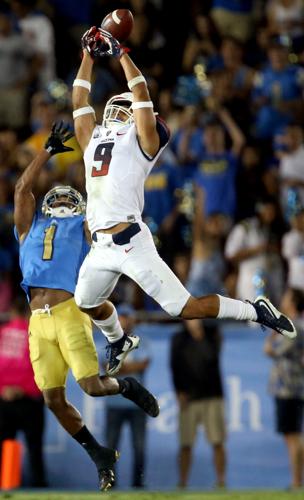
Arizona cornerback Dane Cruikshank (9) out jumps UCLA wide receiver Ishmael Adams (1) to bat away a pass late in the second quarter of their Pac-12 game at the Rose Bowl, Saturday, Oct. 1, 2016, Pasadena, Calif. Kelly Presnell / 51黑料网
Means to an end
Six former National Junior College Athletic Association players participated in the most recent Super Bowl. Fifteen former NJCAA players were selected in this year鈥檚 NFL draft, including two first-rounders.
Junior college players dot the rosters of NCAA Division I teams across the nation. The Arizona Wildcats鈥� 2019 recruiting class features five junior college transfers, including defensive tackle Myles Tapusoa, who attended EAC. The last two Wildcats picked in the draft 鈥� defensive tackle PJ Johnson and safety Dane Cruikshank 鈥� played junior college ball before arriving in Tucson.
Johnson and Cruikshank had academic issues in high school that prevented them from going directly to Division I universities. That鈥檚 just one demographic the junior college system serves. There鈥檚 a reason Netflix鈥檚 documentary series about JC football is called 鈥淟ast Chance U.鈥�
鈥淎 lot of kids get overlooked for one reason or another,鈥� said Richard Taylor, the coach at Peoria Centennial High School, which produced former UA receiver Shawn Poindexter and current offensive lineman Steven Bailey 鈥� who both played at Glendale Community College.
JC football, Taylor said, provides an opportunity for players who underperformed academically or are undersized or simply aren鈥檛 quite ready for a four-year school.
Taylor experienced the benefits of junior college football first-hand. His son, Andrew, played at GCC before earning a Division I scholarship to Tulsa. Andrew Taylor is now the defensive coordinator at Centennial, one of the strongest high school programs in the state.
Andrew had some smaller-school opportunities coming out of high school. By staying and playing at home at GCC, he saved the family about $20,000 in tuition and related costs, his father estimates.
Two in-state schools play NAIA football: Arizona Christian University and Ottawa University. Both have winning, respected programs.
But even with partial scholarships, they鈥檙e considerably more expensive than the state鈥檚 junior colleges.
鈥淎utomobiles break down. Hot water heaters explode. There鈥檚 just things that come up,鈥� Richard Taylor said. 鈥淲e were really appreciative of (the junior college option).鈥�
The head coach of one of Centennial鈥檚 rivals has lived the JC life. Peoria Sunrise Mountain coach Steve Decker didn鈥檛 have many options coming out of Glendale Apollo High School in 1989. Academically, he was a nonqualifier. Nobody from his family had graduated from college, and he isn鈥檛 sure he would have continued his education if not for a chance to play football at GCC.
鈥淚t helped me grow up and mature,鈥� said Decker, who then transferred to play at Western Illinois. 鈥淚 now have a bachelor鈥檚, a master鈥檚. I don鈥檛 know if I would have had an AA degree.鈥�
Decker鈥檚 son, Tristin, also attended GCC after encountering some academic difficulties at his dad鈥檚 alma mater. He鈥檚 now in the Air Force.
Edgar Soto, Pima鈥檚 former athletic director, often said that sports are the carrot junior colleges can dangle in front of kids who might not otherwise have pursued higher education.
Dr. Christopher Parker, the president and CEO of the NJCAA, summed up the mission of junior college football as follows:
鈥淲e simply always say, but for athletics, how many of those individuals would attend college? We use the sport of football to open the doors to access education on those campuses. That鈥檚 the biggest draw for us.鈥�

Quarterback Marquise Cooper heaves a throw downfield, working with a few receivers well after sunset and into the dark at practice for the Pima Community College football team, Thursday, August 23, 2018, Tucson, Ariz.
Placing the players
When Eastern Arizona became the seventh and final school in the state to drop football, the number of NJCAA institutions playing the sport fell to 65. Many became landing spots for players from the Arizona schools who would have been sophomores this season.
The NJCAA tried to make that process as seamless as possible by expanding the windows in which student-athletes could sign with new schools. Still, it was a challenge for the coaches of the seven Arizona junior colleges to place roughly twice as many players as they would in a normal cycle.
It was also their top priority.
鈥淭he players were the No. 1 concern,鈥� said Doug Madoski, the former coach at Scottsdale Community College who鈥檚 now coaching the Maricopa Mustangs in the new Hohokam Junior College Athletic Conference. (Read more about it in Monday鈥檚 Star.)
鈥淢y word needs to count,鈥� Madoski continued. 鈥淚 was committed to these kids, committed to their families.鈥�
Madoski worked on finding new schools for his ex-players as late as May 10, his last day as an employee at SCC.
鈥淲e promised those parents we鈥檇 take care of their kids,鈥� O鈥橫era said. 鈥淭hen you start applying for jobs.鈥�
O鈥橫era landed one with the Sonoran Sidewinders, Tucson鈥檚 entry in the HJCAC. O鈥橫era officially became the team鈥檚 coach in June.
A year earlier, Jim Monaco learned his coaching tenure at Pima would have an expiration date. He understood and accepted the reality of the situation 鈥� 鈥淭he budget is the budget,鈥� Monaco said 鈥� but that doesn鈥檛 mean he had to like it.
鈥淲ould I have tried?鈥� Monaco said when asked if he considered a last-ditch campaign to save football at Pima. 鈥淚 probably would have tried so hard I would have killed myself.
鈥淏ut I can鈥檛 raise that amount of money. So what are you gonna do?鈥�
Monaco鈥檚 work as the Aztecs鈥� football coach since 2014 earned him a promotion; he was named Pima鈥檚 interim athletic director in October. But he鈥檒l never stop thinking of himself as a coach.
鈥淚鈥檒l be 鈥楥oach鈥� till the day I die,鈥� Monaco, 58, said. 鈥淚 just won鈥檛 be coaching.鈥�